




When the ground starts shaking, the structural integrity of your home becomes the most urgent thing in the world. For the millions of Americans living in seismically active regions – particularly across California, the Pacific Northwest, Alaska, and parts of the Intermountain West – earthquake performance is not an abstract concern. It is a practical, pressing question that shapes where people live and what kinds of homes they choose to build. As prefabricated housing continues to gain mainstream acceptance, a natural and important question follows: how do prefab homes actually perform during earthquakes?
The answer is more nuanced and, for most modern prefab buyers, more reassuring than you might expect. Understanding why requires a closer look at how prefab homes are engineered, regulated, and assembled – and how those factors stack up against traditional site-built construction when seismic forces are at play.
Understanding How Earthquakes Stress a Home
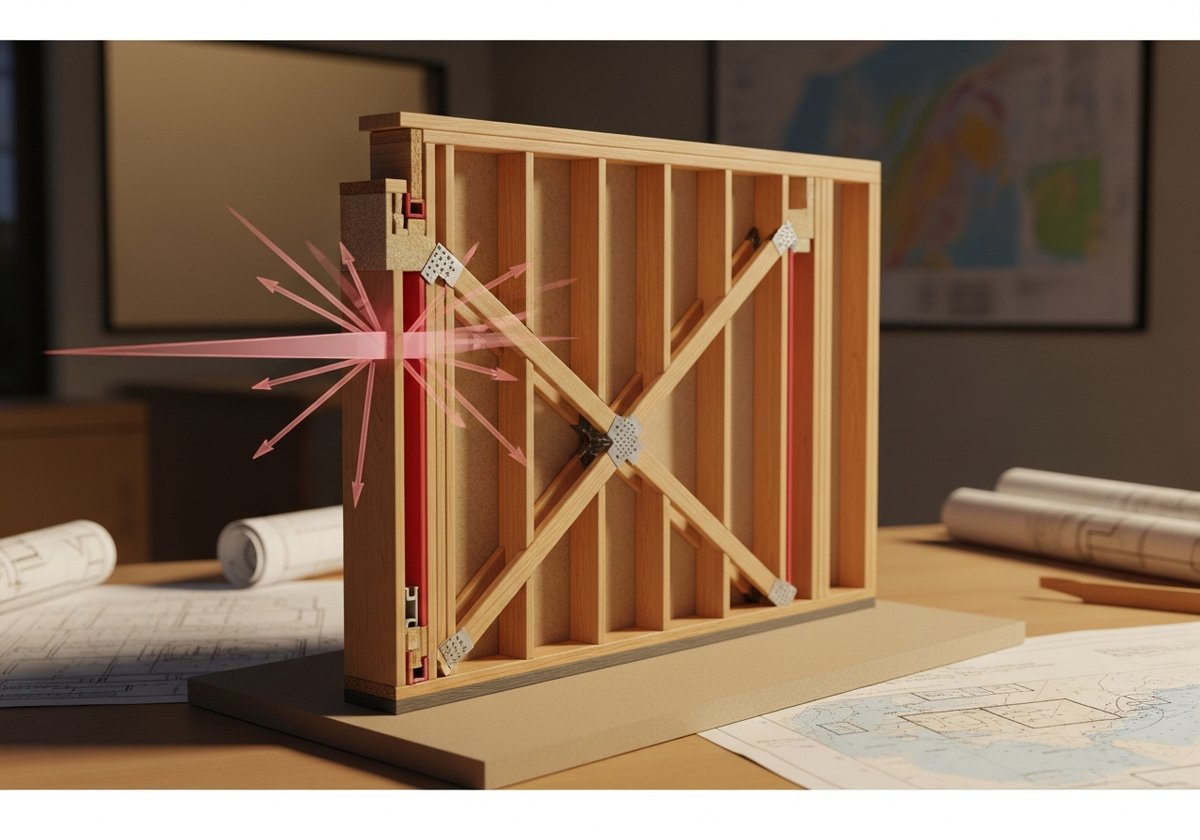
Earthquakes impose lateral forces on structures – energy that pushes and pulls buildings sideways rather than simply bearing down vertically. Traditional building design focuses heavily on vertical loads like roof weight and snow accumulation, but seismic design requires engineers to think about racking forces, shear walls, foundation connections, and the way a structure flexes and recovers without fracturing.
A home’s vulnerability during an earthquake depends on several interconnected factors: the quality and continuity of its structural connections, the strength of its foundation anchoring, the rigidity versus flexibility of its wall systems, and whether it was designed and built to current seismic codes. These factors apply equally to site-built and prefab homes – and in several respects, prefab construction has meaningful structural advantages.
How Modern Prefab Homes Are Built for Seismic Resistance
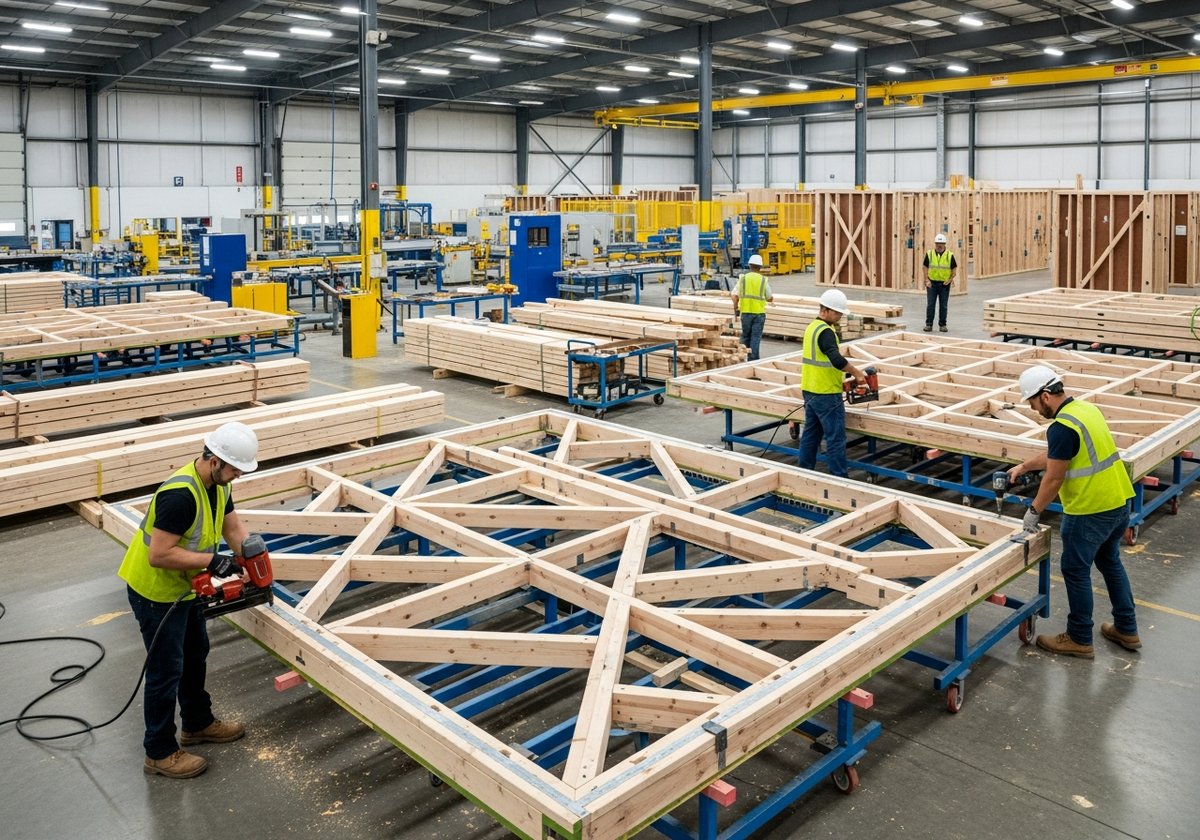
Modern modular and panelized prefab homes are engineered and manufactured in controlled factory environments. This process introduces a level of structural precision that is genuinely difficult to replicate on a job site. Factory construction means that framing connections are mechanically fastened to tight specifications, adhesives cure under controlled conditions, and sheathing is applied uniformly across wall and floor panels.
Modular homes in particular benefit from a construction reality that most homebuyers never consider: because the modules must survive transportation on a flatbed truck over highways and rough roads before they ever reach the building site, they are built to withstand dynamic, multi-directional forces. Engineers actually design for this transport loading as part of the manufacturing process, which means completed modules often exceed the structural standards required for static site-built construction.
For a deeper look at how the manufacturing and on-site assembly process works together, The Prefab Home Construction Process: From Factory to Foundation provides a clear walkthrough of what happens from production through final installation.
Regulatory Standards: What the Codes Actually Require
One of the most important distinctions in this conversation is the regulatory framework governing prefab homes. Modular homes – those built to state building codes in a factory setting – must meet the same International Residential Code (IRC) or International Building Code (IBC) requirements as site-built homes, including seismic provisions. In high-risk seismic zones, those requirements include engineered shear wall design, specific nailing patterns, hold-down hardware, and engineered foundation connections.
California enforces some of the strictest residential building codes in the country. Modular homes built for California must comply with California Building Code (CBC) seismic requirements, and factory inspections are often more rigorous than the typical series of municipal inspections on a site-built home. For a detailed breakdown of how California applies these standards to prefab construction, Are Prefab Homes Earthquake Safe? California’s Safety Standards Explained covers the regulatory landscape thoroughly.
It is worth noting an important distinction: HUD-code manufactured homes (commonly called mobile homes) are governed by a different federal standard – the HUD Manufactured Home Construction and Safety Standards – rather than the IRC or CBC. Older manufactured homes, particularly those built before seismic provisions were added to HUD standards in the late 1990s, can be significantly more vulnerable in earthquakes, especially if they are inadequately anchored to their foundations. When people associate “prefab homes” with earthquake damage, they are often referencing this older manufactured housing stock, not modern modular or panelized construction.
Foundation Connections: The Critical Link
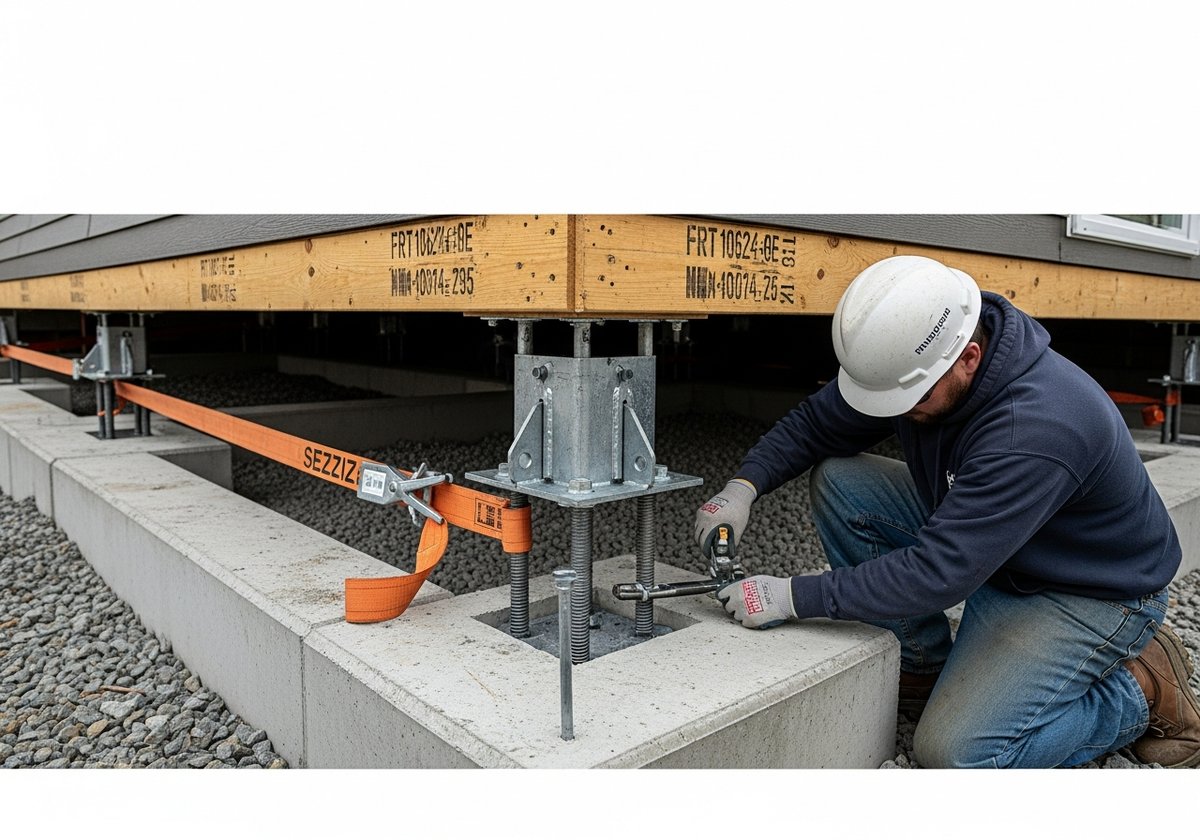
Regardless of how well a home is built above the foundation line, the connection between the structure and its foundation is the single most important variable in earthquake performance. A home that slides or tips off its foundation – even if the structure itself remains intact – can be a total loss.
Modern modular homes are set on permanent foundations and anchored using engineered hold-down hardware, anchor bolts, and steel strapping that ties the structure directly into the foundation system. When properly installed, these connections are designed to resist the uplift and lateral forces generated during seismic events. The foundation type matters as well: full perimeter concrete foundations generally outperform pier and beam systems in earthquake performance, though engineered pier systems with proper bracing can also perform well when designed for seismic conditions.
Prefab vs. Traditional Homes: Does Construction Type Actually Matter?
In honest terms, the construction type matters less than whether the home was designed and built to current seismic codes and whether its foundation connection was properly engineered and installed. A well-built modular home on a properly anchored foundation will perform similarly to a well-built site-built home with the same engineering. Conversely, an older or poorly anchored structure of either type is at higher risk.
Where prefab construction can claim a genuine advantage is in construction consistency. Site-built framing involves dozens of individual subcontractors working under variable weather conditions, with individual variation in how connections are made and how hardware is installed. Factory production reduces that variability considerably. Quality control inspections happen in a controlled environment, and tolerances are tighter.
This consistency translates directly to long-term value. Homes that survive seismic events without significant structural damage retain their value and insurability far better than damaged properties. How Appraisers Evaluate Prefab Homes Today explores how that quality recognition is increasingly reflected in property valuations.
Design Strategies That Improve Seismic Performance
Beyond meeting minimum code requirements, there are specific design choices that meaningfully improve how a prefab home performs in an earthquake:
- Continuous load path design: Engineering the home so that seismic forces travel continuously from roof to foundation without interruption or weak links in connections.
- Shear wall placement: Distributing shear walls symmetrically to prevent torsional (twisting) response during ground motion.
- Redundant fastening systems: Using both structural adhesives and mechanical fasteners for floor and wall sheathing to increase panel rigidity.
- Seismically rated hardware: Specifying hold-downs, straps, and anchor bolts rated for the seismic design category of the building site.
- Regular maintenance of foundation anchoring: Inspecting and, where necessary, retrofitting foundation connections as the home ages.
Frequently Asked Questions About Prefab Homes and Earthquakes
General Questions About Seismic Performance
Are prefab homes earthquake proof?
No home is truly earthquake proof. The goal of seismic engineering is life safety and structural survivability, not zero damage. Modern modular prefab homes built to current seismic codes are designed to resist significant ground motion without collapse, but even well-engineered homes may sustain cosmetic or moderate structural damage in major earthquakes.
Are prefab homes safer than traditional homes in earthquakes?
When both types are built to current seismic codes, performance is generally comparable. Prefab homes benefit from factory precision and consistent quality control, which can reduce the risk of construction defects that compromise seismic performance. Older manufactured homes with inadequate foundation anchoring are at considerably higher risk.
What is the biggest risk factor for prefab homes in earthquakes?
Inadequate foundation anchoring is the primary risk factor. A structurally sound home module that is not properly secured to its foundation can slide or tip during ground shaking. Proper engineering and installation of foundation connections is essential regardless of construction type.
Does the type of foundation affect earthquake performance?
Yes. Full perimeter concrete foundations with proper anchor bolt placement generally provide the most secure seismic connection. Pier and beam foundations can perform well when engineered with seismic bracing but require more careful attention to anchoring details.
Practical Steps for Buyers and Homeowners
How do I verify that a prefab home meets seismic requirements in my area?
- Ask the manufacturer for documentation showing the home’s engineering complies with the seismic design category for your site.
- Review the structural engineering drawings and confirm that shear wall layout and foundation connections are engineered for your seismic zone.
- Work with a licensed contractor who is experienced with seismic installation requirements in your region.
- Schedule a third-party structural inspection after installation is complete.
Can an older manufactured home be retrofitted for better seismic performance?
Yes. Retrofitting programs – including foundation anchoring systems and perimeter bracing – can significantly improve the seismic performance of older manufactured homes. Many state and county programs offer guidance or incentives for manufactured home seismic retrofits.
Does buying a prefab home in California require special permits related to seismic safety?
Yes. California requires prefab homes to comply with the California Building Code, which includes seismic provisions specific to each region’s ground motion risk. The permitting process verifies that structural plans, foundation design, and installation meet these requirements. For guidance on navigating California’s permitting process, How to Get a Building Permit for a Prefab Home in California is a useful starting point.
Does earthquake performance affect the long-term value of a prefab home?
Absolutely. Homes in seismic zones that are demonstrably built to current standards, properly anchored, and free of earthquake damage history are easier to insure, easier to finance, and more attractive to buyers. Structural resilience is a meaningful component of long-term return on investment for any home in an earthquake-prone region.
Sources
- International Code Council – International Residential Code Seismic Provisions
- California Building Standards Commission – California Building Code (CBC) Seismic Requirements
- U.S. Department of Housing and Urban Development – HUD Manufactured Home Construction and Safety Standards
- Federal Emergency Management Agency (FEMA) – Seismic Performance of Manufactured Homes
- Structural Engineering Institute (SEI) / American Society of Civil Engineers – ASCE 7 Minimum Design Loads
- Applied Technology Council – Seismic Evaluation and Retrofit of Manufactured Homes
