



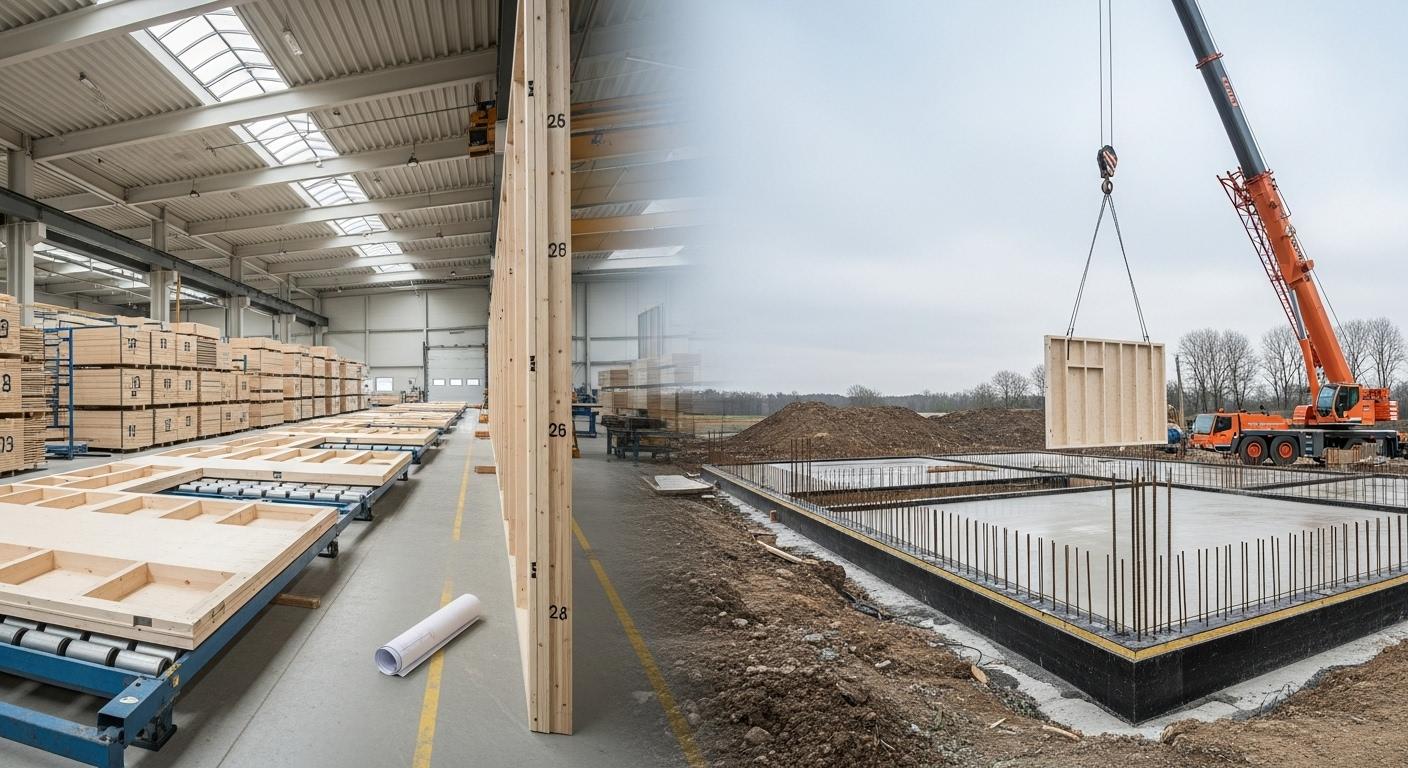
Introduction to Prefab Homes
Prefab homes, a term often tossed around in the housing sector, carry an air of modern magic. But what exactly are they? Simply put, prefab homes, or prefabricated homes, are homes whose major sections are manufactured and assembled in a factory setting before being transported to their final site. This differs from traditional homes, which are constructed entirely on-site from the ground up. Within the prefab category, you’ll find variations like modular, manufactured, and panelized homes. Each comes with its own set of rules and construction processes.
Modular homes, for instance, are completed sections or modules constructed in a factory and assembled on-site. Manufactured homes, often confused with mobile homes, are built entirely in a factory and then transported to the site. This method’s roots stretch back to the early 20th century when kit homes from catalogs were all the rage, proving the allure of prefab is nothing new.
Today, prefab homes have surged in popularity, thanks to their efficiency, sustainability, and customization options. In an age where speed is often of the essence and environmental impacts matter more than ever, they’ve found their place in the hearts of both architects and homeowners alike.
Design and Planning Stage
The journey of a prefab home begins with meticulous planning and design. It’s here that architects and designers play a critical role, bringing the homeowner’s vision to life. This collaborative phase involves detailed discussions, where homeowners can explore numerous customization options to meet their needs and aesthetic desires. Selecting the right design is akin to choosing a suit; it should fit just right and reflect your personality.
Site analysis and preparation are also crucial during this stage. Factors like local building codes, the desired location, and site conditions must be thoroughly evaluated to ensure the home is both compliant and suited to the environment. It’s a bit like prepping for a marathon every detail counts.
Factory Production Phase
Once the design is set in stone, or perhaps more accurately, in blueprints, the action shifts to the factory. This is where the magic happens. In a controlled environment, precision tools and techniques come together to create high-quality components that will form the backbone of your new home.
Factory construction holds several advantages over traditional construction methods. First and foremost, the factory setting mitigates weather-related delays, allowing for year-round production. The precision achieved through repeatable processes ensures that each piece meets exact quality standards, reducing waste and enhancing efficiency.
During this phase, components undergo rigorous quality control and inspections to guarantee they meet the highest standards before leaving the factory floor.
Transportation Logistics
Getting your prefab home from the factory to the site is akin to a carefully choreographed dance. Large modules, sometimes entire sections of a home, must be transported with care to avoid damage.
Transport challenges include maneuvering through traffic, narrow roads, and adhering to transportation regulations. But fear not; skilled logistics teams ensure that everything arrives in one piece, ready for assembly. This step is crucial as it can affect the timeline of the entire construction process.
On-Site Assembly
Once the prefab modules arrive at their destination, it’s time for the on-site assembly. This phase is where your new home truly starts to take shape. Skilled teams work to integrate these modules with existing infrastructure, ensuring everything fits together seamlessly.
Compared to traditional construction, this method is remarkably quick often completed in a matter of days or weeks instead of months. Key personnel, including site managers and utility specialists, oversee the installation process, ensuring everything aligns and functions as intended.
Foundation and Installation
The foundation is quite literally the base upon which stability and security rest. While traditional homes often require more intricate foundation work, prefab homes can sit on various types, from simple piers to full basements, depending on the site and design requirements.
Preparing the site and setting a permanent foundation is a crucial step in the prefab home construction process. Ensuring structural integrity, these foundations must comply with all local building codes. Methods to secure prefab components to the foundation are designed to maintain the utmost precision and structural stability.
Finishing Touches and Inspections
With the structure in place, attention turns to finishing touches. The installation of interior fixtures and fittings, as well as exterior finishes, brings the home personality and warmth. It’s like adding accessories to a well-tailored outfit.
Before moving in, final inspections ensure everything is up to code and functioning correctly. Local authorities perform these inspections, offering peace of mind that your home is ready for occupancy. A homeowner walkthrough often follows, addressing any concerns and fine-tuning details to ensure satisfaction.
Benefits and Considerations of Prefab Homes
Why choose prefab? Well, for starters, cost efficiency often makes them an attractive option. With factory construction, many costs are reduced, and projects are completed faster, saving valuable time. Environmentally, they’re a win too; waste is minimized, and many prefab models are designed with sustainability in mind.
Despite misconceptions that prefab homes lack individuality or quality, modern advancements have proven otherwise, offering stylish designs that meet all safety and quality standards. As the industry continues to evolve, innovations in prefab construction promise even more exciting possibilities on the horizon.
So, if you’re pondering the next steps for your home, whether you’re an investor aiming for quick returns or a family dreaming of a custom space in a desired location, prefab might just be the perfect fit. With careful planning, a dash of creativity, and a solid team, a prefab home can offer you speed, flexibility, and quality all in one package.
