



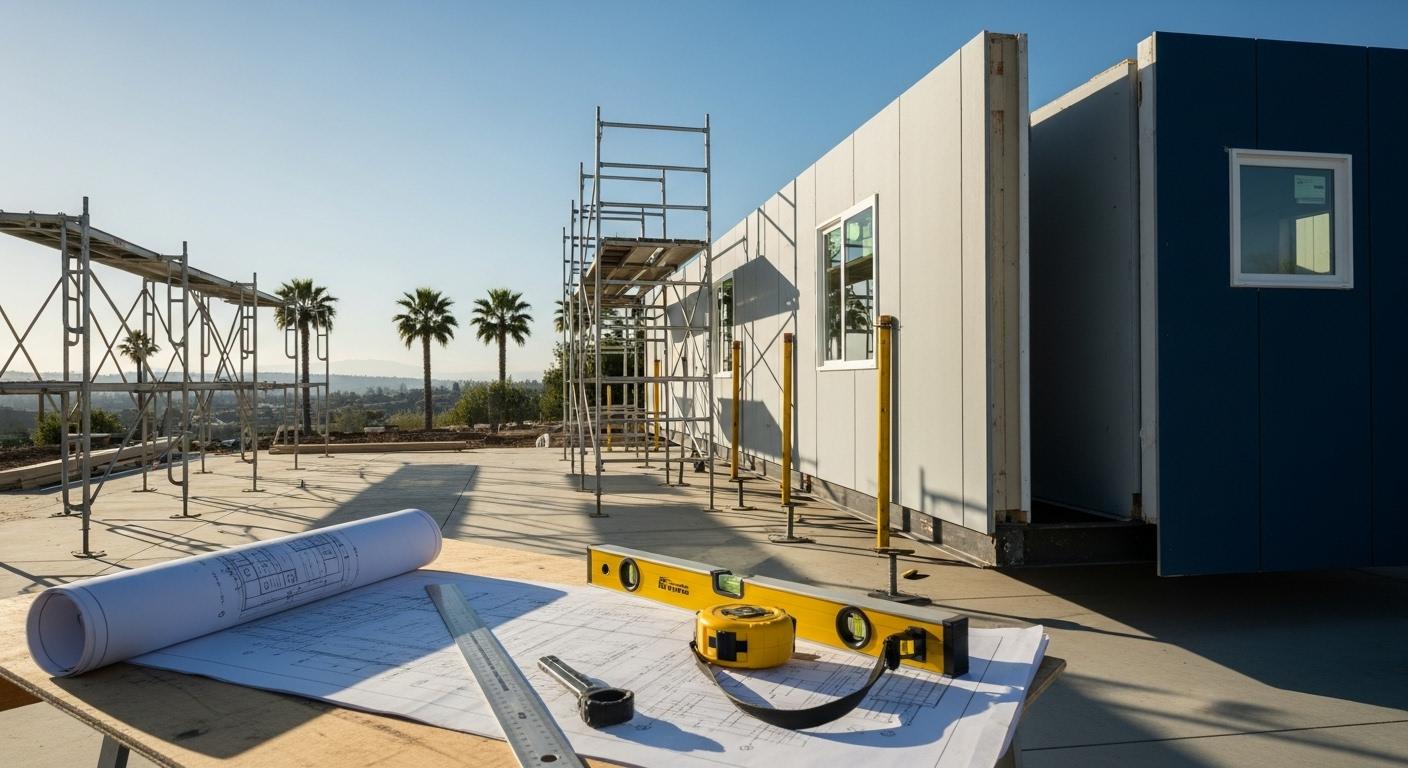
A few years back, a couple in San Jose decided they’d had enough of the endless delays and ballooning costs of traditional homebuilding. So they went prefab a sleek, energy-efficient home delivered in sections straight from a factory. Everything seemed smooth sailing until they ran into a wall of red tape: California’s building codes. Suddenly, they were tossing around terms like “Title 24,” “HCD certification,” and “local jurisdiction.” Sound familiar? You’re definitely not the only one.
Prefab homes are popping up all over California from the suburbs of Los Angeles to quiet stretches near Sacramento offering a faster, often greener way to build. But even though the walls might come from a factory, every prefab still has to meet California’s famously strict regulations before anyone can call it home. This guide lays out those rules in plain English, so you can start your project with a little more confidence and hopefully, a lot fewer headaches.
Understanding Prefab Homes and How They Differ from Traditional Homes
The term “prefab home” covers a few different builds: modular homes (made in box-like sections), panelized homes (built from large wall panels), and manufactured homes (sometimes called mobile homes). Each category has its quirks, but they all share one big thing in common the bulk of the construction happens inside a factory.
That controlled environment means fewer weather delays, tighter quality control, and less wasted material. It’s a big reason prefab construction has gained so much traction, not only for homes but also for ADUs and short-term rentals in cities like San Francisco and L.A.
But here’s the thing: no matter how advanced the factory setup, once those modules hit your site, they’re subject to local building permit requirements just like any other structure. That means inspections for the foundation, utility hookups, ceiling height, and zoning rules under your city or county’s jurisdiction. In short, what happens in the factory doesn’t stay in the factory.
Overview of California’s Building Code Framework
California doesn’t mess around when it comes to building codes and honestly, that’s for good reason. The California Building Standards Commission (CBSC) oversees one of the most detailed regulatory systems in the country. All of those rules live under Title 24 of the California Code of Regulations.
Title 24 covers everything from earthquake safety to fire protection to accessibility. For prefab homes, there are four main areas you’ll want to understand:
- Structural Safety: Making sure modules can handle seismic forces especially important in quake-prone areas like San Jose or Sacramento.
- Fire Safety: Using materials that meet wildfire zone requirements.
- Energy Efficiency: Following Title 24 Part 6 rules on insulation, HVAC systems, and overall energy performance.
- Accessibility: Ensuring doorways, bathrooms, and entryways meet universal access standards.
The CBSC updates these codes every three years through what’s called the triennial revision cycle. If you’re building or adding an ADU, it’s worth double-checking which version your local government is enforcing. Staying up to date can save you from costly mid-project changes later.
Factory Construction Standards: HCD vs Local Jurisdiction
This is where things get a bit tricky. In California, the Department of Housing and Community Development (HCD) regulates what happens inside the factory. They make sure each modular unit meets state-level safety standards before it ever leaves the production floor.
Once approved, a module gets an HCD insignia label basically its stamp of legitimacy. But here’s where many homeowners get tripped up: while HCD certifies the factory work, your local city or county still has to inspect everything done on-site the foundation, utility hookups, finishing touches before granting a final occupancy permit.
So coordination really matters. The manufacturer, contractor, and local building department all need to be in sync. Miss one inspection or forget a document, and your project could be delayed for weeks. Keep close tabs on every permit from grading to site prep so nothing falls through the cracks.
Energy Efficiency & Sustainability Requirements under Title 24
If prefab homes have a secret weapon, it’s energy efficiency. Under Title 24 Part 6 the Energy Code California sets some of the toughest standards in the country. These cover everything from wall insulation to HVAC performance to lighting efficiency.
Most prefab manufacturers already build tight, well-sealed modules that naturally reduce air leaks (a huge plus). Add solar readiness requirements from the post‑2020 updates yes, new homes must include solar setups or at least be wired for them and prefab homes often end up ahead of the game when it comes to sustainability.
Then there’s CALGreen under Part 11 of Title 24. It promotes things like water-saving plumbing fixtures and sustainable building materials. Many prefab builders already include these features by default, which saves time during inspections and helps meet local requirements across the state from San Diego to Sacramento’s rural outskirts.
Zoning Laws & Permitting Process for Prefab Installations
Zoning might not sound exciting, but it can make or break your project. Every city enforces its own rules about setbacks (how far your home must be from property lines), height limits, lot coverage, and parking especially if you’re adding an ADU or planning short-term rentals.
Most projects will need permits for things like:
- Foundation work
- Utility hookups
- Transportation and installation
- Zoning verification
Practical Tips for Homeowners & Builders Navigating Compliance
Yes, the regulations can look intimidating. But with some structure and planning, you can get through it smoothly. Here’s how:
- Pick the right manufacturer: Choose an HCD-approved builder familiar with California’s codes. They’ll provide all the necessary documentation for each module before it arrives on-site.
- Stay organized: Keep a running checklist of every permit from grading to final inspection to avoid those last-minute “why isn’t this approved yet?” moments.
- Communicate constantly: Keep open lines between your builder, installers, and local inspectors. Even small misunderstandings can cause big delays.
- Double-check paperwork: Most delays happen because of missing signatures, outdated forms, or misaligned paperwork. Make sure everything’s current before submission. Many counties now use digital portals, which helps but only if your uploads are complete.
- Use official resources: Bookmark the CBSC and HCD Factory-Built Housing Program websites. They post real-time updates, code changes, and helpful tables for everything from ceiling height limits to energy efficiency thresholds. A little research early on can save you expensive redesigns later.
A Final Thought
If there’s one thing to remember about California’s prefab home codes, it’s this: the rules aren’t there to make your life harder. They’re there to make homes safer, stronger, and more efficient places we actually want to live in for years to come. With the right information, some patience, and good communication, you can absolutely navigate the process. And when you finally step into that finished, code-compliant, beautifully built home yeah, it’ll be worth it.
