



The Promise of Prefab Speed vs. the Reality on Site
Somewhere near the edge of a busy city say New York a sleek modular building sits half-finished. Inside a nearby warehouse, its twin modules gleam under bright lights, perfectly assembled and waiting to be delivered. The construction project manager checks the schedule: “Factory production is done on time.” Yet weeks pass before those modules ever touch the foundation. What happened?
That gap between what happens in a controlled factory environment and what unfolds on-site is where many prefab projects stumble. Prefabrication, after all, is often celebrated for its efficiency fast timelines, tidy assembly lines, and predictable costs that promise to outpace traditional construction methods. In theory, while one team pours concrete foundations on-site, another assembles bathroom pods or steel frames in a clean, climate-controlled environment hundreds of miles away. It sounds almost symphonic.
But even in modular construction’s precise world where measurements are tight and processes standardized delays creep in once those modules leave the factory gates. The issue isn’t capability; it’s coordination. Factory time doesn’t always match site time. Understanding why these disconnects happen helps explain why prefab homes and modular buildings often run behind schedule despite their streamlined reputation.
Design Freeze and Late Revisions: When Decisions Lag Behind Production
If you’ve ever tried to change your coffee order just as the barista starts pouring milk you’ll recognize this problem instantly. Factories thrive on fixed inputs and predictable sequences. In modular construction projects, every wall panel, fixture, or electrical layout depends on final drawings well before production begins.
But real-world design processes rarely behave so neatly. Clients may request subtle tweaks a window shifted for better light or an upgraded kitchen finish after fabrication has started. Even small revisions can ripple through entire production lines like dominoes tipping over each other in slow motion.
This tension between customization and standardization lies at the heart of many prefab delays. The more flexibility clients demand, the harder it becomes for manufacturers to keep schedules intact. That’s why experienced project managers emphasize early design sign-offs and disciplined communication between architects, engineers, and factory teams. In most cases, locking down decisions early maintains momentum and saves both time and labor cost down the road.
Permitting and Inspection Bottlenecks: Paperwork Meets Precision Manufacturing
The construction industry loves rules or at least it must live with them. Local building codes ensure safety but weren’t always written with off site construction in mind. When a modular home or prefabricated component rolls out of a factory in another state (or even another county), regulators sometimes scratch their heads: Who inspects what? And when?
This bureaucratic uncertainty leads to delays that no amount of automation can fix. Some municipalities still treat modular units as if they were traditional buildings assembled piece by piece on-site, requiring multiple redundant inspections once modules arrive even if they’ve already passed rigorous quality control inside a certified factory setting.
A few forward-thinking cities have adapted more flexible frameworks for modular building approvals but uneven adoption across the United States means timing mismatches remain common. Successful prefab teams engage regulators early, clarifying which inspection occurs where so finished modules aren’t left waiting idly for paperwork to catch up with progress.
Site Readiness: Where Construction Sequencing Breaks Down
No matter how immaculate those factory-built modules appear under fluorescent lights, they can’t be installed until something very analog happens: the foundation must be ready. That sounds obvious but in practice it’s one of prefab’s biggest choke points.
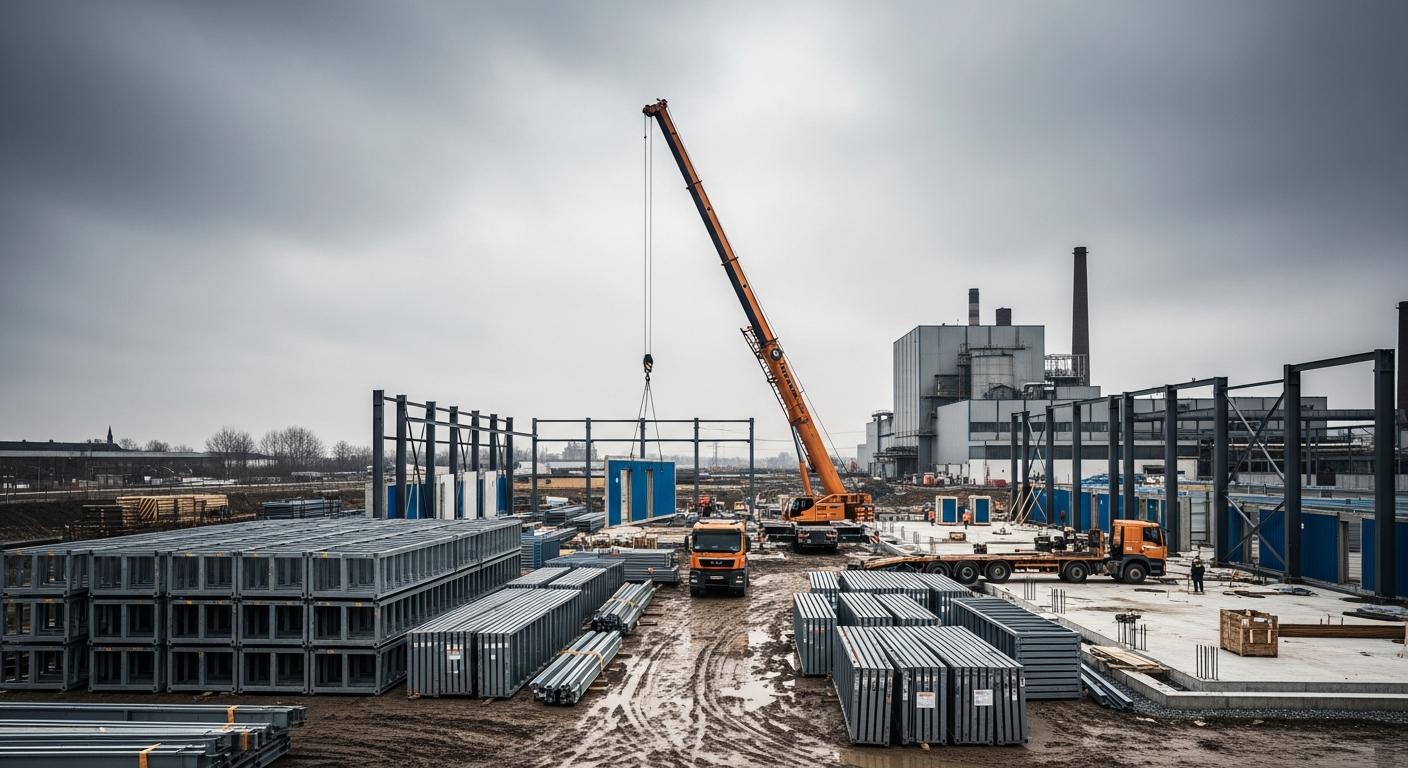
A storm might delay excavation crews; utility lines might take longer than expected; an access road may need reinforcement before heavy trucks can deliver oversized loads. While factory work stays on track inside its controlled environment, site preparation often remains vulnerable to weather delays or subcontractor shortages a familiar challenge across all forms of traditional construction.
When timing slips here, completed modules become expensive inventory sitting idle at storage yards or along transport routes. To some degree, this is where prefab success hinges not just on speed but synchronization the seamless handoff between off-site precision and on-site readiness is what separates smoothly executed projects from disjointed ones.
Logistics and Transportation Hurdles: Moving Buildings Isn’t Like Shipping Furniture
If you’ve ever watched an oversized load crawl down a highway escorted by flashing vehicles you’ve seen part of the challenge first-hand. Delivering prefabricated components or full-size modular units from factory floor to job site requires logistical choreography worthy of a Broadway production (and sometimes set right in Manhattan streets).
Special permits are needed for wide loads; bridge clearances must be checked; routes are timed around rush-hour bans or weather windows that can close suddenly with high winds or snow squalls. Each step introduces potential days or weeks of delay into what looked like a simple project timeline on paper.
Urban sites present their own puzzles: cranes need setup space that busy city blocks rarely offer; rural locations face opposite issues like poor roads or long travel distances from suppliers. Coordinating haulers, crane operators, police escorts, and installation crews requires near-perfect timing and when one element falters, everything downstream waits.
Supply Chain Ripple Effects: One Missing Component Can Halt a Whole Line
The past few years taught us plenty about supply chain fragility and prefab factories felt those tremors sharply. Unlike traditional methods where builders might source alternate materials locally when shortages hit, modular factories rely on pre-engineered assemblies that demand precise components: specific insulation densities, branded mechanical systems, exact fastener types designed for controlled-environment installation.
If one supplier misses delivery by even two days say a shipment of steel connectors gets stuck at port the entire assembly line may pause because substitute parts could compromise certifications or structural integrity tests tied to building codes.
Diversifying suppliers helps cushion these disruptions but adds complexity and cost pressures that many smaller manufacturers struggle to absorb. Still, some forward-looking firms now maintain buffer inventories for critical items or partner closely with vendors who understand just how unforgiving prefab scheduling can be within tight project timelines.
Communication Gaps Between Stakeholders: Too Many Timelines, Not Enough Alignment
You’ll often hear developers talk about milestones while manufacturers talk about production slots and somewhere between those two rhythms lies confusion waiting to happen. Modular projects involve overlapping layers of accountability: financiers expect returns based on projected occupancy dates; contractors focus on field readiness; factories track throughput rates inside their assembly lines.
Without integrated communication tools linking everyone from architect to crane operator it’s easy for assumptions to diverge silently until schedules collide head-on later in the process.
The Modular Building Institute has long advocated integrated project delivery models precisely because they align incentives across stakeholders early rather than leaving coordination until panic sets in midstream. Shared accountability encourages transparency everyone sees updates in real-time instead of relying solely on weekly reports that trail reality by days or weeks.
Toward Better Timing: What Successful Prefab Teams Do Differently
If there’s one thing seasoned builders learn quickly about prefabrication it rewards holistic thinking more than heroic effort at any single stage. Treating scheduling as one continuous ecosystem rather than discrete silos makes all the difference between success stories told at conferences and cautionary tales whispered around job sites.
- Create connected timelines: Link design studios with factories through shared digital dashboards so revisions appear instantly across teams instead of trickling via email threads lost overnight.
- Add realistic buffers: Weather delays will happen; shipping hiccups will occur; permitting reviews take longer than anyone hopes budgeting honest slack keeps “unexpected” downtime from derailing budgets entirely.
- Nurture relationships: Collaboration with regulators often yields faster inspections later because mutual trust replaces bureaucratic hesitancy a lesson proven repeatedly across successful case studies within modular construction projects nationwide.
- Pilot small first: Starting with compact prototypes lets teams refine workflows before scaling up complex multi-story modular buildings where stakes (and penalties) grow exponentially when something slips even slightly off schedule.
The encouraging news? Every delay hides data pointing toward refinement opportunities the next iteration nearly always runs smoother because lessons embed themselves deeply into process culture rather than fading into post-project fog.
A More Realistic Kind of Speed
No system eliminates uncertainty entirely not even manufacturing-based construction methods built around precision jigs and robotic welders operating inside spotless facilities free from rain or wind gusts that torment traditional methods outside. Yet acknowledging where unpredictability creeps back into supposedly predictable systems makes them stronger over time.
The magic of prefabrication was never just about moving faster it was about working smarter through control and repeatability while maintaining architectural creativity within disciplined boundaries.
A More Realistic Kind of Speed
When coordination catches up with technology when site crews know exactly when trucks roll out; when inspectors approve drawings digitally before physical delivery the dream starts matching reality again.
And perhaps someday soon those polished modules waiting patiently near New York won’t have to linger quite so long before finding their permanent place beneath open sky a small victory not only for scheduling charts but for confidence in how we build differently across an evolving construction industry forever learning new ways to balance precision with patience.
