



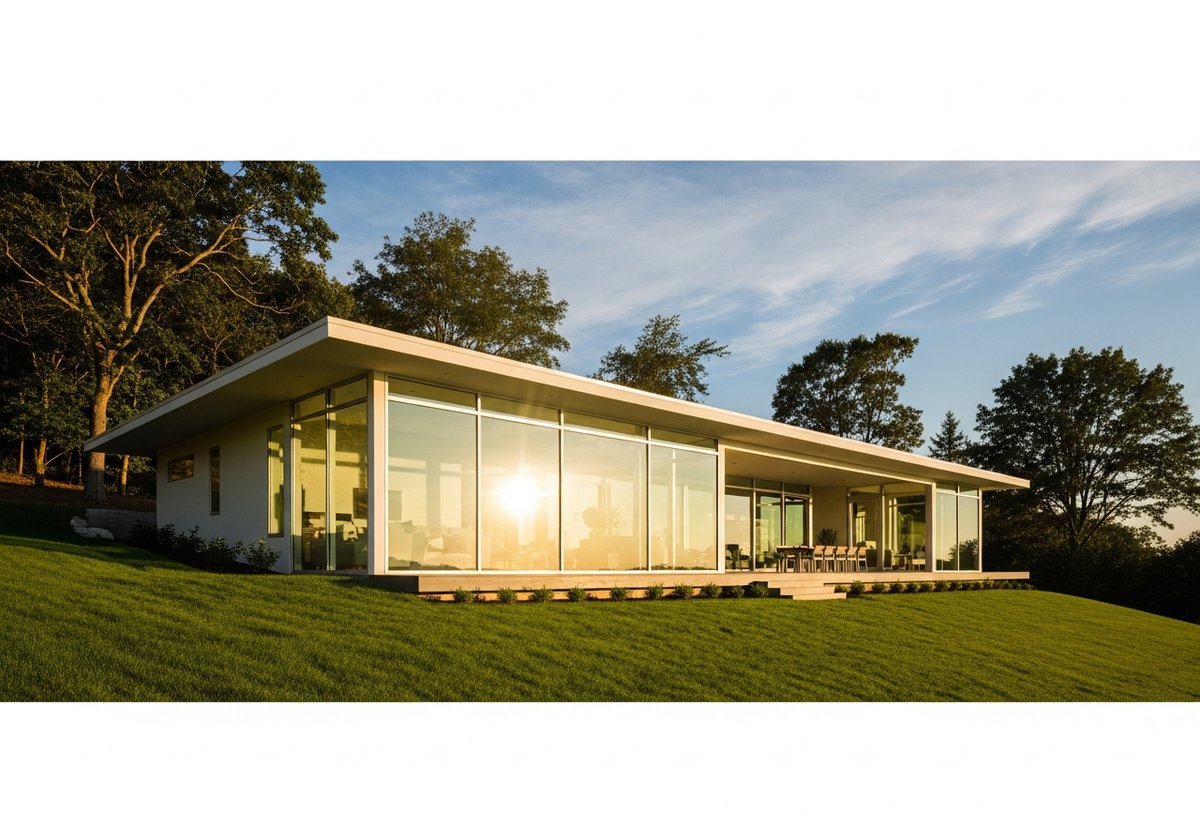
There is a moment that every homeowner knows. You walk into a room and something feels right – the space breathes, colors pop, and you feel genuinely at ease. Nine times out of ten, that feeling traces back to one source: natural light. It is free, it is powerful, and in the world of prefab homes, it is increasingly a design priority that separates a good build from a great one.
Prefabricated housing has come a long way from the boxy, dimly lit structures that many people still picture. Today’s modular and panelized homes are engineered with serious architectural intention, and natural light is central to that conversation. But getting light right in a prefab home involves more than just adding a bigger window. It requires deliberate choices made early in the design process – choices that touch on orientation, floor plan, glazing technology, and even roof geometry.
Why Natural Light Deserves a Seat at the Design Table
Light does more than illuminate a room. Research consistently links natural daylight exposure to improved mood, better sleep, higher productivity, and reduced energy bills. From a sustainability angle, maximizing natural light reduces reliance on artificial lighting, which accounts for roughly 15 percent of household electricity use in the United States.
For prefab homes specifically, the stakes are slightly higher. Because modular units are manufactured in controlled factory settings and then assembled on site, window and skylight placements are locked in at the design stage. You cannot easily knock a hole in a load-bearing wall six months after delivery. This means that decisions made on a design plan – sometimes viewed casually as aesthetic choices – carry real, long-term consequences for how a home feels and performs.
Orientation: The Foundation of a Light-Filled Prefab
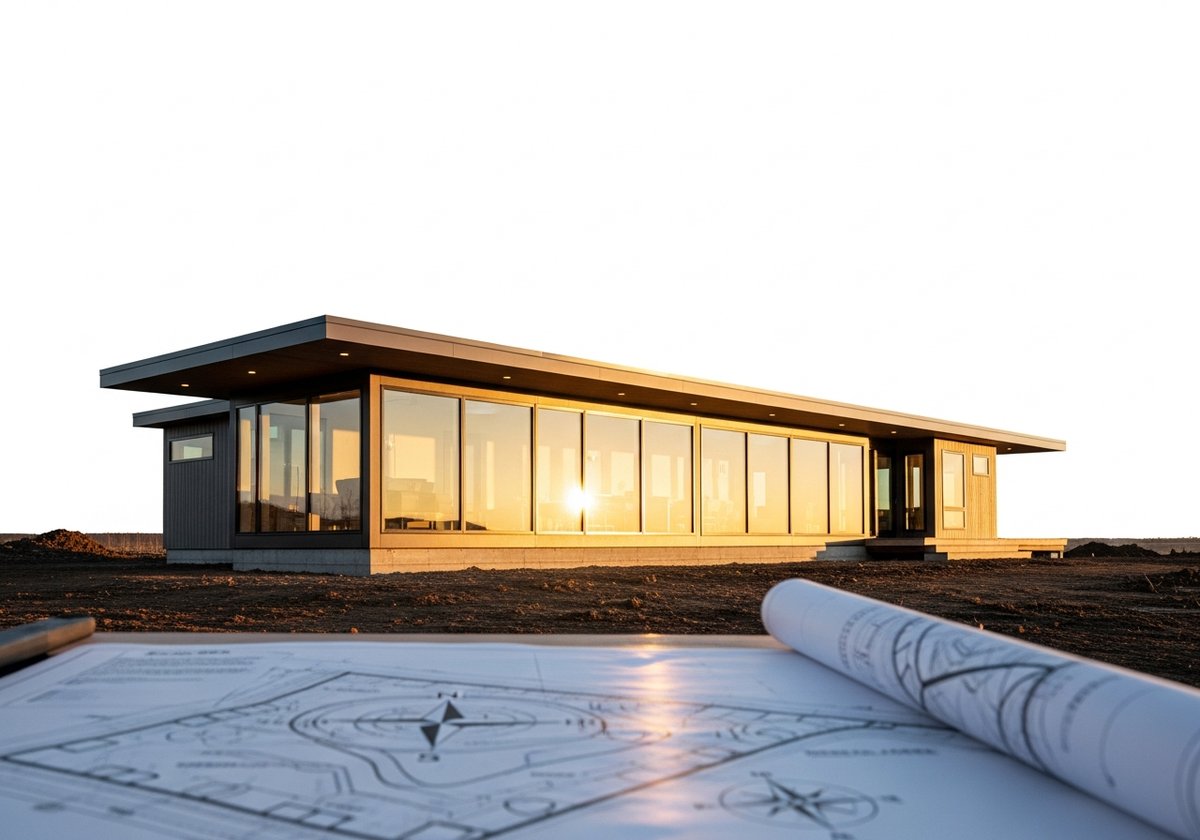
Before you talk about windows or skylights, you need to talk about which way a building faces. Passive solar design depends almost entirely on orientation. In the Northern Hemisphere, south-facing glazing captures low winter sun while roof overhangs block the higher summer sun. The result is warmth when you need it and shade when you do not.
Prefab builders who take passive solar seriously will orient living areas and main glazing toward the south, with bedrooms and service spaces facing north or east. Modern prefab companies apply this with precision tools like solar path modeling software. If you are exploring 10 prefab home design trends for 2025, passive solar integration keeps appearing near the top of the list, and for good reason.
When siting your prefab, work with your builder to analyze the specific solar angles for your latitude and lot. Even a 20-degree rotation from the optimal south-facing axis can meaningfully reduce passive solar gain and natural light quality throughout the day.
Windows: More Than a View
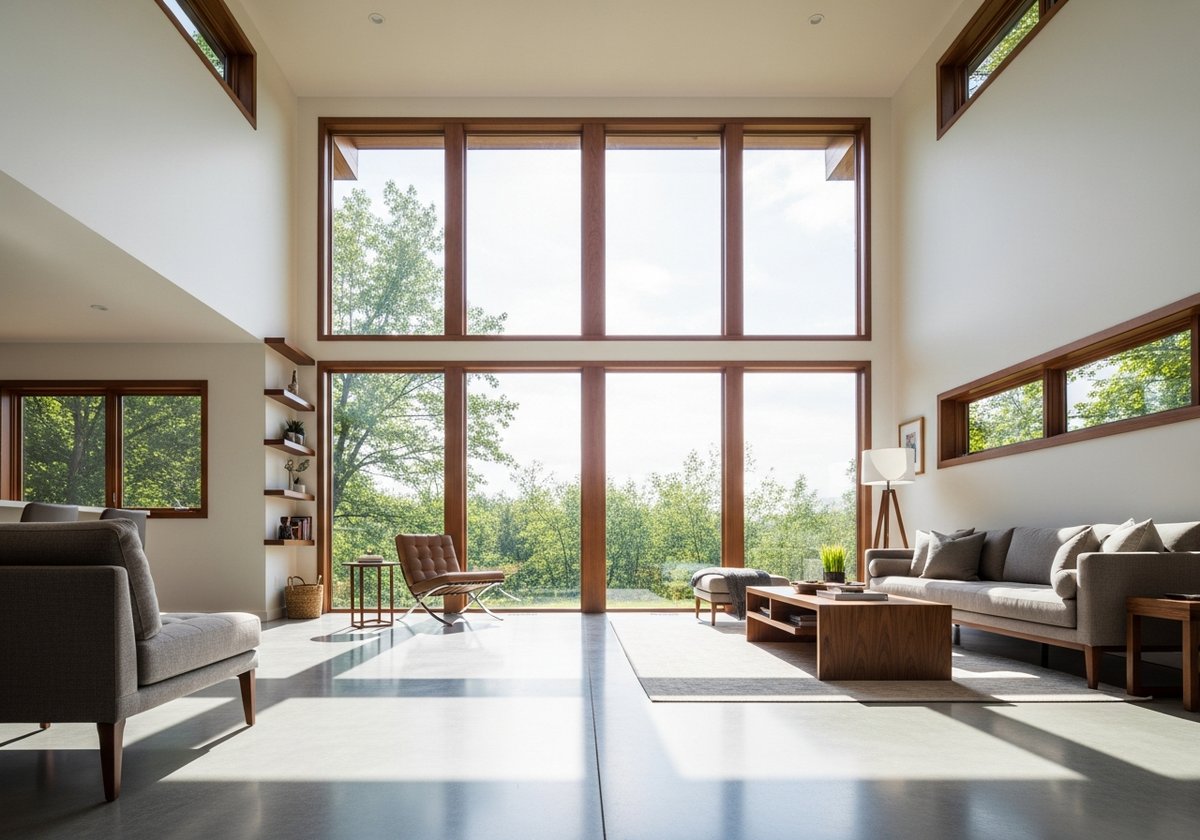
Window placement, size, and glazing type are where passive solar theory meets practical design. The general principle is to use larger windows on south-facing walls and smaller, more strategic windows on north-facing walls to minimize heat loss without sacrificing light quality.
Floor-to-ceiling glazing panels dramatically increase the sense of openness and connection to the outdoors. Triple-pane low-emissivity (low-E) glass has made it possible to have expansive glazing without the energy penalty that large windows once carried. Low-E coatings reflect infrared heat while allowing visible light to pass through, letting in daylight while keeping conditioned air inside.
Clerestory windows – horizontal bands of glazing positioned high on walls, above eye level – are another underused tool. They bring in diffused light from above, which is softer and more evenly distributed than direct window light, while preserving wall space for furniture.
If you are designing a smaller footprint, a well-placed set of windows in a 400-square-foot unit can make the space feel twice its size. For inspiration, the interior design ideas for small ADUs and tiny prefabs offer practical strategies for balancing light, space, and livability at a compact scale.
Skylights: Light From Above
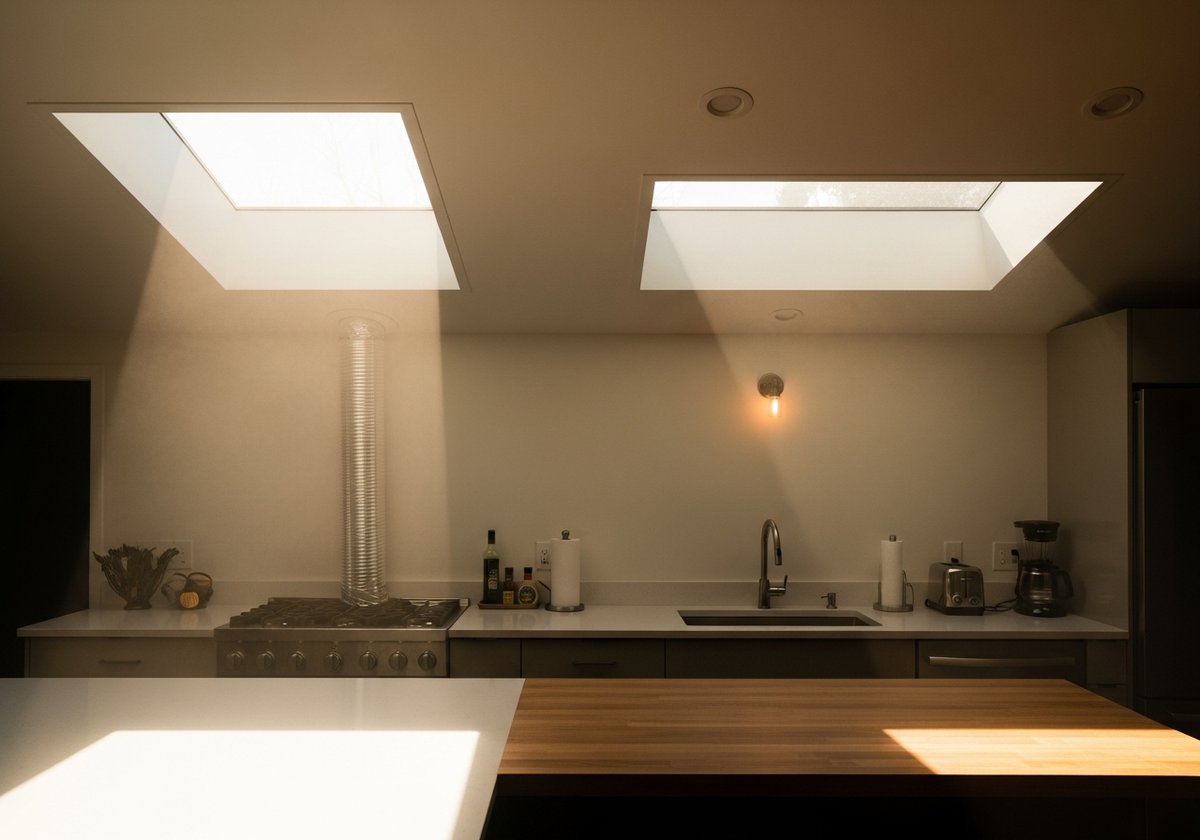
Skylights are one of the most effective tools for bringing natural light into spaces that windows cannot easily reach – interior hallways, bathrooms, stairwells, and kitchen cores. They admit up to three times more light per square foot than a vertical window of the same size, because they face the sky directly.
In prefab construction, skylights need to be factored into the roof panel design at the factory stage. This is actually an advantage: factory installation reduces the risk of leaks compared to field-cut skylights, and manufacturing precision ensures tight seals and proper flashing details.
Tubular skylights are a compact alternative for spaces where a full skylight is not structurally feasible. A small dome on the roof captures sunlight and channels it through a reflective tube into the room below, producing results that look almost like a recessed light fixture but run entirely on daylight.
One caution: skylights on flat or low-slope roofs in hot climates can generate significant heat gain in summer. Specify glazing with a solar heat gain coefficient (SHGC) appropriate for your climate zone, and consider operable skylights that can be opened for ventilation when temperatures rise.
Open Floor Plans and the Flow of Light
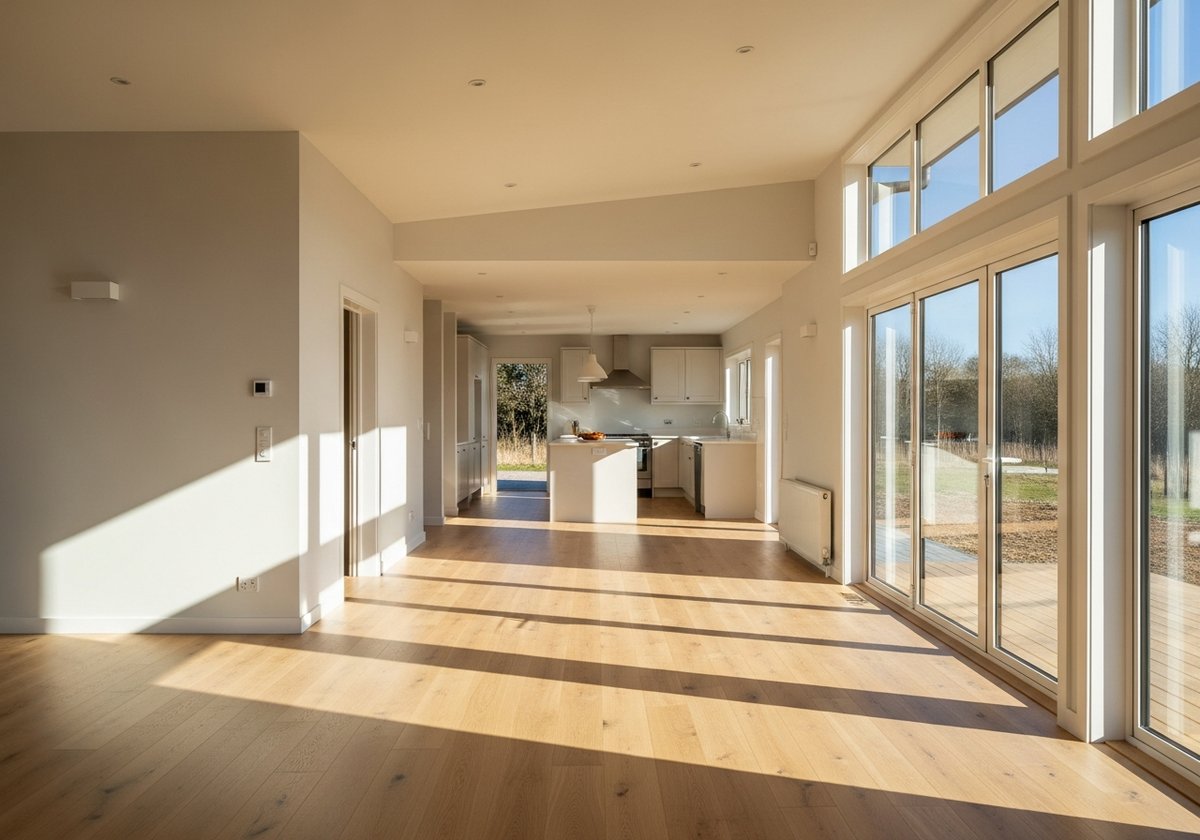
Natural light travels. A well-placed south-facing window can illuminate not just the room it faces but also adjacent spaces, provided the floor plan allows for it. Open floor plans in prefab homes are not just a stylistic trend – they are a functional strategy for distributing daylight deeper into a building’s footprint.
Removing interior walls between kitchen, dining, and living areas allows light to move freely across the entire zone. Glass partitions and interior transoms serve a similar purpose where some acoustic separation is desired – a topic worth exploring in the guide to real soundproofing expectations in prefab homes.
Light-colored interior finishes also amplify the effect. White and off-white walls, pale timber ceilings, and polished concrete floors reflect daylight rather than absorbing it, bouncing light into corners that direct sunlight cannot reach.
Bringing It All Together: A Holistic Light Strategy
The best prefab home lighting strategies are integrative, beginning with orientation and passive solar logic, then layering in glazing placement, floor plan openness, interior reflectance, and finally artificial lighting as a complement rather than a substitute.
Prefab builders like Connect Homes have made this integration a signature part of their design language, engineering modular units with expansive glazing and open plans as structural defaults, not upgrades. For a closer look, the Connect Homes California builder profile is a useful reference for understanding how design and manufacturing intersect in practice.
There is also an energy efficiency dimension worth underscoring. Homes well-designed for natural light typically perform better on energy assessments and may qualify for green building incentives.
Frequently Asked Questions About Natural Light in Prefab Homes
Can I customize window placement in a prefab home?
Yes, though the degree of flexibility depends on the builder and construction method. Panelized and custom modular builders typically allow significant customization. Kit-based or highly standardized manufacturers may offer limited options. Always clarify this during the design phase, before manufacturing begins, since changes after production are expensive or impossible.
Are skylights a good idea in all climates?
- In cool, overcast climates, skylights are highly effective for bringing in diffused light and are rarely a heat problem.
- In hot, sunny climates, skylights need carefully selected low-SHGC glazing to avoid overheating interior spaces.
- Operable skylights add ventilation benefits in mixed climates where both heat gain and natural cooling are priorities.
Does an open floor plan really improve natural light distribution?
Yes, significantly. Interior walls block the path of daylight from exterior glazing to interior spaces. Open plans allow light to travel across larger zones, reducing dark corners and the need for supplemental artificial lighting during daylight hours.
What glazing specifications should I ask my prefab builder about?
- U-factor: measures heat loss through the window; lower is better for cold climates.
- Solar heat gain coefficient (SHGC): lower is better for hot climates, higher can be useful in cold climates for passive heating.
- Visible light transmittance (VLT): higher values mean more daylight.
- Low-E coatings: manage heat transfer while maintaining light transmission.
How does passive solar design differ from just having large windows?
Passive solar design is a system. It combines building orientation, window placement, thermal mass, and shading elements to manage solar energy throughout the year. Large windows without these other components can result in overheating in summer and heat loss in winter.
Will more windows make my prefab home harder to keep private?
Not necessarily. Strategic placement using clerestory windows, high transoms, or side-positioned glazing can bring in abundant light without exposing living areas to direct sightlines. Frosted or textured glass is another option for bathrooms and other spaces needing both light and privacy.
Does natural light affect the resale value of a prefab home?
Yes. Real estate research consistently finds that bright, well-daylit homes sell faster and at higher prices than comparable homes with poor natural light. Buyers perceive daylit spaces as larger, more welcoming, and healthier – all of which translate directly into market value.
