



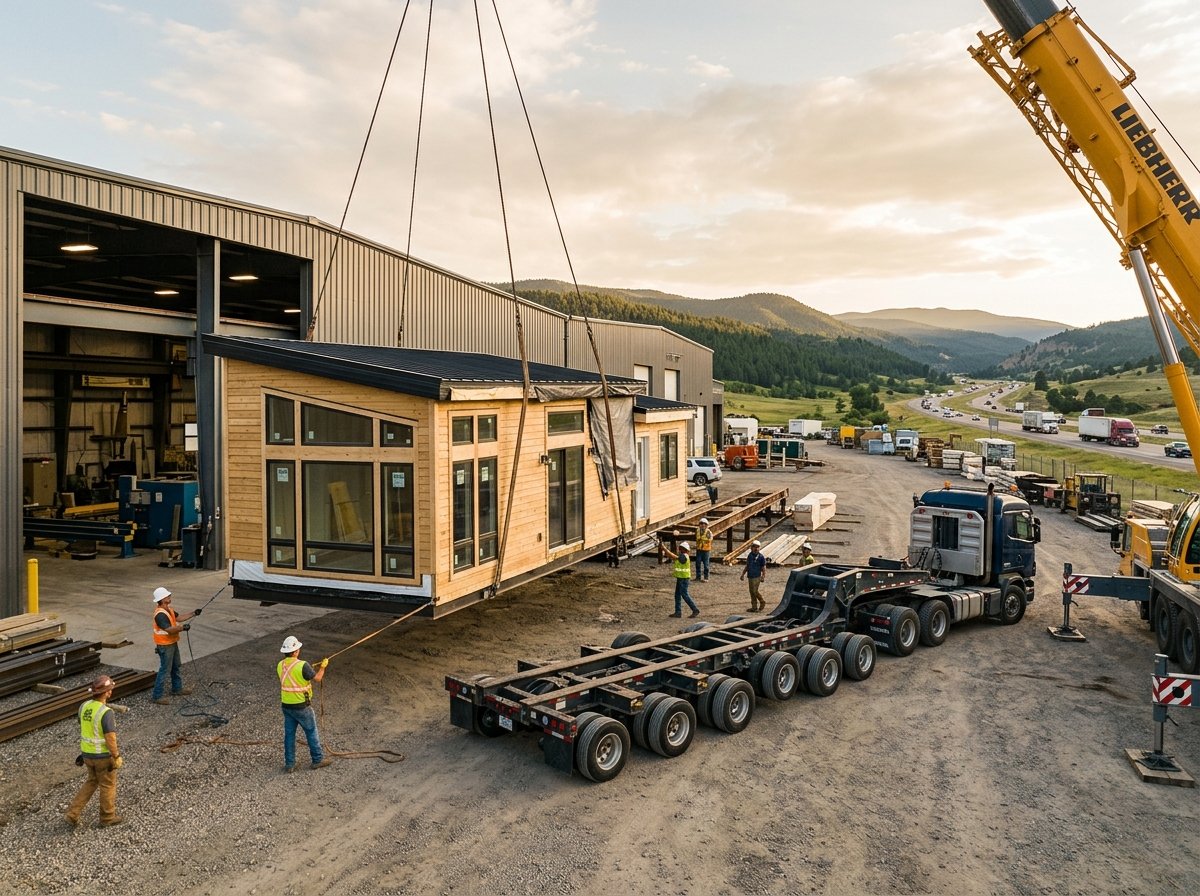
Factory-built housing promises speed and predictability, but the final invoice often hinges on a variable buyers rarely control: how many miles the modules travel from the plant to the foundation. Delivery distance shapes everything from base freight rates to crane rental windows, and understanding those mechanics helps buyers negotiate realistic budgets. While gig-economy delivery platforms debate how far drivers should travel for a single order, prefab manufacturers operate under entirely different logistics constraints. Hauling a 1,200-square-foot module cross-country isn’t a scaled-up local drop. It triggers permit cascades, escort vehicle rules, and dimensional restrictions that reshape project economics entirely.
How Freight Pricing Works for Prefab Modules
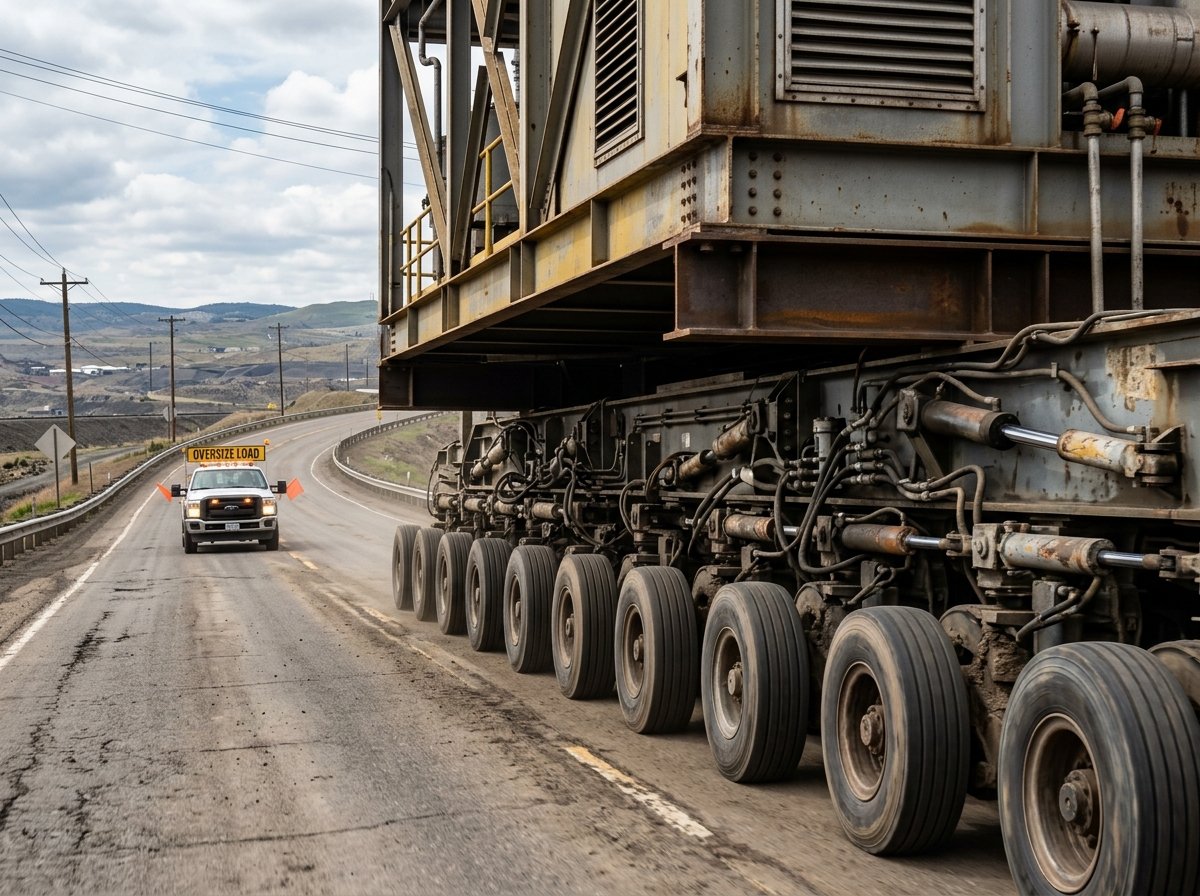
Prefab transport isn’t standard flatbed trucking.
Modules are oversize loads. They routinely exceed 12 to 14 feet in width and need specialized trailers with hydraulic steering. The U.S. Department of Energy notes that modular construction can reduce site energy use by up to 67 percent compared to conventional building, but those savings depend on modules arriving intact and on schedule. Distance is the primary threat to that schedule.
Freight charges for prefab units typically combine several line items rather than a simple per-mile rate. Base hauling fees cover driver time, fuel, and equipment depreciation. Beyond a certain radius, usually between 100 and 300 miles from the factory, carriers add distance-based surcharges. These aren’t linear; a 500-mile haul costs disproportionately more than five 100-mile hauls because of regulatory thresholds.
The Federal Motor Carrier Safety Administration governs hours-of-service rules that limit commercial drivers to 11 hours of driving time after 10 consecutive hours off duty. For oversize loads, which travel slower and require more frequent stops for permit verification, this constraint bites harder. A module moving 800 miles may require two drivers or an overnight layover, doubling personnel costs without doubling distance.
Regulatory Thresholds That Redefine Cost
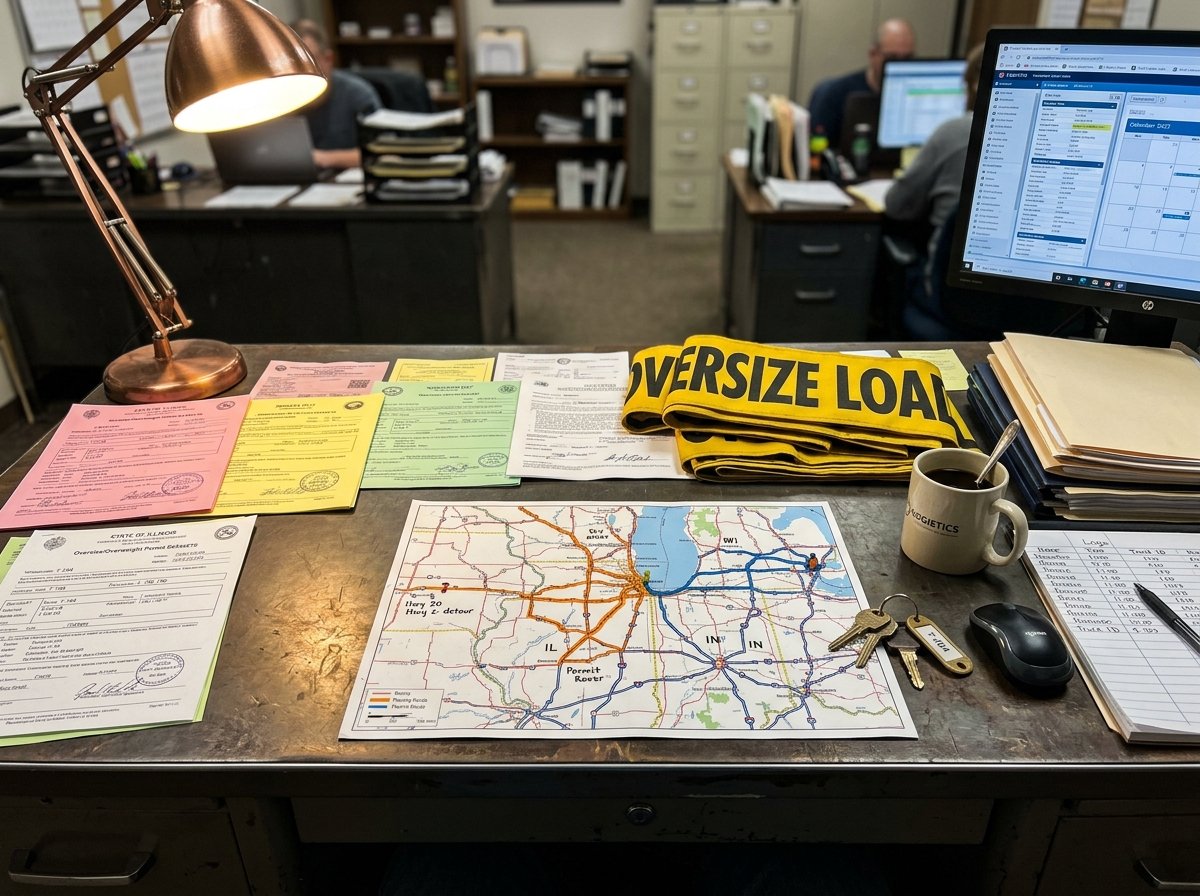
State-by-state variation in oversize load rules creates invisible price cliffs. California, which processes thousands of modular shipments annually through its Housing and Community Development department, requires separate permits for each jurisdiction traversed. Per Title 13, Division 2 of the California Code of Regulations, any load wider than 8 feet 6 inches needs a Caltrans transportation permit. Pilot vehicles may be mandatory depending on route and time of day.
A factory in Oregon delivering to Northern California faces different compliance costs than one in Nevada delivering to the same destination. Same mileage, different rulebooks. Route surveys, utility clearance checks, and law enforcement notification pile on fixed costs. They shrink per mile but never disappear.
The California HCD’s 2020 publication “Factory-Built Housing: A Guide for Buyers and Owners” warns buyers to check whether quoted delivery prices cover all permit fees or just base transport. That gap matters. A single oversize load’s permit costs can swing wildly by jurisdiction, and predicting them ahead of time is often guesswork.
Factory Direct Delivery Radius Pricing Models
Factories price geography through several standard structures. Know which one governs your project, or budget shock follows.
- Zone-based flat rates: Concentric radius bands, each carrying a fixed charge. Breakpoints typically land at 100, 250, and 500 miles.
- Mileage-plus formulas: A base fee covers loading and the first 50 miles; per-mile increments stack on top. Nearby buyers win. Distant ones pay.
- Third-party logistics partnerships: Some factories contract with regional carriers, passing through negotiated rates with modest markup. Others require buyers to arrange independent transport.
- Volume aggregation programs: Manufacturers with national distribution networks may consolidate multiple orders onto a single convoy, reducing per-unit freight for buyers in remote clusters.
The following table compares delivery cost factors by distance band, based on Federal Highway Administration oversize load guidance and California HCD modular housing logistics documentation.
| Distance Factor | Local (under 100 mi) | Regional (100-400 mi) | Long-Haul (400+ mi) |
|---|---|---|---|
| Permit complexity | Single jurisdiction | Multi-state coordination | Federal routing, escort vehicles |
| Driver hour limits | Single shift typical | May approach 11-hour limit | Team drivers or layover required |
| Route flexibility | Multiple road options | Limited by bridge clearances | Pre-surveyed corridor only |
| Weather exposure risk | Low; same-day completion | Moderate; overnight possible | High; multi-day exposure to elements |
| Typical buyer cost structure | Included in base price | Itemized surcharge | Separate logistics contract |
Buyers evaluating long-term ROI should fold these transport variables into total project cost rather than treating delivery as a fixed afterthought. A factory 600 miles away with lower module pricing may not beat a nearer competitor once freight, escorts, and extended crane rental are tallied.
Hidden Distance Costs Beyond the Freight Invoice
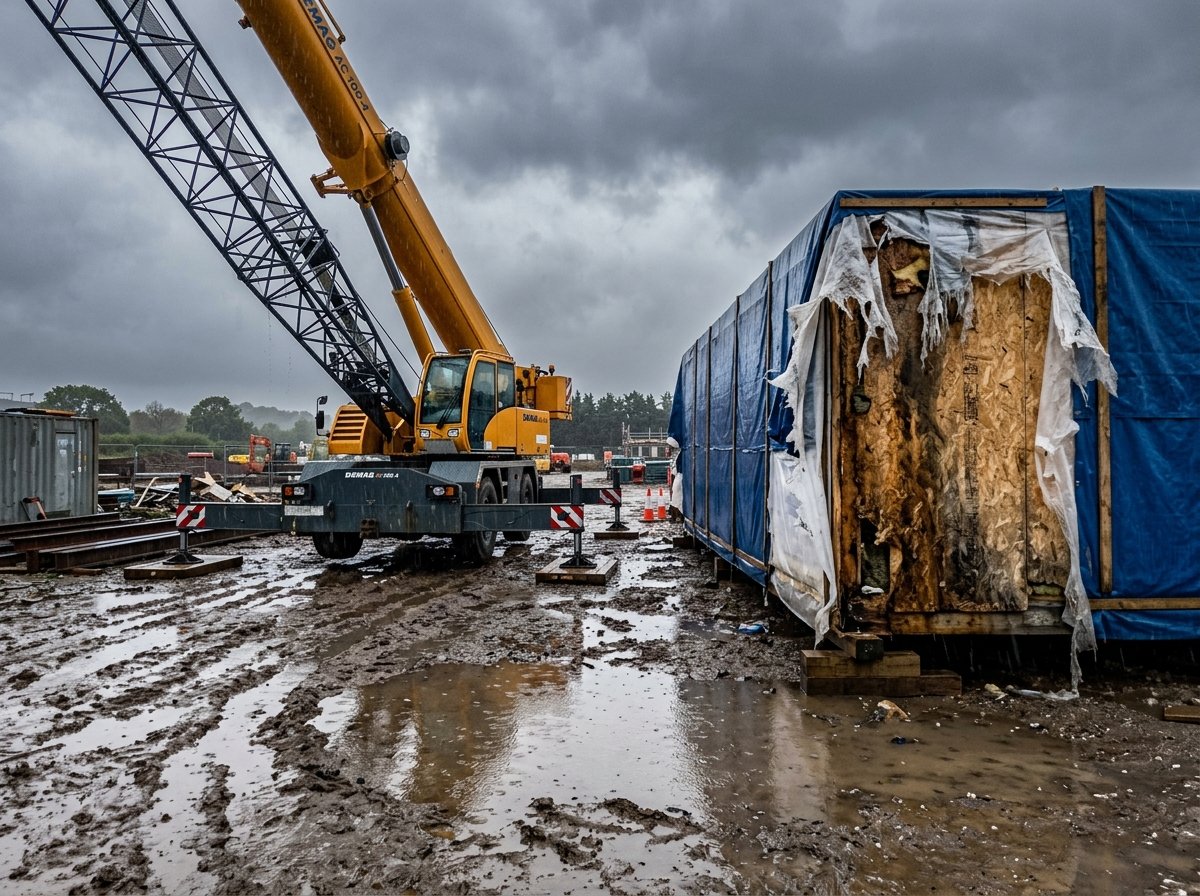
The truck invoice captures only direct transport. Secondary costs accumulate in ways buyers often miss.
- Crane standby time: Modules must be set within hours of arrival to avoid weather or theft exposure. Delays from traffic or permit holds trigger crane rental extensions at hourly rates.
- Module protection: More miles mean more vibration fatigue on interior finishes and joint seals. Extra bracing or climate-controlled transport may be mandatory for sensitive components.
- Insurance valuation: Transit coverage scales with distance and route risk. Remote or mountainous corridors carry higher premiums than interstate highway runs.
- Site crew coordination: A Tuesday morning delivery that slips to Wednesday evening can idle a five-person set crew, turning a one-day operation into a multi-day expense.
These factors explain why some manufacturers decline projects beyond a self-imposed radius despite legal ability to ship nationwide. The reputational risk of weather-damaged modules or missed set windows outweighs the marginal revenue from distant sales.
Strategies for Managing Delivery Distance Costs
Buyers aren’t passive recipients of freight quotes. Several tactics can bend the cost curve.
First, negotiate factory selection into the design phase. If your architect specifies a particular panel system available from only two plants, distance becomes a constraint rather than a variable. Early involvement of the general contractor or modular consultant allows factory options to be weighed against freight impacts.
Second, explore aggregation. Manufacturers sometimes schedule regional delivery clusters, combining orders from multiple buyers to share convoy costs. This requires schedule flexibility but can reduce per-unit freight substantially.
Third, verify what the factory quote includes. Some manufacturers quote “delivered” prices that cover only curbside drop; others include crane set and weather protection. The U.S. Census Bureau’s Construction Spending reports consistently show that transportation and logistics represent a growing share of total construction costs, making this line-item scrutiny essential.
Finally, buyers in remote locations should investigate whether local manufacturers exist at acceptable quality levels. The cost comparison between prefab and traditional construction shifts when freight adds 15 to 20 percent to the prefab total.
Real-World Constraints: How Far Is Too Far?

Practical limits emerge from manufacturer behavior rather than regulation. Most major modular producers serving the continental United States maintain effective delivery radii of 500 to 800 miles for standard projects. Beyond this, specialized logistics firms take over, and pricing becomes bespoke.
Coastal deliveries introduce additional complexity. Modules manufactured inland for Pacific Coast sites must navigate mountain passes with clearance restrictions, or alternatively travel by rail to port and transfer to barge. Each mode change adds handling cost and damage risk. The ENERGY STAR program, administered by the U.S. Environmental Protection Agency and Department of Energy, notes that repeated handling of sealed building envelopes can compromise thermal performance if joint tapes or gaskets shift.
Alaska, Hawaii, and international destinations operate under entirely different economics. Containerized modular units, built to ISO shipping dimensions, sacrifice interior volume for transport compatibility. These aren’t simply smaller versions of domestic modules; they’re engineered for the constraints of maritime logistics from the design stage.
Frequently Asked Questions
Cost and Pricing
How do manufacturers calculate delivery fees for prefab homes?
Manufacturers typically use zone-based or mileage-plus formulas rather than simple per-mile rates. Base fees cover loading, equipment, and initial transit; surcharges activate at distance thresholds where permit complexity and driver hour limits increase. For very long distances, some factories quote freight as a separate line item or require buyer-arranged transport.
Can I negotiate lower transport costs if I live far from the factory?
Negotiation leverage depends on order timing and market conditions. Buyers with schedule flexibility can sometimes join regional delivery clusters that share convoy costs. Others negotiate for factory-staged storage, allowing modules to ship during low-demand periods when carrier rates soften. In all cases, clarity about what the quoted price includes (permits, escorts, insurance) prevents post-contract surprises.
Logistics and Practical Limits
What is the maximum practical distance for prefab home delivery?
Most domestic manufacturers maintain effective delivery radii of 500 to 800 miles for standard oversize modules. Beyond this, specialized carriers and custom routing become necessary, with costs that escalate non-linearly. International or non-contiguous U.S. destinations typically require containerized units designed for maritime or rail transport from the outset.
Do delivery distance limits affect what prefab designs I can choose?
Yes. Wider modules trigger more restrictive permit thresholds, which compound with distance. A 16-foot-wide unit may be feasible for a 100-mile haul but prohibitively expensive for 600 miles due to escort vehicle requirements and route limitations. Some buyers select narrower, multi-piece designs specifically to stay within standard permit classes for long hauls.
How does weather exposure during long transport affect module quality?
Extended transit increases risk of moisture infiltration at panel joints and vibration fatigue on interior finishes. Manufacturers address this through additional bracing, sealed transport wraps, or climate-controlled trailers for high-value components. Buyers should verify weather protection protocols for hauls exceeding one day and confirm that transit insurance covers moisture or handling damage.
Are there parallels between prefab freight and other long-distance delivery services?
The comparison is limited. While consumer services debate operational questions like how far drivers should travel for individual orders, prefab logistics involve multi-ton oversize loads governed by federal hours-of-service rules and state permit systems. The economics of long distance pickup truck delivery jobs or food delivery platforms don’t translate to modular construction, where a single load represents six-figure value and specialized equipment requirements.
Should delivery cost influence my choice between prefab and traditional construction?
For remote sites, absolutely. When freight adds substantial percentage points to total project cost, site-built construction may become competitive despite prefab’s labor and schedule advantages. Buyers should model all-in costs including transport, crane rental, and potential delay contingencies before committing to a factory source. The break-even distance varies by region, module specification, and local construction labor rates.
Sources
- California Department of Housing and Community Development, 2020. “Factory-Built Housing: A Guide for Buyers and Owners.” https://www.hcd.ca.gov/building-standards/docs/FBH_Buyers_Guide.pdf
- California Code of Regulations, Title 13, Division 2. “Transportation of Oversize and Overweight Loads.” https://leginfo.legislature.ca.gov/faces/codes_displayText.xhtml?lawCode=VEH&division=15.&title=&part=&chapter=&article=
- U.S. Department of Energy, Office of Energy Efficiency and Renewable Energy. “Modular Construction and Energy Efficiency.” https://www.energy.gov/eere/buildings/modular-construction
- U.S. Department of Transportation, Federal Motor Carrier Safety Administration. “Hours of Service Regulations.” https://www.fmcsa.dot.gov/regulations/hours-service/summary-hours-service-regulations
- U.S. Census Bureau. “Monthly Construction Spending.” https://www.census.gov/constructionspending
- U.S. Environmental Protection Agency and U.S. Department of Energy. “ENERGY STAR Certified Homes, Version 3.1: Thermal Enclosure System Rater Checklist.” https://www.energystar.gov/newhomes
- Federal Highway Administration, Office of Freight Management and Operations. “Oversize/Overweight Vehicle Routing.” https://ops.fhwa.dot.gov/freight/infrastructure/routing/index.htm
