



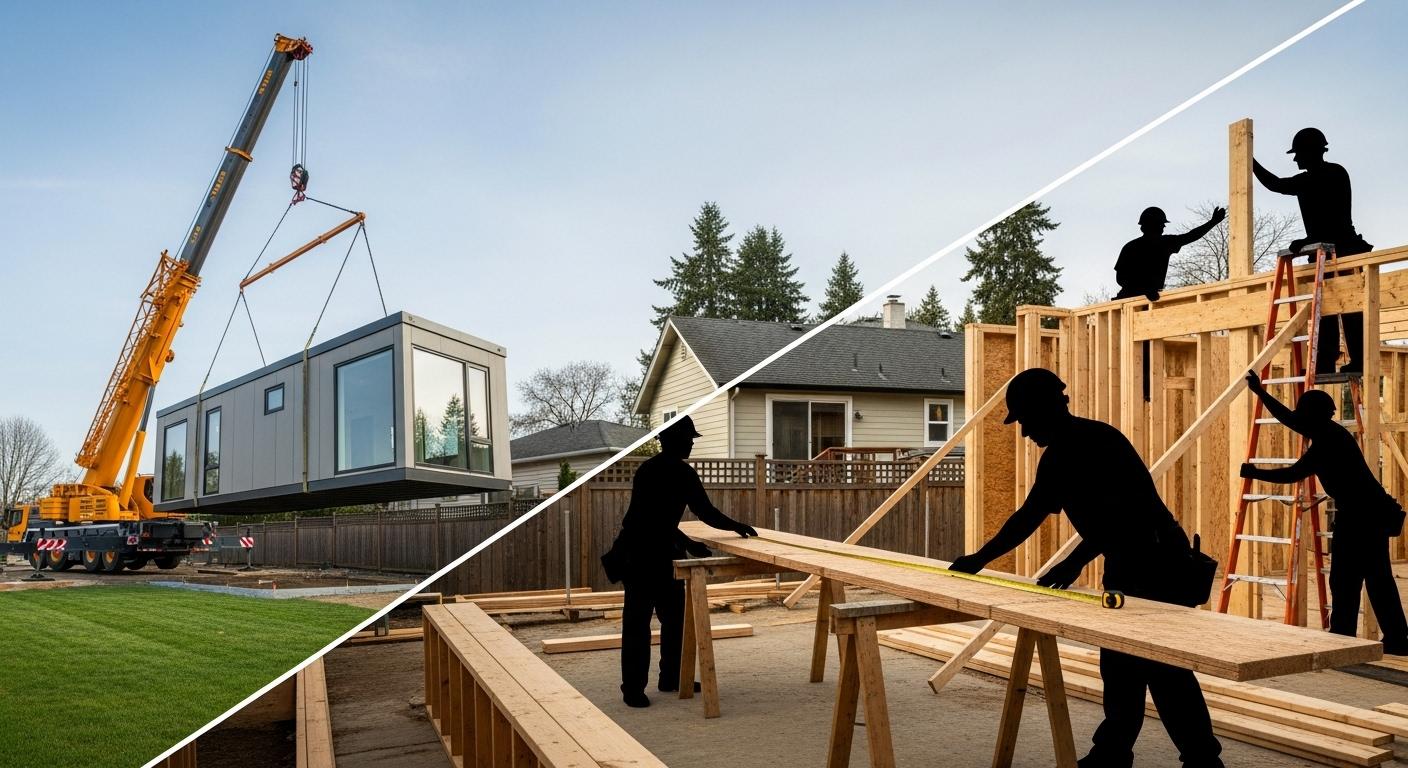
Introduction to ADUs
Accessory Dwelling Units, or ADUs, are becoming a popular feature in Californian homes. Picture a compact living space tucked away in your backyard, offering a perfect blend of privacy and proximity. ADUs serve multiple purposes housing aging parents, providing rental income, or even acting as a home office away from the hustle and bustle of the main home.
The rising popularity of ADUs is hardly surprising. They offer homeowners flexibility, additional income streams, and a solution to housing shortages. But, as with any significant home addition, decisions need to be made, especially when it comes to choosing between prefab and traditional ADUs. Each type has its charm and challenges, dictated by factors like cost, design, and time.
Understanding Prefab ADUs
Prefab ADUs, short for prefabricated accessory dwelling units, are built off-site in a controlled environment before being delivered to your property. You might find this modular approach both efficient and cost-effective. Unlike traditional construction, where unpredictability can be a bedfellow, prefab units promise quality and consistency. They come in a range of styles, from sleek, modern designs to more classic layouts.
The production timeline is a key advantage imagine having your ADU ready in weeks instead of months. This kind of efficiency might just appeal to the impatient homeowner in all of us. From a financial standpoint, prefab ADUs generally require less investment than their traditional counterparts, though the delivery and site preparation can sometimes add unexpected costs.
Exploring Traditional ADUs
On the other hand, traditional ADUs, sometimes referred to as stick-built ADUs, are constructed on-site, much like a full-sized home. This traditional construction method offers homeowners an unparalleled level of customization. Want a bay window here or a skylight there? Consider it done. Such flexibility in design is often absent in the prefab world.
But customization comes with a cost both in terms of money and time. Traditional builds can see delays brought about by weather, labor availability, or unexpected snags. Still, for some, the ability to tailor every inch of their space justifies these potential setbacks.
Comparing Prefab and Traditional ADUs
Choosing between prefab and traditional ADUs involves weighing numerous factors. Prefab ADUs boast speed, known for their quicker timeline and often lower costs. However, they might lack the design flexibility that some homeowners crave. Traditional ADUs, while offering extensive customization opportunities, can be more susceptible to delays and cost overruns.
Legally speaking, zoning regulations and permits can vary significantly between the two types. It’s an essential step to ensure that your desired ADU project is permissible on your property. Particularly in regions like Los Angeles and other densely populated areas, careful attention to local law is vital.
Evaluating Environmental Impact
Prefab ADUs often come with a smaller environmental footprint, thanks to efficient factory-controlled processes and less material waste. Their construction in a controlled environment allows for adherence to green building practices that traditional methods might struggle with.
Traditional construction does tend to consume more resources and can produce more waste. However, it offers opportunities for using sustainable materials and energy-efficient systems, assuming the homeowner is willing to prioritize these features.
Key Considerations for Homeowners
Before you dive headlong into an ADU project, consider some key factors that can influence your decision.
- Space Availability: Not every site is equal. Consider how much room you have and what preparation the site might need.
- Budget Constraints: Both upfront costs and long-term value matter, and different financing options can influence your decision.
- Design Preferences: Whether your heart beats for modern chic or cozy traditional, your aesthetic vision should guide your choice.
- Future Value: Consider how an ADU might enhance your home’s value and its potential as an investment.
Making the Right Choice
When deciding between a prefab ADU and a traditional one, a balance of heart and mind is required. What suits your lifestyle and financial situation best? Perhaps a case study of a Sydney family, who opted for a modular ADU to house a growing extended family, might offer inspiration. Or perhaps the story of a homeowner in california, who meticulously crafted a stick-built ADU to match the Victorian style of their existing home, resonates more with your ambitions.
Experts often suggest starting with precise budgeting and consulting local zoning laws. And once you’ve made your choice? Begin with obtaining the necessary permits, preparing the site, and engaging with trusted professionals to bring your ADU vision to life.
Conclusion
In navigating the world of prefab vs. traditional ADUs, each step each decision is yours to make. Whether you lean towards the efficiency of prefab units or the custom allure of traditional construction, this journey provides a unique opportunity to enhance your living space and lifestyle in California.
Remember, it’s not just about adding rooms or expanding square footage. It’s about crafting living spaces that resonate with your life and add real value to your property.
