



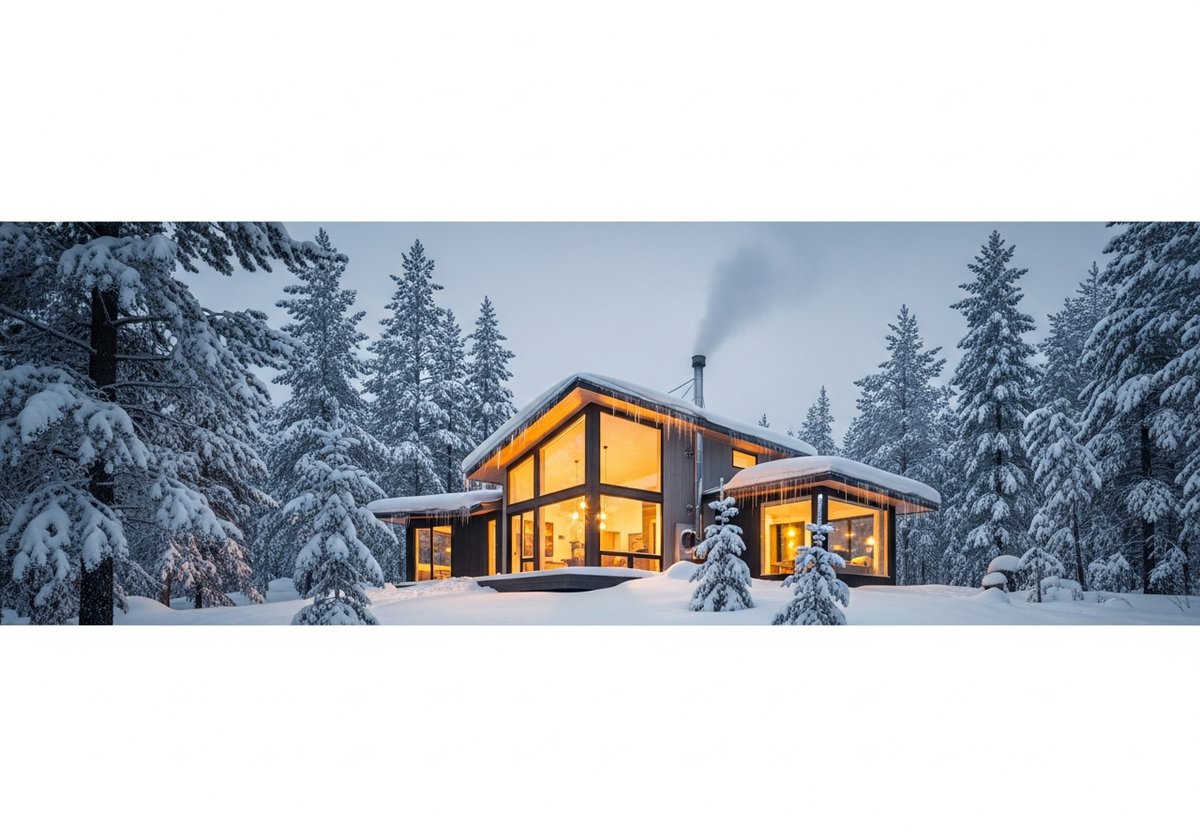
Imagine two neighbors, both living in prefab homes, one in Phoenix, Arizona, where summer temperatures regularly crack 115°F, and the other in Fairbanks, Alaska, where winter lows plunge past -40°F. Are both of them comfortable? The honest answer is – it depends entirely on how the home was designed, built, and insulated. That answer tells us something fascinating about where prefab construction has come from and where it is headed.
Prefab homes have long carried a reputation, sometimes deserved, sometimes wildly unfair, of being drafty in winter and sweltering in summer. That perception is rooted in the history of low-cost manufactured housing from the 1970s and 1980s, when thin walls, minimal insulation, and cheap single-pane windows were the norm. Modern prefab is a different story entirely, and understanding that difference could save you thousands of dollars in heating and cooling bills while keeping you genuinely comfortable year-round.
Why Thermal Performance Starts at the Factory
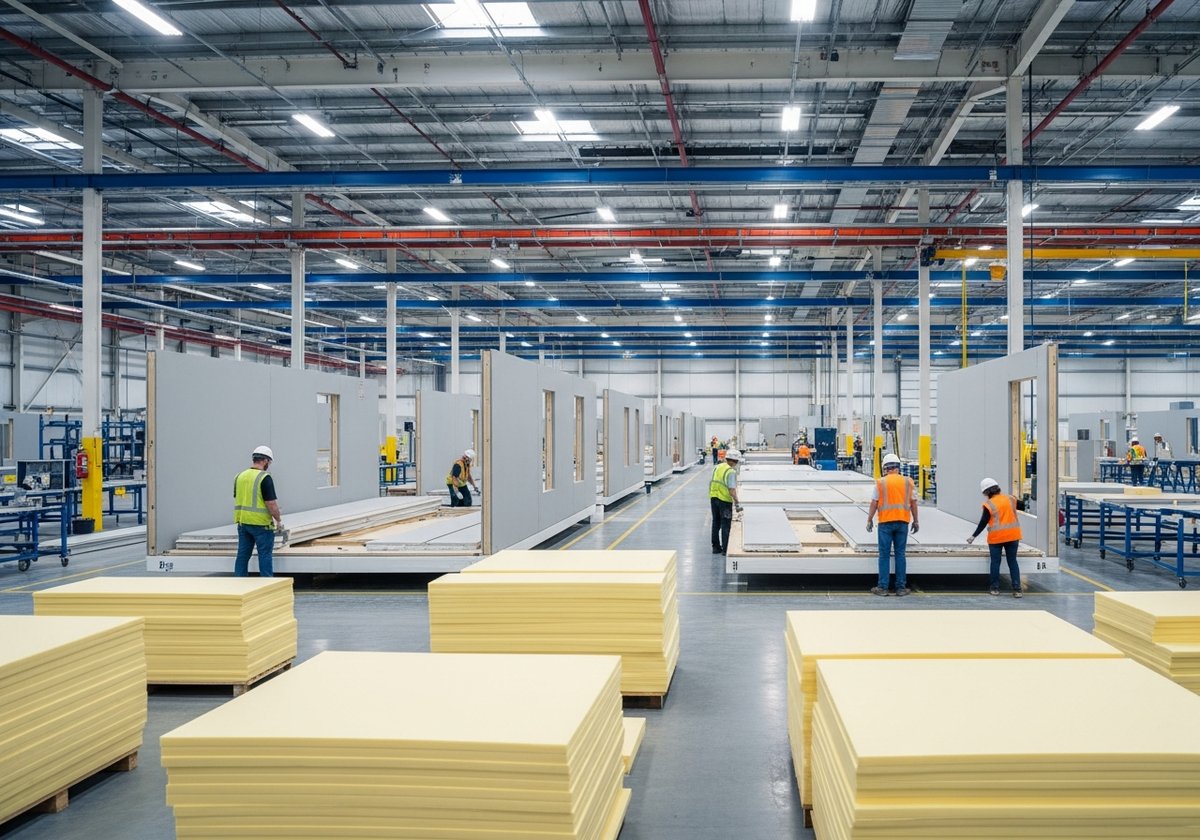
One of the most underappreciated advantages of prefab construction is that the building envelope – the walls, roof, floor, windows, and doors that separate conditioned interior space from the outside world – is assembled in a controlled factory environment. That matters more than most people realize.
In traditional site-built construction, insulation batts get stuffed into wall cavities by crews working in rain, wind, or heat. Gaps appear. Moisture sneaks in before the walls are closed. Air sealing is inconsistent. In a factory, those same steps happen on a dry assembly line where quality control is continuous and measurable. The result is a much tighter building envelope, and a tighter envelope is the single most important factor in thermal comfort.
According to the U.S. Department of Energy, air leakage accounts for 25 to 40 percent of the energy used for heating and cooling in a typical home. Prefab homes built to modern standards routinely achieve air infiltration rates that are 30 to 50 percent lower than comparable site-built homes. That is not a minor improvement – that is the difference between a home that fights the weather and one that genuinely shields you from it.
Insulation Options That Actually Match Your Climate
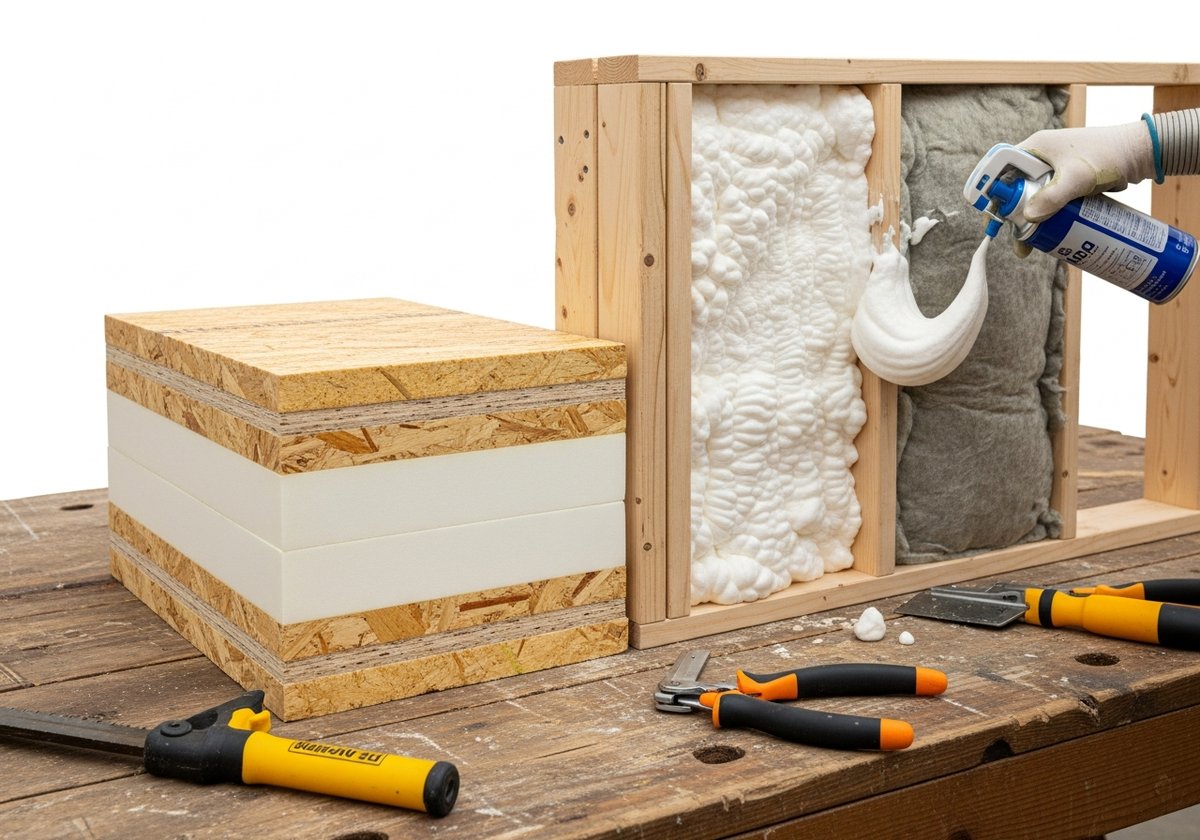
Not all insulation is created equal, and the best prefab builders treat insulation as a climate-specific engineering decision rather than a box to check.
Structural Insulated Panels (SIPs)
SIPs are sandwiches of rigid foam insulation bonded between two structural facing panels, typically oriented strand board. They deliver R-values ranging from R-14 in a 3.5-inch panel to R-50 or higher in extra-thick configurations designed for subarctic climates. Because SIPs have no stud cavities to create thermal bridges, they outperform standard batt insulation in real-world conditions.
Spray Polyurethane Foam
Closed-cell spray foam achieves R-6 to R-7 per inch and also acts as a vapor barrier and air sealant in a single application. It is particularly effective in hot-humid climates like Florida and coastal Texas, where moisture management is as critical as temperature control.
Continuous Exterior Insulation
Adding a layer of rigid foam or mineral wool board to the outside of the structural wall eliminates thermal bridging through studs and dramatically improves whole-wall R-values. Some prefab builders targeting cold-climate markets routinely achieve whole-wall R-30 or better, compared to R-13 to R-15 in a standard 2×4 stud wall with fiberglass batts.
If you want to see how these choices affect your monthly bills, the detailed comparison in monthly utility costs in prefab homes compared to traditional houses is worth reading before you finalize any purchase decision.
Heating and Cooling Systems Built for Extremes
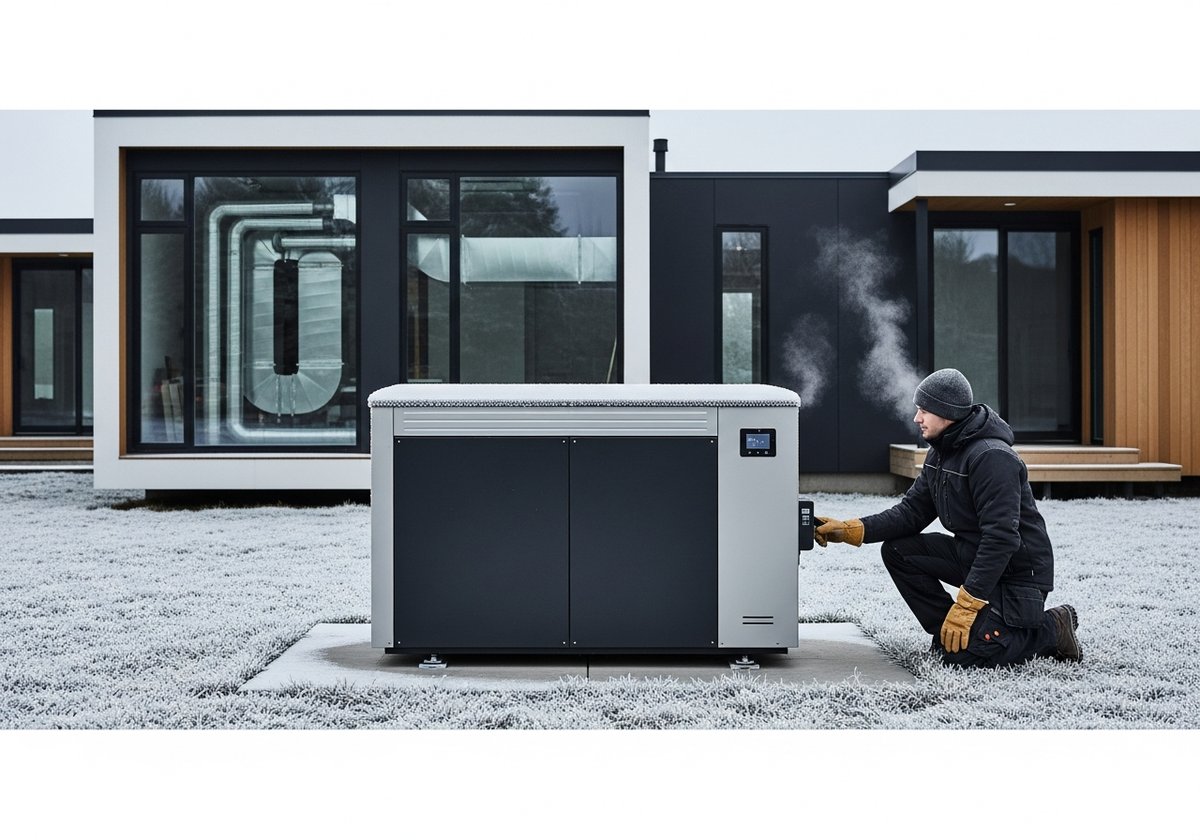
A well-insulated shell only does half the job. The mechanical systems inside a prefab home determine whether that shell pays off. Modern prefab homes are increasingly paired with heat pumps rather than conventional furnaces or air conditioners. A cold-climate heat pump can maintain full heating capacity at outdoor temperatures as low as -13°F, which covers most of the continental United States and a large portion of Canada.
The efficiency advantage is significant. A heat pump delivers two to four units of heat energy for every unit of electrical energy it consumes, compared to one-for-one in a resistance electric heater. In climates with very long, very cold winters, radiant floor heating paired with a heat pump or a highly efficient boiler is another option that many prefab buyers find worth the upfront investment.
For off-grid prefab homes, thermal mass and passive solar design become even more important. Orienting the home to maximize south-facing glazing in winter, adding concrete or stone thermal mass to absorb daytime heat, and using operable shading devices to block summer sun are strategies that cost little to implement in a factory-built home but deliver measurable comfort gains over decades.
Windows, Doors, and the Weak Links in the Envelope
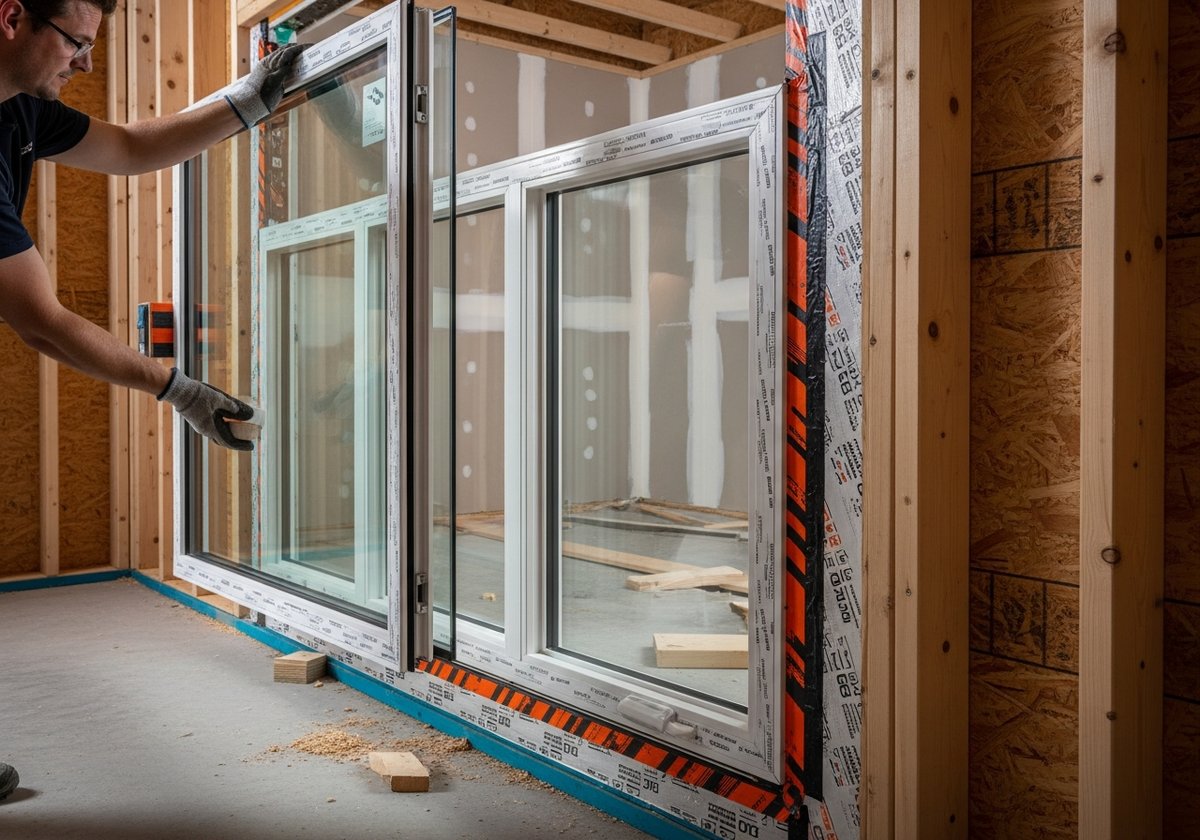
Even a perfectly insulated wall is only as good as its weakest link, and in most homes, windows are that link. Single-pane windows have an R-value of roughly 1. A triple-pane, low-emissivity, argon-filled window can achieve R-8 to R-10 – a tenfold improvement that dramatically affects both comfort and energy cost.
Leading prefab manufacturers targeting cold or hot-dry climates now specify triple-pane windows as standard rather than optional. In hot climates, the solar heat gain coefficient (SHGC) of the glass matters as much as the R-value. A low-SHGC window blocks solar radiation before it enters the home, reducing cooling loads without sacrificing natural light.
Many buyers are surprised by how many misconceptions surround these details. The article on 10 common misconceptions about prefab homes addresses several thermal comfort myths directly, including the persistent belief that prefab homes are inherently less durable or comfortable than site-built alternatives.
Real-World Performance: What Buyers in Extreme Climates Report
Surveys and owner reports from buyers in extreme climates consistently reveal a clear pattern. Buyers who purchased entry-level manufactured homes without upgraded insulation or windows report discomfort and high utility bills. Buyers who worked with builders specializing in high-performance prefab – companies that design to Passive House, Net Zero, or at minimum ENERGY STAR standards – report comfort levels equal to or better than site-built homes at comparable price points.
In California, where climate zones range from coastal Mediterranean to high-desert extremes, the best prefab home builders in California include several manufacturers who have invested heavily in thermal envelope engineering, partly in response to Title 24, California’s strict energy code, and partly because the market increasingly rewards energy performance.
The takeaway from real-world data is consistent: prefab homes built to current energy codes or higher perform extremely well in both heat and cold. The variability is not in the construction method itself but in the specifications buyers choose and the builders they select.
Design Trends That Are Raising the Bar
The prefab industry is not standing still. Passive House-certified modular homes are now available from multiple manufacturers in North America and Europe. These homes use so little energy that a small mechanical ventilation unit with heat recovery can provide all the fresh air and temperature stability occupants need, even in climates with temperature swings of 100°F between seasons.
The broader trajectory covered in 10 prefab home design trends for 2025 shows a clear movement toward homes that are not merely compliant with energy codes but actively optimized for thermal resilience. Electrochromic smart glass, phase-change material insulation, and integrated photovoltaic roofing are all moving from experimental to commercially available in prefab applications.
Frequently asked questions
Climate performance and insulation basics
Are prefab homes warm enough in very cold climates?
Yes, when properly specified. Modern modular and panelized homes built with SIPs, closed-cell spray foam, or thick continuous insulation routinely achieve R-30 to R-50 wall assemblies, which perform well even in subarctic conditions. The key is choosing a builder who designs for your specific climate zone rather than a generic national standard.
Can prefab homes handle extreme heat like desert summers?
Absolutely. High-performance prefab homes in hot climates rely on:
- Low solar heat gain coefficient windows to block radiant heat
- Continuous exterior insulation to reduce thermal bridging
- Tight air sealing to keep conditioned air in and hot air out
- Reflective or cool roofing materials to reduce heat gain from above
What is the best insulation for a modular home in a cold climate?
Structural Insulated Panels (SIPs) and closed-cell spray foam are the top performers for cold climates because they combine high R-value per inch with excellent air sealing. Adding continuous exterior rigid foam further eliminates thermal bridging through wall studs.
Are prefab homes energy efficient compared to traditional houses?
In most comparisons, yes. Factory-built homes achieve tighter air sealing than site-built homes, and modern manufacturers often exceed minimum energy code requirements. High-performance modular homes frequently meet or exceed ENERGY STAR and Passive House benchmarks.
Practical decisions and upgrades
What heating and cooling systems work best in prefab homes?
- Cold-climate heat pumps for most North American climates, effective down to -13°F
- Radiant floor heating paired with a heat pump or efficient boiler for very cold, long winters
- Mini-split systems for hot climates or zone-specific cooling needs
- Passive solar design combined with mechanical ventilation for off-grid applications
Do prefab homes lose heat faster than site-built homes?
Poorly insulated or older manufactured homes can, yes. However, modern high-performance prefab homes typically have lower air infiltration rates than site-built homes because factory assembly allows more consistent quality control. The specifications are what matter, not the construction method itself.
Can I upgrade the insulation in an existing prefab home?
Yes, though scope and cost depend on the original construction. Common upgrades include adding continuous exterior insulation cladding, replacing windows with triple-pane units, air sealing around penetrations and joints, and upgrading to modern heat pumps. Consult an energy auditor to identify where your home loses the most conditioned air before investing.
Are there financial incentives for improving the energy performance of a prefab home?
Yes. Federal tax credits under the Inflation Reduction Act cover heat pump installation, insulation upgrades, and efficient windows at 30 percent of the cost, subject to annual caps. For California residents, the full breakdown is covered in the guide on tax credits and rebates for prefab and green homes in California.
Sources
- U.S. Department of Energy, Building Technologies Office: Residential Air Leakage and Energy Use
- ASHRAE Standard 90.2: Energy-Efficient Design of Low-Rise Residential Buildings
- Passive House Institute: Certified Passive House Component Database
- Pacific Northwest National Laboratory: Factory and Site-Built Housing Comparison
- Lawrence Berkeley National Laboratory: Residential Fenestration Performance Data
