



The Big Picture: Why Energy and Utility Costs Matter
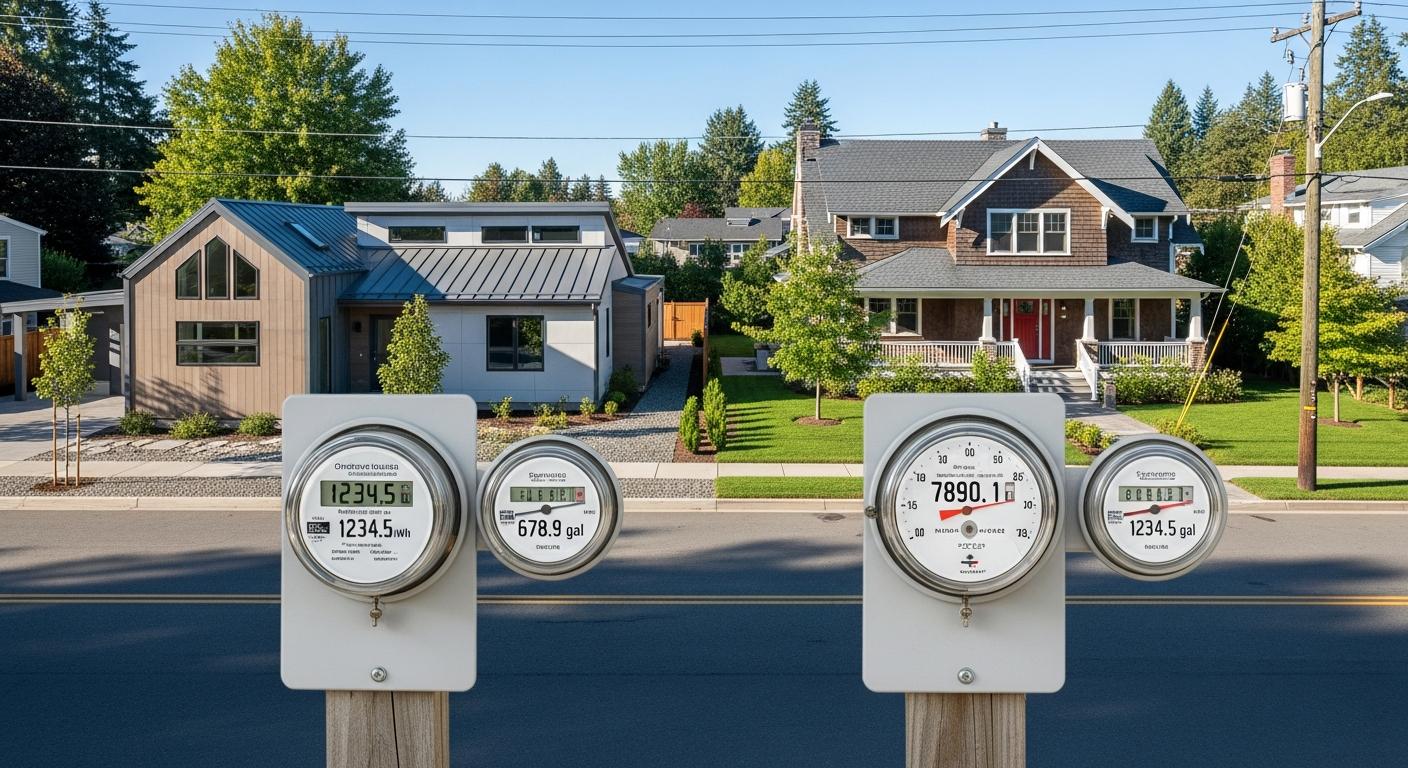
On a quiet street in Sacramento, a homeowner named Carla compares her monthly utility bill to that of her neighbor. Her home a sleek prefab house built two years ago comes with an energy dashboard that glows green most days. Her neighbor’s place, a traditional stick built home from the 1980s, tells a different story: higher heating costs in winter, air-conditioning bills that spike every summer. Both houses are similar in square foot size, yet their energy costs feel worlds apart.
This isn’t just Carla’s story; it’s the growing curiosity shared by homeowners across California and beyond. Can prefabricated homes really make such a difference when it comes to monthly utility costs? Housing design directly shapes how much we pay for comfort light, warmth, coolness, even hot water and the type of construction used can tilt the numbers one way or another.
The average American home pours nearly half of its energy consumption into heating and cooling alone. Add to that lighting, cooking, electronics, and water heating, and your utility bill becomes a vivid diary of daily life. Prefab construction methods promise to rewrite this diary with fewer surprises and smaller totals at the bottom line.
Prefab homes sometimes called modular homes or manufactured homes depending on their construction method are drawing attention for their potential to lower these recurring costs through precision engineering and controlled factory construction. The question is simple but significant: do those efficiencies actually translate into lighter monthly bills?
Building Science Behind Prefab Efficiency
The magic often begins before the prefab house even touches the building site. In a climate-controlled factory setting, builders can fine-tune insulation placement and window seals with millimeter accuracy. Unlike traditional construction methods performed outdoors where weather delays or human error can introduce tiny gaps a modular home benefits from consistency.
Each panel in prefabricated homes fits together like puzzle pieces designed by someone who hates drafts. This tighter building envelope reduces air leakage the invisible culprit behind many inflated heating and cooling bills. You’ll often find that prefab homes maintain steadier interior temperatures with less energy input.
Because factory construction eliminates most on-site improvisation (and sawdust blowing away mid-measure), there’s less material waste and fewer thermal weak points over time. Standardization also means quality control: if one modular residence meets an energy performance target, chances are all units built that week will meet it too.
Heating and Cooling: The Biggest Slice of the Utility Pie
If utility costs were a pie chart, heating and cooling would be the largest slice and often the messiest to manage. A prefab home typically needs less energy for temperature control compared to a traditional build of similar square footage because of its insulation continuity and airtightness.
Many modern prefab designs include high-performance windows that trap heat during winter yet reject excess solar gain in summer. Some integrate passive house principles or use radiant floor systems instead of conventional forced-air HVAC setups. Heat pumps small marvels capable of both heating and cooling efficiently are now common features in factory-built designs.
Consider two identical floor plans: one constructed as a site built home using traditional construction techniques, another assembled as a modular home within controlled conditions. Studies show up to 20 30% reductions in annual heating loads for the prefab version under comparable climates. Of course, local conditions matter; what saves money in coastal Oregon might look different in desert Nevada or snowy Vermont.
Powering Daily Life: Electricity Use and Smart Integration
Beyond temperature control lies another set of electricity demands from lighting your kitchen island to charging your phone (or increasingly, your car). Modular residences often come prewired for solar panels or at least designed with easy rooftop integration in mind a small detail with big long-term potential.
Many contemporary modular homes include smart metering systems that let owners track usage room by room in real time. This kind of feedback loop gently nudges behavior toward conservation without feeling punitive you might notice how leaving lights on really does add up over time.
LED lighting has become standard fare across prefab house models; efficient induction cooktops replace gas flames; even refrigerators are chosen for ENERGY STAR ratings before leaving the factory floor. These small efficiencies accumulate quietly month after month until they show up as genuine cost savings on your utility bill.
Automation plays its part too: thermostats learn schedules; blinds close themselves during peak sun hours; power strips cut phantom loads automatically all without demanding constant fiddling from homeowners who would rather be doing anything else than micromanaging kilowatts.
Water Systems and Waste Reduction at Home
Energy efficiency isn’t just about watts it’s also about water flow rates and plumbing precision. Prefabricated homes often include low-flow fixtures installed off-site where quality checks are easier to maintain than during hectic fieldwork on traditional builds.
Factory-produced plumbing assemblies reduce leaks because joints are machine-tested before shipping out for installation on permanent foundations. Some prefab constructions incorporate greywater-ready systems right from production lines a head start toward sustainability that site-built houses rarely achieve without costly retrofits.
Hot water accounts for roughly 15 20% of household energy consumption in most U.S. regions. Modern manufactured homes frequently employ heat pump water heaters or tankless on-demand systems that only operate when needed, cutting down wasted standby energy use.
Even something as humble as reduced leakage contributes indirectly to lower energy bills less wasted water means less pumping and less heating overall a win-win many homeowners appreciate once those quiet savings start stacking up year after year.
Comparing Real Numbers: What Homeowners Actually Pay
So what does all this look like when bills arrive each month? Data from several case studies show prefab homeowners spending between 10% 40% less per month compared with occupants of similarly sized traditional houses built under conventional codes.
A 1,800-square-foot modular home equipped with solar panels might see combined electricity and gas expenses around $100 $130 per month depending on regional rates while an older stick built counterpart could easily reach $180 $250 under identical occupancy patterns. For California homeowners facing high electricity prices, those differences quickly compound into thousands saved annually.
Of course and here’s where hedging becomes honest outcomes vary widely based on lifestyle choices (thermostat settings matter!), insulation upgrades during remodels, or whether renewable generation offsets consumption fully toward net zero targets.
Another subtle factor is maintenance: prefab structures benefit from accurately aligned seams that resist moisture intrusion over decades which means fewer drafts forming later, preserving their designed performance long after mortgage paperwork fades yellow at the edges.
Long-Term Value Beyond the Utility Bill
Monthly savings tell one story; broader value tells another richer tale altogether. Lower operational costs strengthen affordability even if initial base price tags appear similar or occasionally higher for modular builds due to premium materials or custom floor plan options.
Energy-efficient ratings now influence resale values almost as much as granite countertops once did (remember when everyone talked about countertops?). Buyers today increasingly ask about HERS scores or LEED certifications rather than just paint colors which positions well-designed prefabricated homes favorably against older site-built properties using traditional construction methods.
Fewer repairs mean more predictable ownership budgets not glamorous perhaps but deeply satisfying when you realize there’s no “hidden cost” waiting behind next winter’s electric statement or property tax season surprise tied to emergency furnace replacements.
At community scale too there’s growing promise: groups of modular residences linked via shared solar microgrids can pool excess power locally instead of sending it back inefficiently through distant networks a practical expression of neighborhood sustainability grounded literally right underfoot.
Looking Ahead: Where Prefab Energy Design Is Headed Next
The future looks bright and not just because LEDs use so little power while shining cheerfully long into night hours.
Emerging materials like cross-laminated mass timber panels provide structural strength with natural insulation advantages; phase-change wall linings store thermal energy quietly inside layers thinner than drywall sheets used today.
You’ll also see increasing experimentation linking whole clusters of prefabricated homes into renewable networks where rooftop solar panels charge communal battery arrays feeding heat pumps collectively a kind of eco-cooperative powered by sunlight rather than HOA fees.
Policymakers have noticed these successes too; cities eager for faster housing solutions now bundle incentives around green modular home developments since factory environments sidestep weather delays while meeting strict emissions goals faster than sprawling job sites ever could.
The data feedback loop is tightening as well each new model sends anonymized performance stats back to manufacturers refining future designs further toward low-carbon living perfection (well… nearly perfection). As lessons accumulate across climates from Austin humidity zones to Bay Area breezes these smarter blueprints continuously iterate not reinvent but polish what works best until achieving near net zero operation feels ordinary rather than exceptional.
