



Introduction to Prefab Homes
Prefab homes. The term might evoke images of a futuristic society where families live in ready-to-assemble capsules. But the reality is much more grounded and, dare I say, exciting. Prefab, short for prefabricated, homes are constructed off-site in sections, often in a controlled factory environment. These sections are then transported and assembled on the home site. It’s like a giant Lego set, only the outcome is a fully functional home. Who wouldn’t love that?
The world of prefab homes is rich with variety, ranging from modular homes, where sections are constructed off-site, to panelized homes, composed of pre-made panels assembled on-site, and even tiny homes, which are full houses in miniature form. The real draw? Prefab homes can be built faster and at a lower cost than traditional homes.
Just as important, especially in quake-prone regions like California, is the question of earthquake safety. How do these homes fare when the ground starts to shake? Let’s delve into the seismic details.
California’s Earthquake-Prone Environment
California, the Golden State, is not just known for its sunny beaches and Hollywood glamour. It’s also a hotbed of seismic activity. Straddling the mighty San Andreas Fault, California is synonymous with earthquakes. Remember the 1994 Northridge earthquake? It was a stark reminder of the region’s vulnerability.
Stringent safety standards in California aren’t just a bureaucratic hurdle they’re a necessity. With public awareness campaigns, drills, and a dash of healthy fear, residents are increasingly prepared to face the inevitable quakes.
California’s Safety Standards for Prefab Homes
So, how do prefab homes in California stack up against these rigorous safety standards? The California Department of Housing and Community Development plays a pivotal role in setting these standards, ensuring prefab homes can withstand seismic forces.
Prefab homes undergo rigorous testing for earthquake resistance, often mimicking quakes’ effects in controlled environments. So, are they held to different standards than traditional homes? Not really. The goal is the same: to keep homes standing firm.
Features of Earthquake-Resilient Prefab Homes
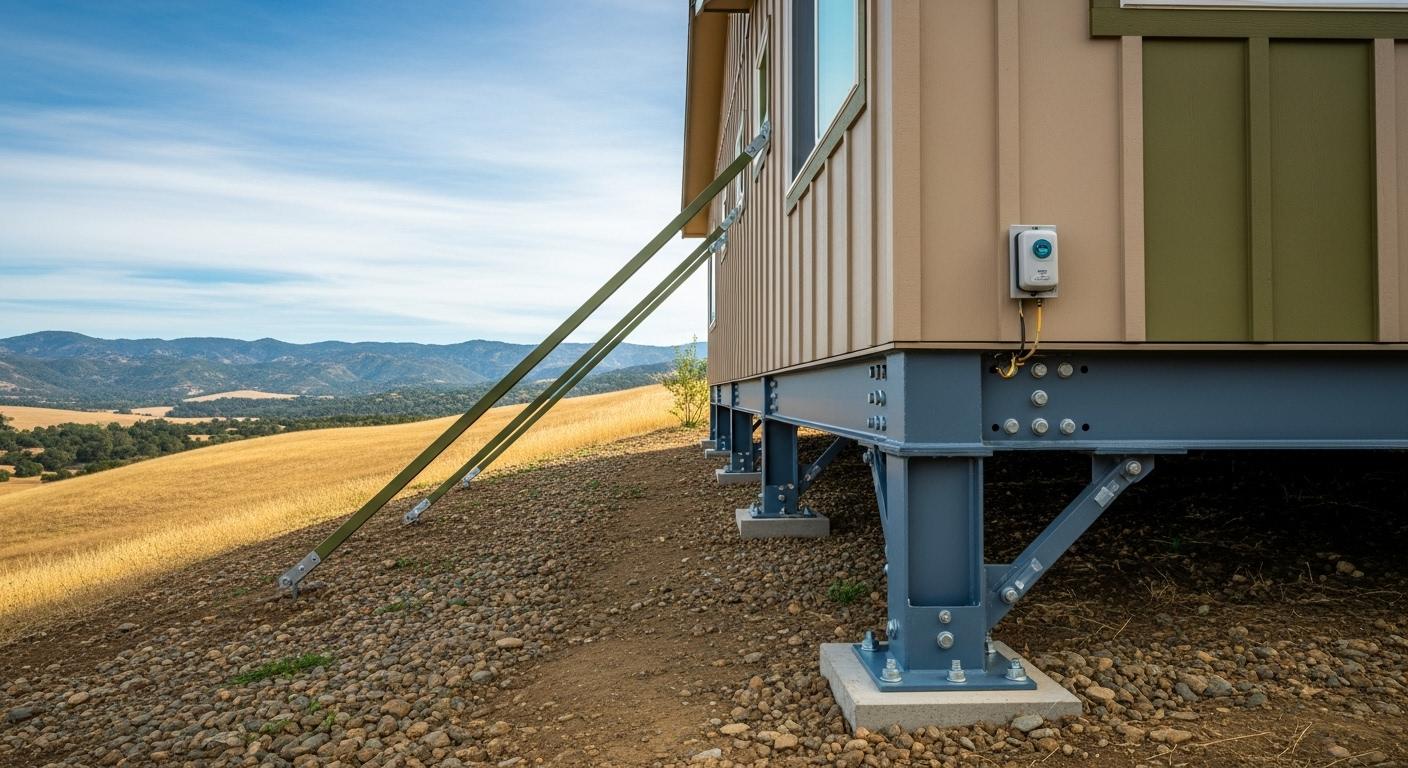
Let’s peek behind the walls of these earthquake-resilient prefab homes. Key features often include reinforced roof structures and cross-bracing, which prevent collapse and distribute seismic forces evenly across the building.
Materials like steel and engineered wood provide both strength and flexibility. Innovative construction techniques, such as base isolators, allow homes to sway independently of the violent shaking ground.
Designers also keep earthquake resilience in mind, ensuring that aesthetics don’t compromise safety. It’s a blend of art and science, where the beauty isn’t just skin-deep.
Challenges and Considerations
Meeting safety standards in prefab construction isn’t without its challenges. Costs can rise when incorporating advanced safety features, and retrofitting older prefab homes can pose unique challenges. It’s about finding a balance between architectural flair and safety.
For homeowners, ensuring the resilience of their prefab homes means thinking pragmatically about safety and design. It’s a dance of creativity and caution.
Future of Prefab Homes in Earthquake-Prone Areas
Looking ahead, the future of prefab homes in regions like California is bright. With ongoing research, the use of cutting-edge materials, and continuous improvements in technology, these homes promise even greater safety.
The prefab industry is committed to evolving safety standards, ensuring that residents in earthquake-prone areas have homes that are both secure and smartly designed. Optimism drives this endeavor, as innovation marries safety and style, all while bravely facing the seismic challenges ahead.
Challenges and Considerations
Meeting safety standards in prefab construction isn’t without its challenges. Costs can rise when incorporating advanced safety features, and retrofitting older prefab homes can pose unique challenges. It’s about finding a balance between architectural flair and safety.
For homeowners, ensuring the resilience of their prefab homes means thinking pragmatically about safety and design. It’s a dance of creativity and caution.
Case Studies and Real-World Examples
Take, for instance, a community of prefab homes in Los Angeles. This area showcased homes designed with innovative techniques that absorbed seismic energy without significant damage. Homeowners, initially skeptical, found confidence in the robust designs and careful engineering.
Research reveals that prefab homes, when built to code, perform comparably to traditional homes in earthquakes. Conversations with experts and homeowners paint a picture of a resilient and adaptable housing solution poised for the future.
Future of Prefab Homes in Earthquake-Prone Areas
Looking ahead, the future of prefab homes in regions like California is bright. With ongoing research, the use of cutting-edge materials, and continuous improvements in technology, these homes promise even greater safety.
The prefab industry is committed to evolving safety standards, ensuring that residents in earthquake-prone areas have homes that are both secure and smartly designed. Optimism drives this endeavor, as innovation marries safety and style, all while bravely facing the seismic challenges ahead.
