



The Hidden Journey of a Prefab Home
Some homeowners remember the day their prefab home arrived like it was a holiday. Neighbors came out to watch, phones in hand, as a massive truck rolled slowly down the street carrying what looked like a complete living room windows, drywall, even the faucet still wrapped in plastic. It’s a spectacle that feels equal parts construction and choreography. But beneath the excitement lies one of the most underestimated stages in modular construction: transport.
Transporting a prefab home isn’t just about moving boxes; it’s about moving precision-built architecture through an unpredictable real-world environment. A modular home can travel hundreds of miles from a controlled factory in North Carolina or elsewhere in the United States to its permanent foundation on private land meeting road vibrations, temperature shifts, and weather surprises along the way. This journey links two worlds: factory-perfect production and muddy construction reality.
Many buyers assume delivery is routine, something handled by “the pros.” And while that’s often true, treating it as simple freight can be an expensive mistake. Moving a prefabricated home is less like hauling lumber and more like transporting a grand piano that happens to be 40 feet long and costs several hundred thousand dollars. The risks are real and commonly ignored.
Weight, Width, and Weather: The Physics Behind the Move
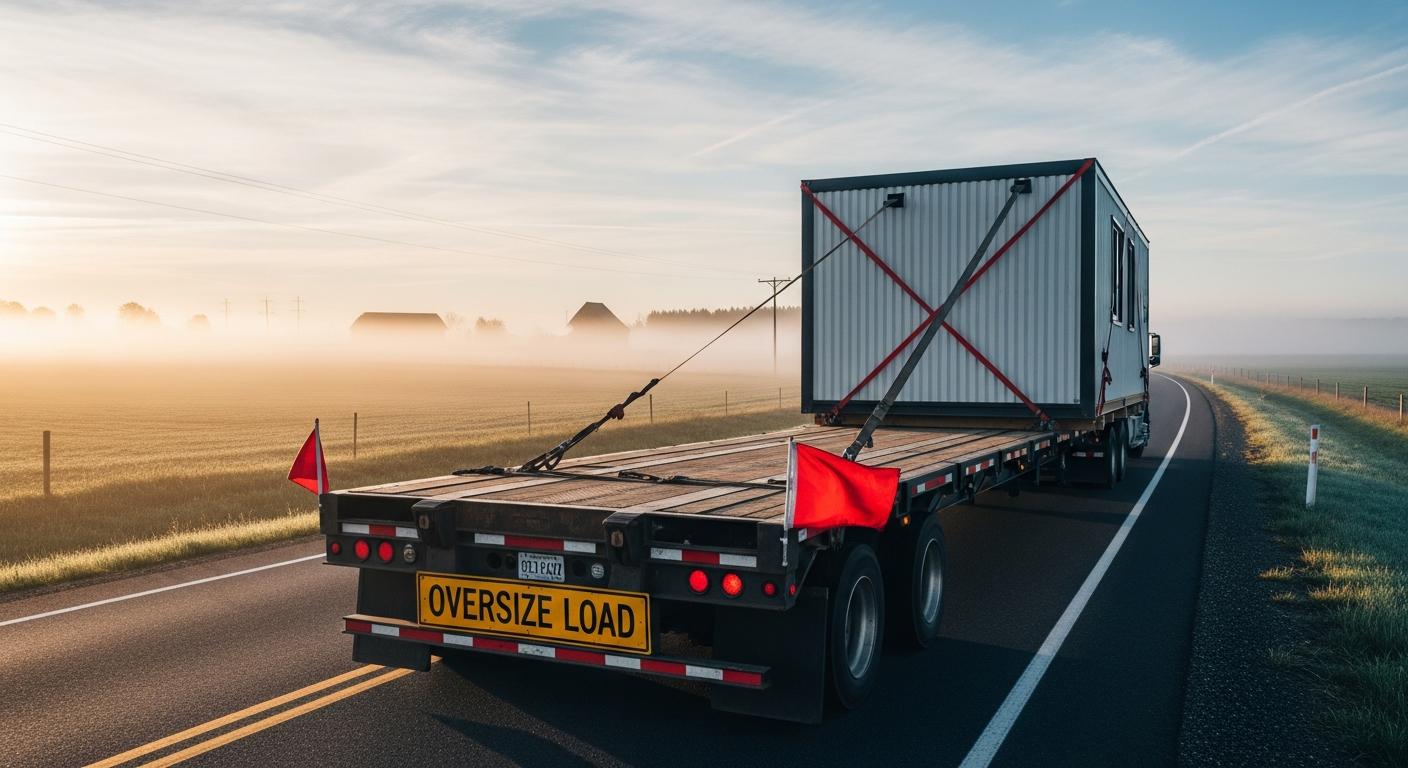
Prefab homes including modular homes and manufactured homes built under HUD code standards are engineered to fit within specific legal dimensions for road travel. Each module typically maxes out around 16 feet wide and 60 feet long. Go beyond that, and you enter “oversized load” territory a world requiring special permits, planned routes avoiding low bridges or tight turns, escort vehicles with flashing lights, and sometimes police assistance.
The physics at play here are fascinating. Every extra square foot adds weight; every curve in the highway introduces torque that stresses joints and fasteners. Variables multiply fast: road grade, tire pressure, even humidity levels can matter more than you’d think. A sudden rainstorm across North America can increase air moisture enough to subtly swell wood panels or affect finishes inside your prefab house.
Factories account for some of these factors through design tolerances a kind of built-in forgiveness but harsh conditions have their own ideas. High winds on open highways can push on tall modules like sails. Scheduling transport around weather forecasts isn’t just cautious; it’s smart logistics protecting both property value and safety.
Structural Stress and Vibration Damage
A well-designed modular home is sturdy but not invincible. Think of what happens when you twist a sealed shoebox it flexes slightly but doesn’t break unless pushed too far. The same principle applies when lifting or hauling each section of a prefabricated home onto trailers or cranes.
Even brief moments of torsion during loading can create hairline cracks in drywall or shift interior doors just enough that they no longer latch smoothly once reassembled onsite. These aren’t catastrophic failures but subtle imperfections that take time and money to fix after installation.
Experienced manufacturers test modules for structural stress using vibration tables or digital modeling systems before shipment. Yet human handling remains critical; one careless forklift move at the factory yard can undo hours of precision work. Savvy homeowners often check whether their modular home insurance covers transport-related damage because not all policies do by default.
The Cost Curve Few People Calculate
If you ask most first-time buyers where their budget goes in prefab construction, they’ll likely mention design customization or energy-efficient upgrades not transportation costs. But moving those beautiful modules from factory to site can represent anywhere from 10% to 25% of total project expenses depending on distance and complexity.
It adds up quickly: diesel fuel prices fluctuate daily; some states require escort fees for oversized loads; tolls differ by route; temporary road closures cause crane crews to wait (and charge). Miss one day due to permit delays or weather hold-ups? That’s another line item swelling your spreadsheet under “additional cost.”
This is why comparing quotes between different manufactured housing companies without factoring logistics into your math often leads to misleading expectations about affordability per square foot. In other words, two identical prefab houses may carry very different price tags once you include transport costs and only one will arrive intact on schedule.
Permits, Policies & Red Tape on the Road
A surprising amount of bureaucracy stands between your finished module leaving the plant and its arrival at your permanent foundation site. Every U.S. state enforces distinct oversize load rules: height limits (usually under 13’6″), travel curfews on busy urban routes, even mandatory escorts through certain counties.
Miss one document? Your convoy might sit parked at a weigh station for days while inspectors confirm compliance with local building codes or Department of Transportation forms all while rental cranes idle onsite waiting to lift those modules into place.
This is where dedicated transport coordinators earn their keep. They don’t get much glory in glossy real estate brochures but handle everything from pilot car scheduling to route optimization software designed to minimize carbon emissions along highways a small yet growing priority among sustainable builders aiming to reduce environmental impact during delivery itself.
Site Readiness: When Timing Becomes Everything
No matter how skilled your hauler is or how efficient your factory build schedule runs, if your foundation isn’t ready when trucks arriveyou’re in trouble. Foundations must cure completely before bearing heavy modular sections; otherwise alignment errors creep in later when connecting plumbing lines or sealing seams between units.
Rural projects face an extra wrinkle: access roads sometimes need reinforcement so those multi-ton trailers don’t rut soft ground after rainstorms common across much of North America’s countryside housing sites. Without preparation, you could find an $80-per-hour crane waiting while operators scramble with gravel backfill solutions not exactly ideal project management.
If inclement weather stalls installation entirely (say high winds prevent safe lifting), having temporary weatherproof storage nearby becomes vital protection against moisture intrusion into insulation layers or finishes inside each module.
Environmental Footprint of Long-Distance Delivery
The sustainability credentials of prefab homes are strong factory efficiency reduces waste compared with traditional site built homes but long-distance shipping can partially offset those gains through fuel consumption and emissions output during transit.
A cross-country haul from Texas to New York consumes thousands of gallons of diesel fuel per unit convoyed an environmental footprint few marketing brochures advertise openly. That’s why many experts advocate regional manufacturing hubs serving localized markets rather than centralized mega-factories shipping nationwide.
This clustered model keeps travel distances short while supporting local employment within urban development regions concerned about housing affordability and energy efficiency alike. Some forward-thinking companies now experiment with hybrid-electric transport fleets or rail-based shipment options for larger manufactured housing projects seeking lower-carbon alternatives over traditional trucking methods used across the United States highway network.
Smart Precautions for Buyers
The good news? Most risks tied to transporting prefab homes are manageable when addressed early and proactively communicated among all parties involved: buyer, manufacturer, hauler, insurer, lender (especially if financing via chattel loan versus mortgage), inspector, and site contractor working under local building codes regulations aligned with HUD code requirements for manufactured homes classification as real property instead of personal property assets once attached permanently onsite.
