



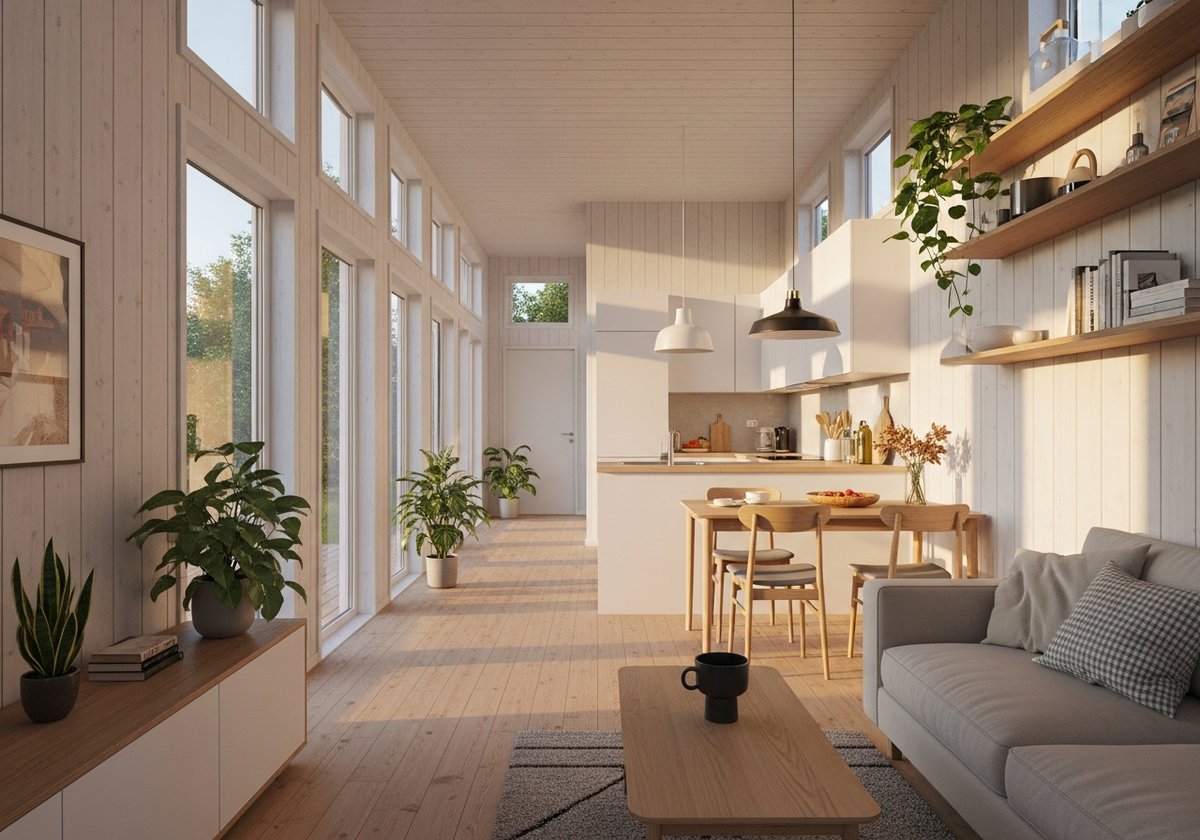
Imagine two homes, both exactly 700 square feet. Walk into the first one and you feel it immediately – the low ceiling, the corridor-like hallway, the rooms that feel like separate boxes stacked together. Walk into the second and you exhale. It feels open, airy, almost generous. Same square footage. Completely different experience. What changed? The floor plan.
This is the quiet genius behind the best prefab floor plans today. Modern prefab manufacturers have spent years solving a deceptively hard problem: how do you make a compact, factory-built home feel genuinely spacious? The answer turns out to be less about square footage and more about geometry, light, flow, and design principles borrowed from luxury architecture and applied to efficient housing.
Whether you are exploring a backyard ADU, a full-time compact modular home, or simply trying to understand what separates a cramped prefab from a comfortable one, this guide breaks down what actually works – and why.
Why Floor Plan Design Matters More in Prefab Than in Stick-Built Homes
Traditional site-built homes have a design flexibility that prefab homes do not always share. A contractor can push a wall a foot to the left or reconfigure a hallway during construction without much consequence. Prefab homes are engineered in a factory before a single shovel touches your site. Every design decision is locked in earlier, and its consequences ripple through the entire living experience.
This constraint is actually a creative opportunity. The best prefab designers treat the floor plan like a puzzle that must be solved precisely before manufacturing begins. The result, when done well, is a home where nothing is wasted – no dead corners, no transitional spaces that serve no purpose, no hallways that eat square footage without contributing to daily life.
As explored in Small Space Living: How Prefab Homes Maximize Every Square Foot, factory precision allows manufacturers to plan furniture placement, storage integration, and traffic flow from the very first sketch – something site-built construction rarely achieves with the same rigor.
The Open Concept Advantage: Fewer Walls, More Life
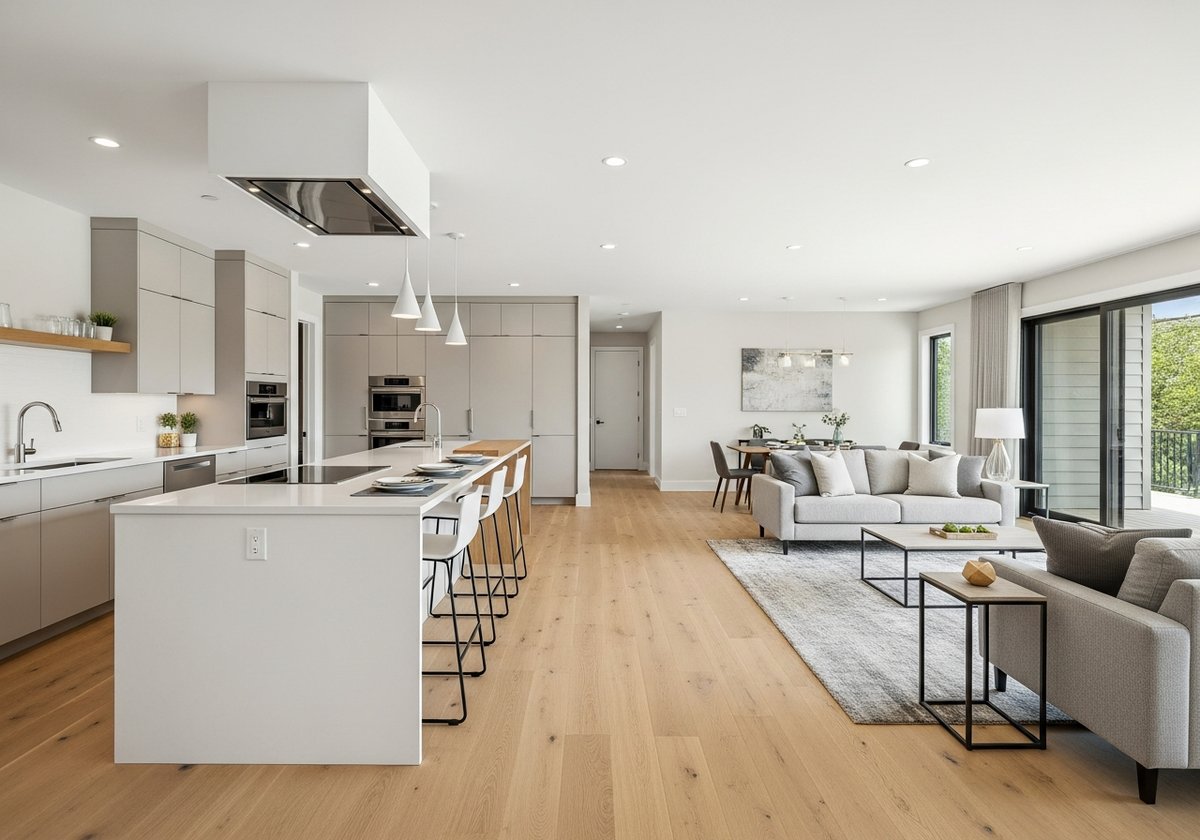
If you ask any prefab architect what single change makes the biggest difference in a small home, the answer is almost always the same: remove the wall between the kitchen, dining area, and living room. Open concept prefab floor plans work because they borrow volume. Instead of three small rooms, you have one generous shared space where light, air, and sight lines move freely.
The psychological effect is real. Research in environmental psychology consistently finds that visual access to a larger zone reduces feelings of confinement. You are not just cooking; you are participating in the full living area. That sense of belonging to a bigger space changes how the home feels entirely.
Good open concept layouts also manage acoustic and functional zones without relying on walls. A kitchen island defines the cooking zone. An area rug anchors the living room. A subtle change in ceiling height signals a transition between spaces. These soft boundaries do the organizational work that walls used to do, without sacrificing openness.
Ceiling Height: The Underrated Variable
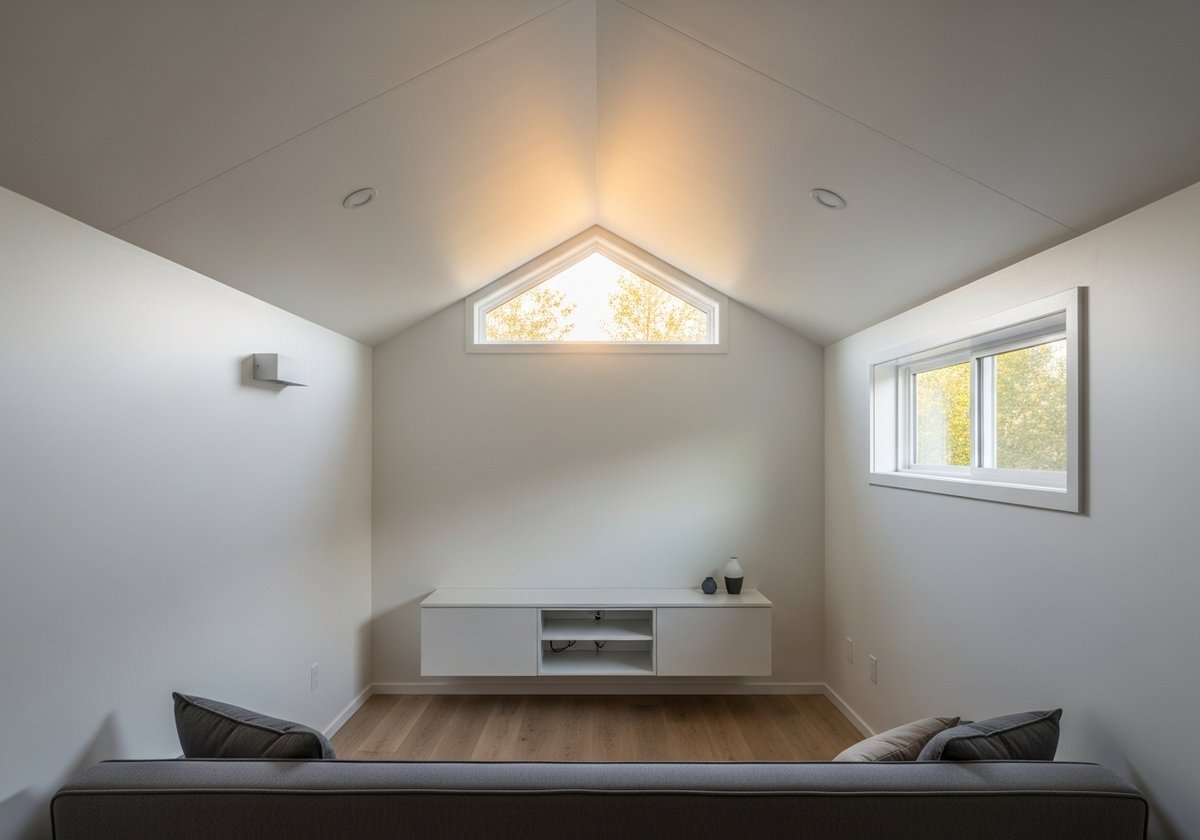
Square footage gets all the attention. Ceiling height deserves more credit. A 400-square-foot room with nine-foot ceilings feels dramatically different from the same footprint with seven-foot ceilings. Volume is what creates the sensation of spaciousness, and volume is the product of both floor area and ceiling height.
Progressive prefab manufacturers have started offering higher standard ceiling heights in their compact modular home layouts specifically because buyers reported feeling confined in otherwise well-designed spaces. Some brands now offer vaulted or shed-roof profiles that allow ceilings to rise toward one end of the home, creating dramatic height without adding structural complexity.
For those interested in how height, light, and material choices interact, the Interior Design Ideas for Small ADUs and Tiny Prefabs resource covers the full range of strategies for shaping perceived scale in a compact home.
Natural Light as Architecture
Light does not just illuminate a space – it expands it. A room flooded with natural light from multiple angles reads as larger than an identically sized room with a single small window. Smart small prefab house design ideas lean hard into strategic glazing. Clerestory windows bring light into interior zones without sacrificing wall space or privacy. Corner windows eliminate the visual solidity of corners and make rooms feel like they dissolve into the outdoors. Skylights in bathrooms and kitchens open the ceiling plane and change the entire character of those compressed spaces.
Some of the most interesting prefab floor plans position the home on the lot to capture morning light in bedrooms and afternoon light in living areas, treating solar orientation as a design input rather than an afterthought. This approach also reduces artificial lighting loads and warms the home passively during cooler months.
Multifunctional Rooms and Built-In Storage
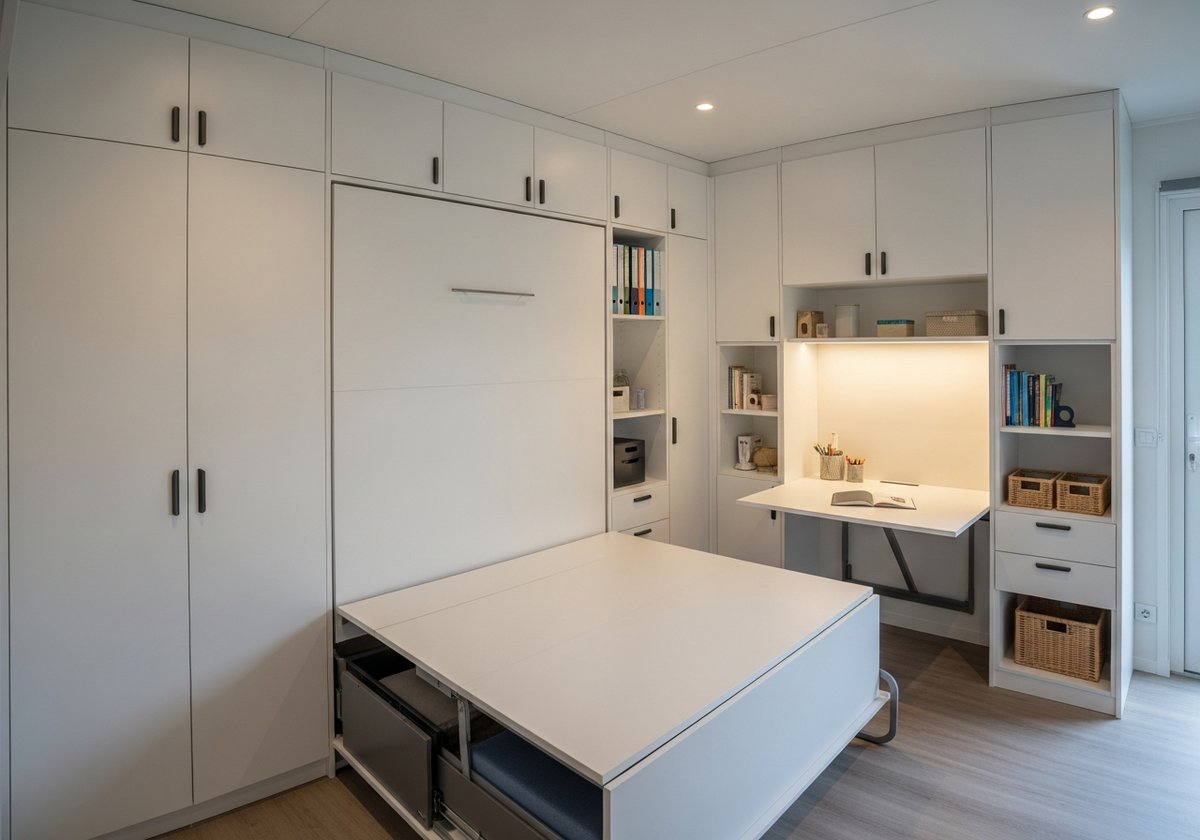
In a compact modular home, every room needs to play more than one role. The dining area doubles as a home office. The guest bedroom converts to a den. The entryway contains all the storage that a mudroom would handle in a larger house. This flexibility is not about compromise – it is about designing with intention.
Built-in storage is one of the clearest advantages prefab construction offers. Because the home is designed and built in a factory, cabinetry and shelving can be integrated into the structure rather than added later. This frees up floor area, keeps rooms uncluttered, and gives small spaces the clean lines that make them feel curated rather than crowded.
Murphy beds, fold-down desks, and modular furniture systems have also become serious design tools. When a bed folds into a wall during the day, a 250-square-foot bedroom becomes a study or yoga space. The square footage did not change. The utility doubled.
Outdoor Connection: Borrowed Space That Costs Nothing
One of the most underappreciated tools in efficient small home floor plans is the deliberate connection between interior living space and outdoor areas. A covered deck or patio that flows directly from the main living zone effectively extends the home’s usable footprint at relatively low cost.
Large sliding or folding glass doors create a seamless transition between inside and outside. When those doors are open, the outdoor space becomes a room. When they are closed, the view through the glass still borrows depth from the landscape. A 500-square-foot home with a well-designed 200-square-foot deck feels dramatically more spacious than a 700-square-foot home with no outdoor connection.
If you are weighing which prefab designs handle this most effectively, Best Prefab Tiny Homes for Backyard Living offers a curated look at models specifically designed to integrate outdoor living into small-footprint designs.
What to Look for in a Prefab Floor Plan Before You Buy
When reviewing modular home floor plans, the numbers on the spec sheet tell only part of the story. Here are the questions worth asking before you commit:
- Where does natural light enter, and does it reach the central living zones or only the perimeter?
- Are hallways minimized, or does the layout spend significant floor area on circulation?
- Is storage integrated into the structure, or will you need to furnish your own solutions?
- Do the main living areas connect visually and physically to outdoor space?
- Can rooms serve multiple functions, or are they dimensioned for a single use?
- What is the ceiling height, and does any part of the design allow for variation?
A prefab floor plan that answers these questions well will feel bigger than it measures, regardless of whether it is 400 square feet or 1,200. The craft of the layout matters more than the math of square footage.
Frequently Asked Questions About Prefab Floor Plans and Space
What makes a prefab floor plan feel spacious in a small home?
Several design choices work together. Open concept layouts remove visual barriers. Higher ceilings add volume. Strategic window placement floods rooms with natural light. Built-in storage keeps surfaces clear. Outdoor connections borrow depth from the landscape. No single element is responsible – it is the combination that matters.
Are open concept prefab floor plans harder to heat and cool efficiently?
Not necessarily. Open floor plans can improve air circulation and allow more effective distribution of conditioned air when HVAC systems are designed for the layout. Many prefab manufacturers design their mechanical systems in tandem with the floor plan. Proper insulation and airtight construction – both strengths of factory-built homes – matter more than whether walls divide the space.
Can I customize the floor plan of a prefab or modular home?
Customization options vary widely by manufacturer. Some offer extensive flexibility within structural constraints. Others provide a catalog of tested layouts with limited modifications. It is important to understand what is and is not changeable before you choose a builder. For a deeper look at modification possibilities after purchase, see Can You Expand a Prefab Home Later? Real Constraints Explained.
How important is ceiling height compared to floor area?
Both matter, but ceiling height is consistently underestimated. A room with a nine-foot ceiling and 300 square feet often feels more comfortable than a room with a seven-foot ceiling and 400 square feet. Volume – the product of floor area and ceiling height – determines how spacious a space actually feels. Always ask for ceiling height specifications when evaluating prefab floor plans.
What is a realistic square footage for a comfortable prefab home for one or two people?
With a well-designed floor plan, most people find that 400 to 600 square feet works comfortably for a single occupant, and 600 to 900 square feet serves two people well. These ranges assume good storage integration, multifunctional rooms, and indoor-outdoor connection. Well-planned layouts in this range consistently outperform larger, poorly designed ones.
Do prefab homes waste space in hallways and transitional areas?
Lower-quality designs sometimes do. The best compact modular home layouts minimize or eliminate dedicated corridors, using open plan arrangements to allow movement between zones without transitional space. When reviewing a floor plan, calculate what percentage of total area is corridor – anything above 10 to 15 percent is worth scrutinizing.
Are there prefab designs specifically built for maximizing small spaces?
Yes, and this is one of the fastest-growing segments of the prefab market. A growing number of manufacturers specialize in compact, high-efficiency designs for ADUs, backyard cottages, and small primary residences. These companies treat space optimization as a core design value, and their floor plans reflect years of iteration on what actually works at small scale.
Sources
- U.S. Department of Energy – Passive Solar Home Design Principles
- National Association of Home Builders – Trends in Modular Housing (2024)
- Environmental Psychology Research, University of California – Spatial Perception Studies
- Prefab.com Editorial Research Team – Prefab Floor Plan Analysis (2025)
