



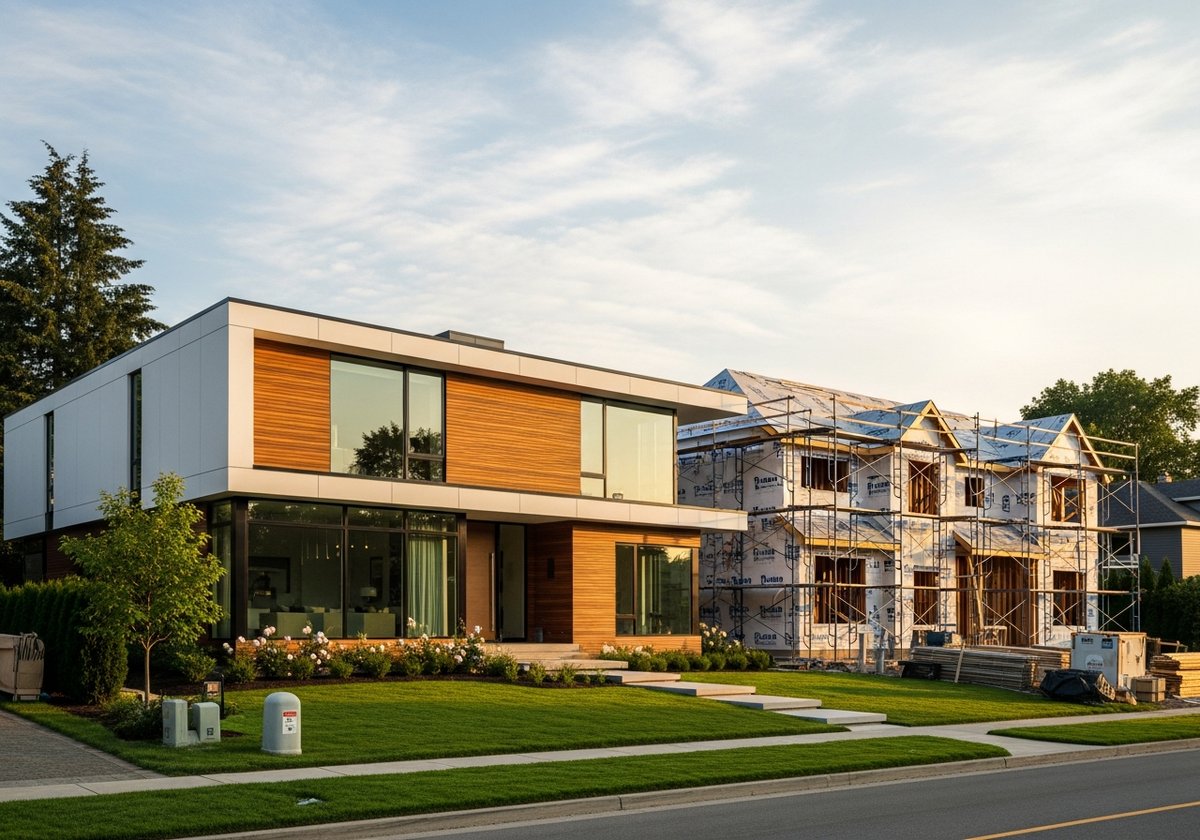
Here is a question worth sitting with before you break ground on anything: what if the house you think is cheaper to build ends up costing you far more to own? That tension sits at the heart of the prefab vs. traditional construction debate, and it is one that more buyers, developers, and policy makers are finally taking seriously. The upfront numbers rarely tell the full story. The real conversation is about what happens over ten, twenty, or thirty years – and that is exactly where prefab homes are beginning to make a compelling, data-backed case.
The Upfront Cost Comparison: Where Prefab Pulls Ahead Early
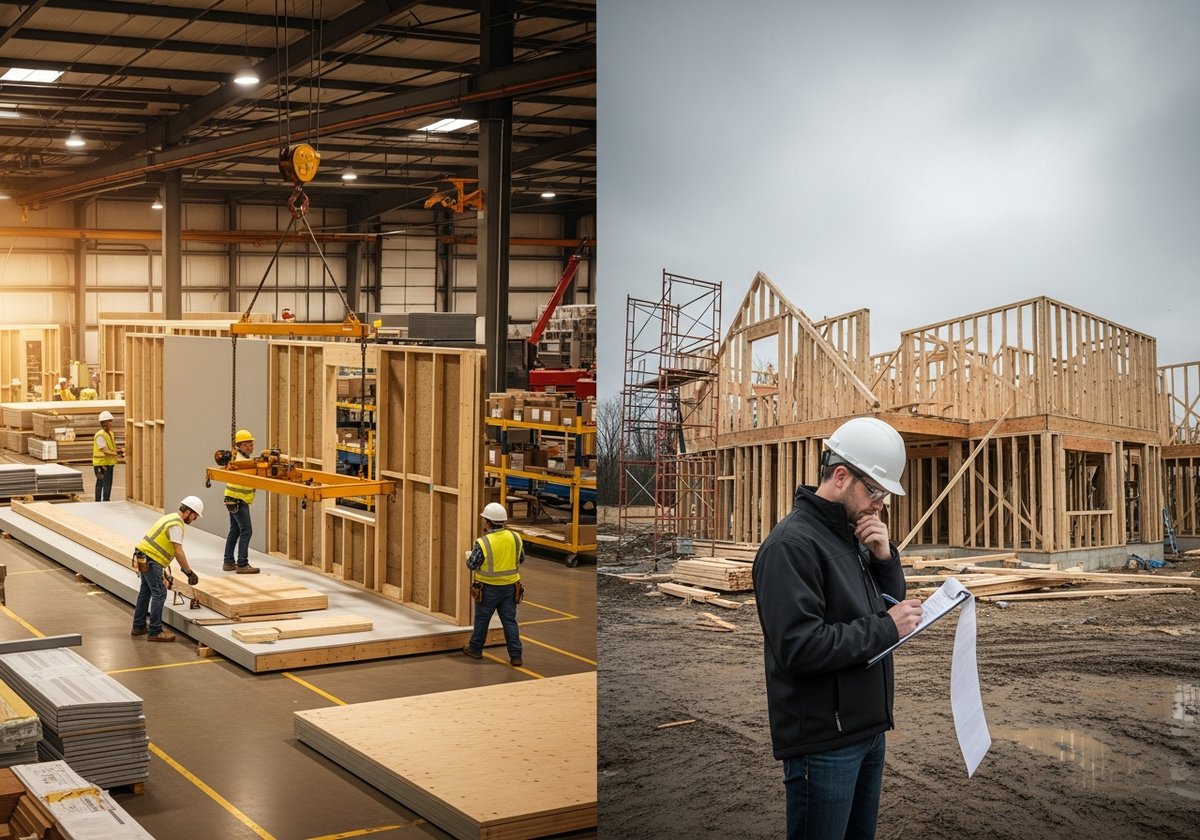
Traditional stick-built construction is deeply familiar. Most people understand the process intuitively: a plot of land, a contractor, a crew, months of weather-dependent work, and a final invoice that almost always exceeds the original estimate. According to the National Association of Home Builders, the average cost per square foot for site-built homes in the United States hovered around $150 to $250 in recent years, with significant regional variation. In high-cost states like California, that number can push well past $400.
Prefab construction operates differently. Modules or panels are manufactured in controlled factory environments, then shipped and assembled on-site. Because the factory process eliminates weather delays, theft of materials, and the inefficiency of coordinating dozens of subcontractors in sequence, builders consistently report cost savings of 10 to 25 percent compared to equivalent site-built homes. Some high-efficiency prefab companies claim savings closer to 30 percent on total build cost.
If you want to understand what that looks like in a specific market, how much a prefab home costs in California in 2025 breaks down real price ranges with useful regional context. The gap between prefab and traditional construction is widest in high-labor, high-regulation markets, which is one reason California has become a proving ground for the prefab industry.
Beyond the Build: The Operating Cost Advantage
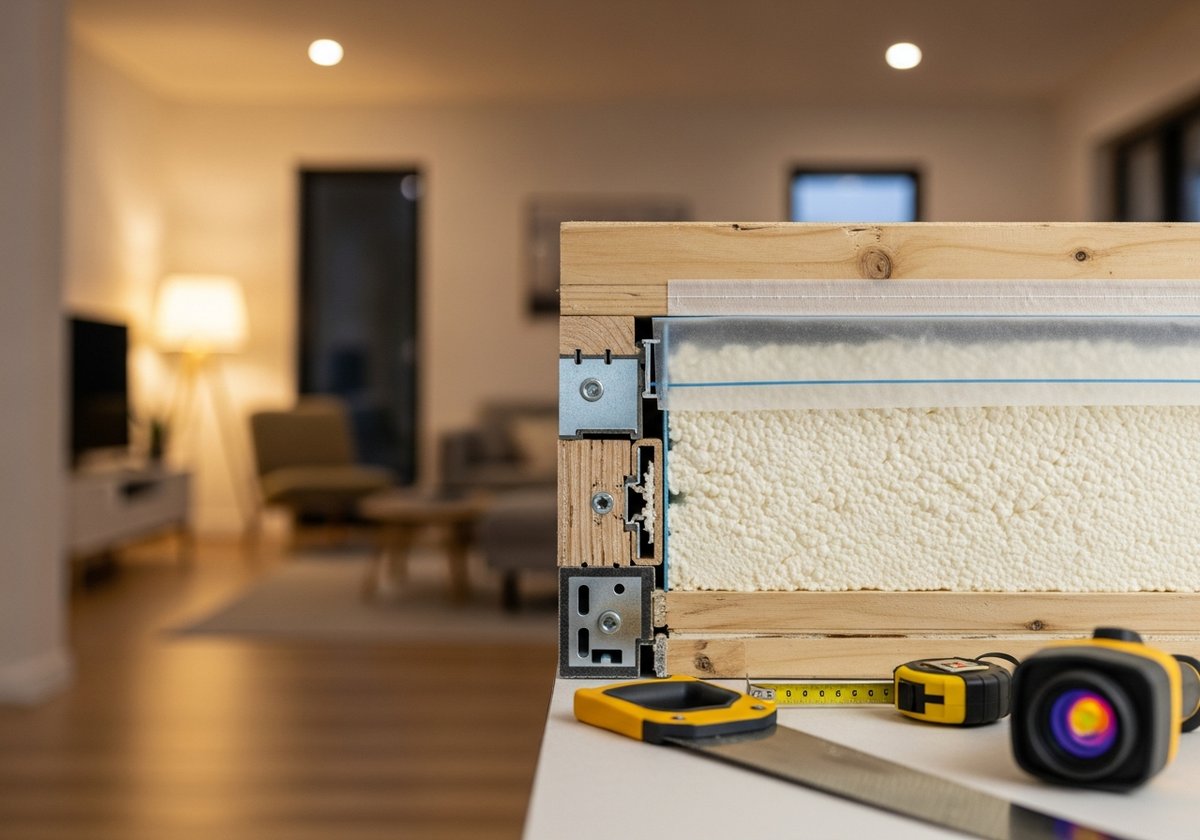
Upfront savings matter, but operating costs are where prefab homes often deliver their most durable financial advantage. Modern prefab construction relies on tight building envelopes, factory-calibrated insulation, and precision joinery that is simply difficult to replicate in the field. The result is a home that tends to lose far less energy through walls, windows, and rooflines.
Studies comparing energy performance of modular versus site-built homes have found that prefab units can reduce heating and cooling costs by 15 to 30 percent annually. Over a thirty-year mortgage, that translates into tens of thousands of dollars in savings – sometimes more, depending on local energy prices and climate.
A granular look at monthly utility costs in prefab homes compared to traditional houses reveals just how significant these differences become when compounded over years. For many homeowners, the utility savings alone come close to offsetting the cost of a premium prefab package.
There is also the question of maintenance. Factory-built construction undergoes quality control inspections at multiple stages of production, catching defects before they are buried behind drywall. Site-built homes, even well-constructed ones, accumulate small errors that compound over time. Leaky windows, uneven framing, and inconsistent insulation gaps are harder to prevent when dozens of workers are making decisions on-site under deadline pressure.
Financing, Timelines, and Hidden Costs of Traditional Builds

One underappreciated element of the total cost comparison is time. Traditional construction timelines in competitive markets routinely stretch to twelve, eighteen, or even twenty-four months. During that period, buyers are often paying rent elsewhere while also servicing a construction loan, which carries higher interest rates than a standard mortgage. A six-month delay on a $500,000 build, financed at a typical construction loan rate, can quietly add $15,000 to $25,000 in carrying costs.
Prefab construction compresses timelines dramatically. Once the factory has completed fabrication – typically two to four months – on-site assembly for a modular home can wrap up in a matter of weeks. That speed reduces carrying costs, gets families into homes faster, and limits the risk of cost overruns driven by material price fluctuations.
For buyers thinking carefully about how to structure the financial side of a prefab project, a direct comparison of prefab vs. traditional construction costs over the long run is worth a close read. It addresses not just build costs but the full spectrum of ownership expenses that determine true ROI.
Resale Value: The Question Every Buyer Asks
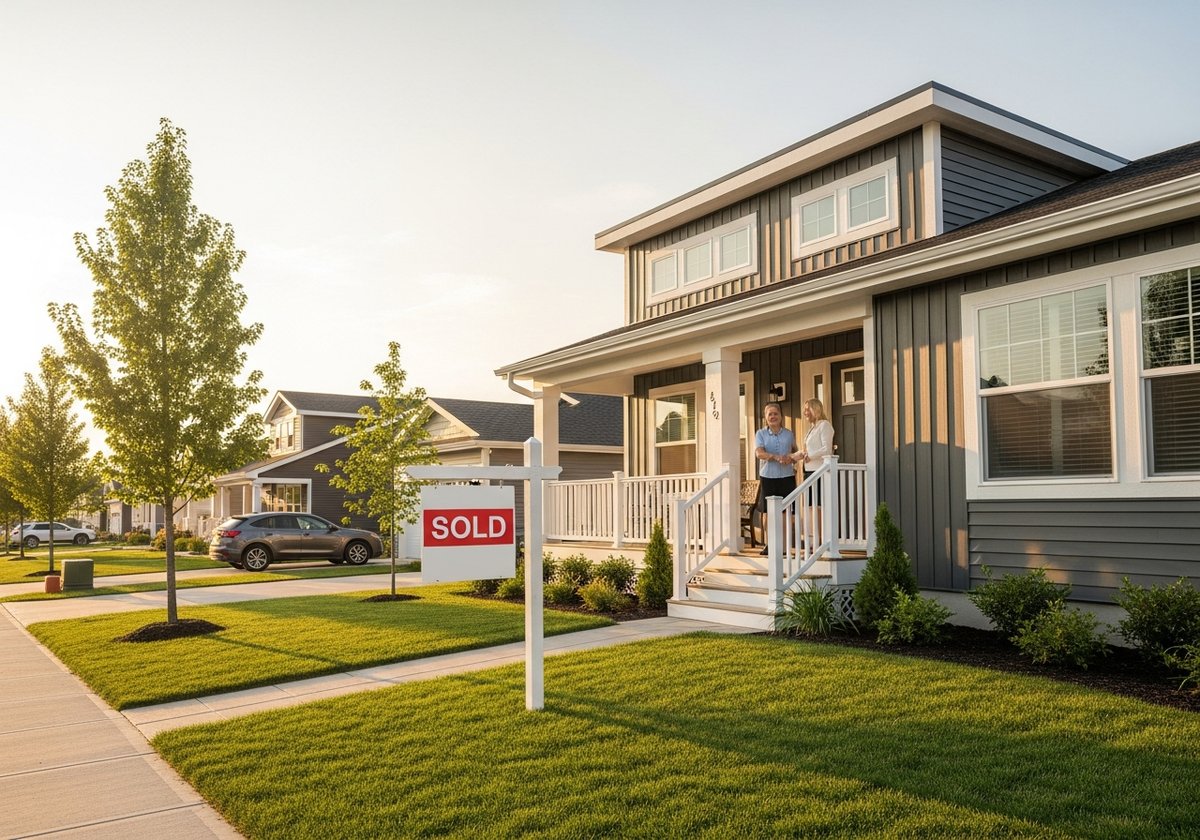
Historically, “manufactured home” carried a stigma in real estate markets. Older mobile homes and lower-quality modular units did depreciate in value, reinforcing a perception that prefab was somehow a lesser form of housing. That perception is shifting, but it deserves an honest examination.
The key distinction is between older manufactured housing built to HUD code standards and modern prefab or modular construction built to the same International Residential Code as any site-built home. Modular homes that meet local building codes are legally treated as equivalent to site-built homes in most jurisdictions. That equivalence matters enormously for appraisals, lending, and resale.
Data from the Urban Land Institute and various regional real estate markets suggests that modern modular homes appreciate at rates comparable to site-built homes in similar locations. The land beneath the home drives the bulk of appreciation – and prefab homes sit on the same land markets as any other property. Location, design quality, and neighborhood comps matter far more than construction method for long-term resale value.
Design, Customization, and the Perception Gap
A persistent misconception about prefab homes is that they are generic or visually inferior to site-built construction. Modern prefab architecture encompasses everything from minimalist Scandinavian-inspired cabins to large multi-story family homes with open floor plans, floor-to-ceiling glazing, and high-end finishes. The factory environment enables precision that benefits design outcomes – tolerances are tighter, finishes are applied under controlled conditions, and structural connections are engineered to exacting standards.
Budget-conscious buyers in California may be surprised by what is achievable without exceeding reasonable price points. A curated look at prefab homes under $200K in California shows just how far the market has come in delivering livable, attractive homes at accessible price thresholds.
The Full ROI Picture: Putting It Together
Return on investment in housing is not a single number. It is a composite of upfront construction costs, financing expenses, ongoing utility and maintenance bills, and eventual resale value. When you add those components honestly, prefab homes perform very well against traditional construction – and in high-cost, high-labor markets, they often outperform it decisively.
Consider a simplified comparison. A traditionally built 1,800-square-foot home in a mid-tier California market might cost $550,000 to build, take fourteen months to complete, carry $30,000 in construction loan interest, require $2,400 per year in energy costs, and need $8,000 in maintenance over its first decade. A comparable prefab home might cost $420,000, complete in seven months, carry $12,000 in loan interest, use $1,800 per year in energy, and require $5,000 in maintenance over the same period. The ten-year advantage for the prefab scenario exceeds $140,000 – and that gap widens as time passes.
Variables matter enormously. Site conditions, local permitting timelines, and the specific builder all influence outcomes. But the structural advantages of prefab construction – cost efficiency, speed, energy performance, and quality control – compound in ways that reliably favor prefab ROI when conditions are compared fairly.
Frequently Asked Questions About Prefab Home ROI
Do prefab homes hold their value over time?
Modern modular homes built to local building codes generally appreciate at rates similar to site-built homes in the same area. Older HUD-code manufactured housing has historically depreciated, but that category is distinct from today’s code-built modular and panelized prefab. Land value and neighborhood dynamics drive most long-term appreciation regardless of construction method.
How much cheaper is prefab construction compared to traditional building?
- Factory construction typically reduces build costs by 10 to 25 percent compared to equivalent site-built homes.
- In high-cost markets like California, savings can approach 30 percent.
- Reduced construction timelines also lower financing carrying costs significantly.
Are prefab homes more energy-efficient than site-built homes?
Generally, yes. Factory-built homes benefit from tighter construction tolerances, precision-installed insulation, and quality-controlled building envelopes. Many prefab buyers report energy savings of 15 to 30 percent annually compared to equivalent site-built homes, which compounds into substantial savings over the life of the mortgage.
What are the main hidden costs to watch for in traditional construction?
- Construction loan interest during extended build timelines.
- Cost overruns from weather delays, labor shortages, and material price changes.
- Higher long-term maintenance from field-variable construction quality.
- Energy costs from less airtight building envelopes.
Can prefab homes be financed like traditional homes?
Yes, modular homes built to local codes qualify for conventional mortgage financing, including FHA and VA loans, once they are permanently installed on a foundation. Construction-to-permanent loan products are also widely available for new prefab builds. Financing structures vary by lender and state.
Is prefab construction faster than traditional building?
Significantly faster in most cases. Factory fabrication and on-site assembly can cut total project timelines by 30 to 50 percent compared to site-built construction. A modular home that might take fourteen months to build traditionally can often be completed in six to eight months from contract to occupancy.
Does design quality affect the resale value of a prefab home?
Yes, substantially. Prefab homes with thoughtful design, high-quality finishes, and energy-efficient systems command stronger resale prices and attract more buyers. The construction method matters far less than design quality, location, and neighborhood comparables when appraisers and buyers evaluate a home.
Are there additional costs specific to prefab construction I should budget for?
- Site preparation, including foundation work, utility connections, and access road grading.
- Transportation and crane fees for module delivery and setting.
- Permitting costs, which vary significantly by jurisdiction.
- Finish work and any customization upgrades added beyond the base factory package.
