



You’ve done your research, picked your builder, and watched your prefab home get placed on a permanent foundation. Now comes a question that surprises many new owners: how is this thing actually going to be taxed? Property taxes on prefab homes are not always straightforward, and the answer depends on several factors that most buyers don’t think about until the bill arrives. The good news is that once you understand how assessors look at prefab homes, the system starts to make a lot of sense – and you can plan around it intelligently.
Why Prefab Homes Create Confusion at the Tax Office
The confusion starts with terminology. “Prefab” is an umbrella term that covers manufactured homes, modular homes, panelized systems, and even container-based structures. Each of these categories can be treated differently under state and local tax codes, and assessors often rely on how a home is titled and whether it sits on a permanent foundation to determine what kind of property it actually is.
For prefab homes, the critical pivot point is usually the foundation and the title transfer from personal property to real property. Understanding the prefab home construction process from factory to foundation is genuinely useful here, because the moment of installation and how the home is anchored often determines the entire tax trajectory of the property.
The Real Property vs. Personal Property Divide
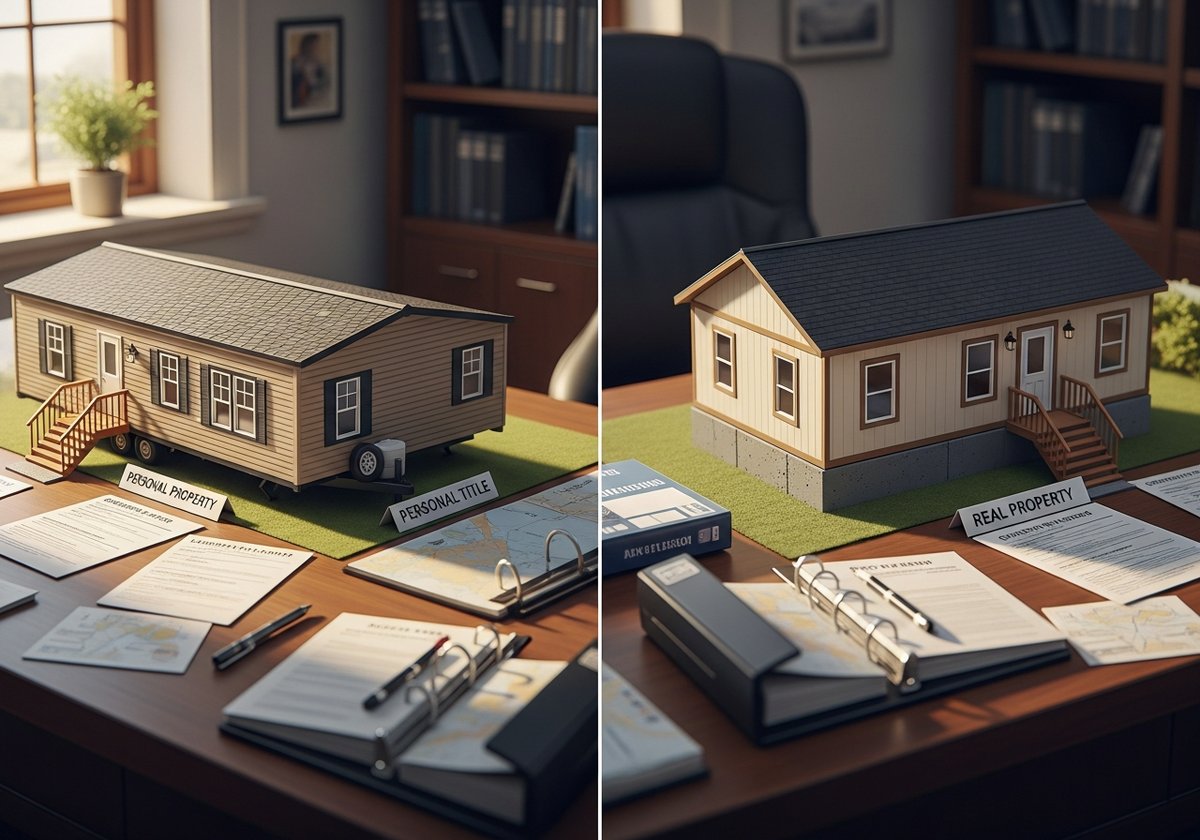
This is the most important distinction in prefab home taxation. In most U.S. jurisdictions, property taxes apply to real property – land and anything permanently attached to it. Personal property includes movable assets like vehicles, equipment, and homes that haven’t been classified as real estate.
A manufactured home sitting on rented land with its chassis still intact is often classified as personal property. It may be taxed through a vehicle registration system or through a separate personal property tax, not through traditional real estate assessment. But place that same home on a permanent foundation, surrender the title to your state’s DMV, and convert it to real property – and suddenly it enters the standard property tax system like any other house on your street.
Modular homes, by contrast, almost always arrive already classified as real property because they are built to local building codes, delivered in sections, and permanently affixed to a foundation from the start. They are treated nearly identically to site-built homes for tax purposes in most states.
How Assessors Actually Evaluate Prefab Homes
Once a prefab home is classified as real property, local assessors typically use one of three approaches to determine value: the sales comparison approach (comparing to similar homes sold nearby), the cost approach (estimating what it would cost to rebuild the structure), or the income approach (used mainly for rental properties).
For residential prefab homes, the sales comparison method is most common. If there are very few comparable prefab home sales in your area, the assessor may default to comparing your home to site-built homes of similar size and finish. This can work in your favor if your prefab home cost significantly less to build than a comparable stick-built home – but the assessed value is based on market value, not construction cost.
Factors that influence assessed value include square footage, lot size, number of bedrooms and bathrooms, quality of finishes, energy efficiency features, and location. If you’re researching how prefab homes age after 10 years, you’ll find that quality construction holds its value well – which means assessed values tend to remain strong over time, just like conventional homes.
Permanent Foundation: The Tax Trigger You Can’t Ignore
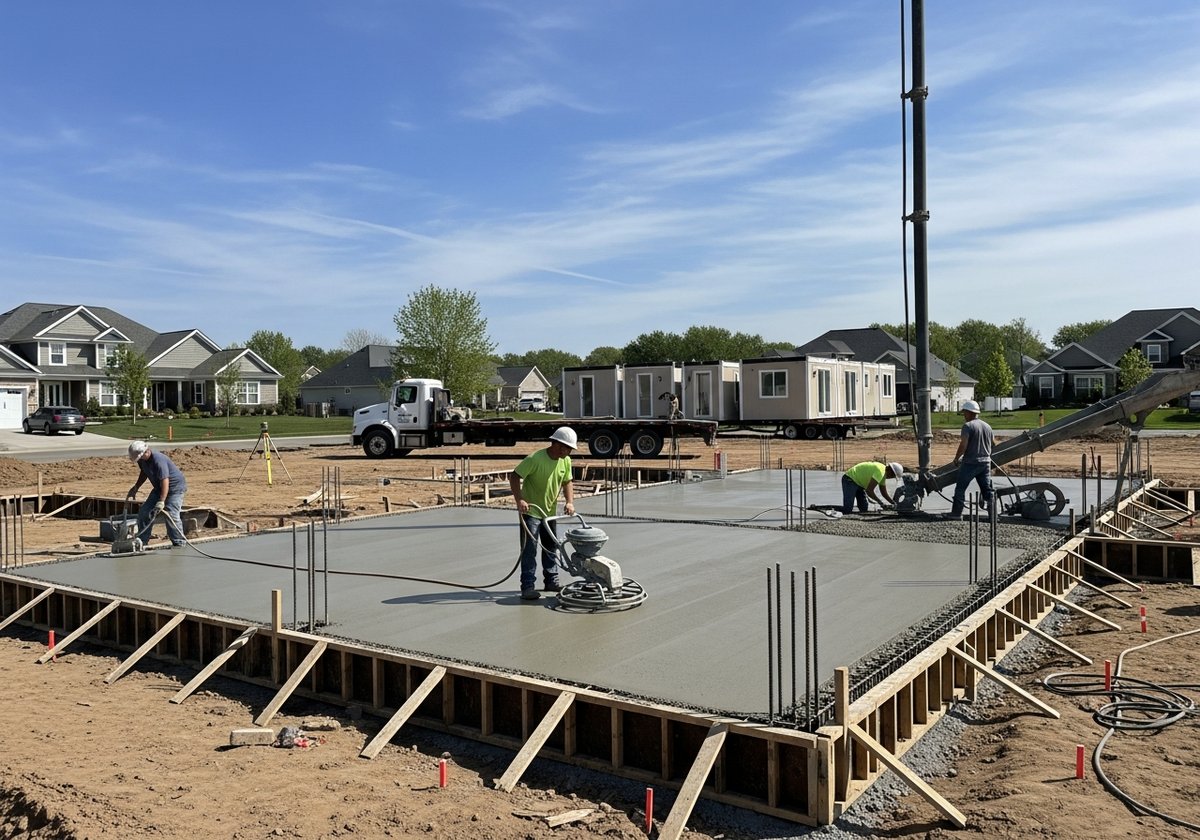
Placing a prefab home on a permanent foundation is often the single action that converts it from personal property to real property. The general process involves several steps:
- The home is affixed to a permanent concrete foundation (slab, crawlspace, or basement).
- The owner files a title elimination or title conversion document with the state.
- The county recorder or assessor is notified, triggering a new property tax assessment.
- The land and structure are combined into a single real property tax parcel.
Once this conversion happens, the property is typically reassessed. In states like California, a change in ownership or new construction triggers a reassessment to current market value. This can result in a significant jump in annual property taxes if the home is being installed on land that was previously assessed at lower values.
State-by-State Variation: Why Location Matters Enormously

There is no single national standard for how prefab homes are taxed. Each state sets its own rules, and some states have dramatically more favorable treatment than others. A few patterns worth knowing:
California taxes modular homes identically to site-built homes once they are affixed to a permanent foundation. Manufactured homes on rented spaces in mobile home parks may be taxed through a vehicle license fee system instead. Owners who convert their manufactured home to real property in California will see it folded into the Proposition 13 framework, which caps annual assessment increases at 2 percent.
Texas follows a similar real property conversion model, but assessments can be more aggressive because Texas has no state income tax and relies heavily on property taxes. Prefab homeowners there should expect active reassessment cycles.
Florida offers a homestead exemption that applies to qualifying manufactured and modular homes on permanent foundations, reducing the taxable value by up to $50,000.
If you are considering tax credits that might offset some of your housing costs, it’s worth reviewing tax credits and rebates for prefab and green homes in California, which outlines programs that can meaningfully reduce your overall tax burden when combined with energy-efficient prefab construction.
ADUs and Secondary Structures: A Special Case
Accessory dwelling units (ADUs) built as prefab structures add another layer of complexity. When an ADU is added to a property, most jurisdictions reassess only the value of the new structure, not the entire parcel. This means your existing home’s assessed value is protected in states with assessment caps, but the ADU itself will be added to the tax roll at current market value.
In California specifically, ADU additions trigger a supplemental assessment for just the new structure. If you are adding a prefab ADU as a rental income strategy, the additional tax burden is usually modest relative to the rental income generated. Exploring options through a resource like best prefab ADUs for rental income in California can help you model the financial picture, including the tax implications, before you commit to a unit.
What New Prefab Owners Should Do Before Installation

A little preparation before your home arrives can save you real money and eliminate surprises. Here’s a practical checklist:
- Contact your county assessor’s office and ask specifically how modular or manufactured homes are classified in your jurisdiction.
- Ask whether a foundation conversion will trigger a full reassessment of the land and structure together, or only the new improvement.
- Research applicable homestead exemptions, senior exemptions, or new construction exemptions that may temporarily reduce your assessment.
- If your home is energy-efficient or certified green, ask whether your jurisdiction offers any property tax incentives for sustainable construction.
- Work with a local real estate attorney or tax consultant who has specific experience with prefab and manufactured housing.
Frequently Asked Questions About Prefab Home Property Taxes
Does a modular home get taxed the same as a site-built home?
In most states, yes. Modular homes are built to local building codes and permanently affixed to foundations, which means they are classified as real property and assessed using the same methods applied to site-built homes. Your tax rate will be the same; only the assessed value of your specific property determines the bill.
Will installing a manufactured home on a permanent foundation raise my taxes?
It often will, because the conversion to real property triggers a reassessment. If your land was previously assessed at low values and the home adds significant market value, the increase may be substantial. Always request a pre-installation estimate from your assessor’s office.
Can I appeal my prefab home’s property tax assessment?
Yes. All property owners have the right to appeal assessments they believe are inaccurate. To build a case, you would typically need:
- Recent sales data for comparable homes in your area.
- Documentation of your home’s construction cost and specifications.
- Evidence of any features or conditions that reduce market value.
Are there property tax exemptions specifically for prefab homes?
Not usually, but general homestead exemptions, senior exemptions, and veteran exemptions apply to prefab homes classified as real property just as they do for site-built homes. Some states also offer temporary exemptions for new construction or energy-efficient improvements.
How do property taxes on a prefab home compare to renting?
Property taxes are one cost component of ownership that renters don’t pay directly – though landlords factor them into rent. For most prefab homeowners, annual property taxes range from 0.5 to 2.5 percent of assessed value depending on location, which is comparable to what site-built homeowners pay in the same area.
Does adding a prefab ADU to my property change my existing home’s tax assessment?
In most jurisdictions, adding an ADU triggers a supplemental assessment only for the new structure. Your existing home’s assessed value is generally protected, especially in states with assessment caps like California’s Proposition 13.
Sources
- National Conference of State Legislatures – Manufactured Housing Tax Policy Overview
- California State Board of Equalization – Assessor’s Handbook for Manufactured Homes
- Urban Institute – “The Role of Manufactured Housing in Expanding Homeownership”
- U.S. Department of Housing and Urban Development – Manufactured Housing Guidelines
- Lincoln Institute of Land Policy – “Property Tax Treatment of Manufactured Homes”
