



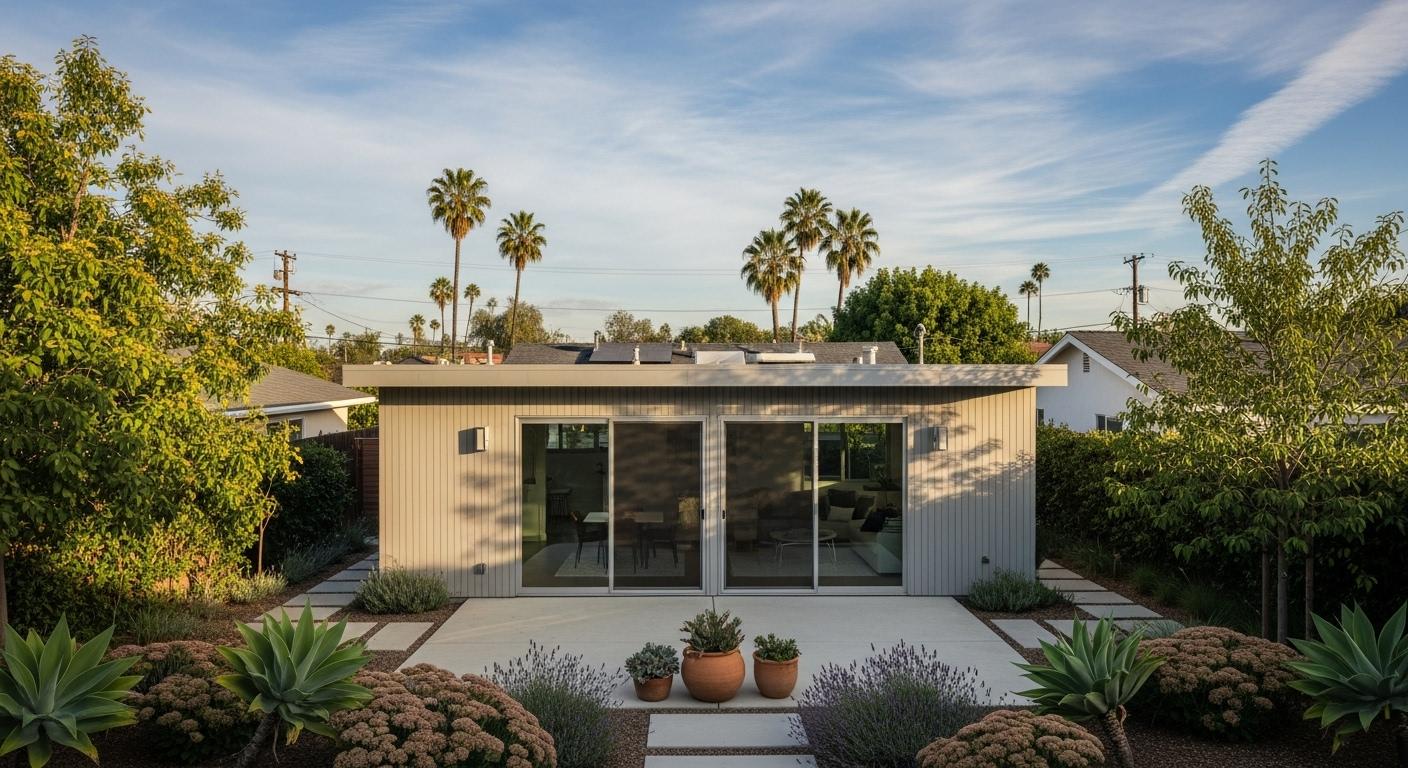
Introduction to Accessory Dwelling Units (ADUs)
Accessory Dwelling Units, or ADUs, have been making quite a buzz in Los Angeles lately. Essentially, these are secondary housing units on a single-family residential lot. But why such interest? Well, ADUs have come a long way from being just the “granny flats” of yesteryears. Originally a solution for housing extra family members, they’ve evolved into versatile spaces that can accommodate various needs, from rental income to home offices. This shift is particularly noticeable in a bustling metropolis like Los Angeles, where housing space is at a premium.
Los Angeles, with its unique charm and challenges, has seen a resurgence in ADU interest due to their potential in alleviating housing shortages. They offer flexibility and a chance to maximize property use. Imagine turning that unused garage into a vibrant living space or having a tiny home in your backyard that brings in rental income. It’s no wonder ADUs are gaining traction!
Current ADU Regulations in Los Angeles
Before diving into construction, it’s crucial to understand the local regulations governing ADUs in Los Angeles. The city’s zoning laws and zoning districts define where and how you can build. Generally, ADUs are permissible in most residential zones, but size and height are subject to specific restrictions. For instance, an ADU cannot exceed 1,200 square feet, and height is typically limited to two stories.
Setback requirements dictate how far your ADU must be from property lines, while parking regulations may require additional spaces unless certain exemptions apply. Recent legislative changes, like California’s Senate Bill 13, have eased some of these restrictions, making it more accessible for homeowners to consider building an ADU on their property.
Costs Associated with Building ADUs
Building an ADU involves various costs, starting from initial permitting and planning expenses. These include fees paid to the Los Angeles Department for necessary permits. Construction costs are the bulk of the expenses, covering labor and materials like any traditional building project.
You’ll need to factor in utilities and infrastructure adjustments, especially if you’re working with an existing structure. Architectural and design services can add up as well. Careful planning and budgeting are essential to avoid unexpected financial strain.
Navigating the Permit Process
Securing permits for an ADU might seem daunting, but a step-by-step approach can simplify the process. Start by gathering key documents such as site plans, floor plans, and project details. Having a good relationship with the city planning department can be beneficial; they’re often more than willing to guide you through the process.
Common hurdles include meeting zoning regulations and understanding local building codes, but with patience and perseverance, these can be overcome. The key is to plan meticulously and keep communication lines open with officials.
Top Builders Specializing in ADUs in Los Angeles
Choosing the right builder is paramount to a successful ADU project. But how do you select a reputable builder? Look for experience, customer reviews, and case studies of prior projects. Companies like “Los Angeles ADU Builders” and “California Tiny Homes” have stellar reputations and provide custom design options tailored to your specific needs.
When working with contractors, clear communication, and understanding contracts are essential factors. It’s not just about the final product but also the journey to get there.
Financing Options for ADU Construction
Once you’ve decided to build, how do you finance it? There are various loans and financing options available, from traditional mortgages to government-backed programs. Grants and city incentives can also ease the financial burden to some degree.
Each financing method has pros and cons. A home equity loan might offer lower rates, but it also puts your primary residence at risk. It’s essential to weigh these factors and choose the financial route that aligns with your budget and long-term goals.
Maximizing the Value of Your ADU
Design and efficiency play crucial roles in maximizing your ADU’s value. Opt for affordable and energy-efficient designs to reduce long-term expenses. An ADU can also become a significant source of rental income, greatly enhancing your property’s return on investment.
Incorporating sustainable features is not only environmentally friendly but also appealing to potential renters. Remember, maintenance is key; regular upkeep ensures your ADU remains a valuable asset.
Future of ADUs in Los Angeles
As Los Angeles continues to address its housing shortage, ADUs are set to play a significant role in urban development. They offer a practical solution to the city’s growing needs, potentially transforming neighborhoods and communities.
With policy changes on the horizon, we can expect even more flexibility in ADU construction and adoption. As societal attitudes towards housing evolve, the charm and utility of these compact living spaces are likely to grow, shaping the future landscape of Los Angeles.
