



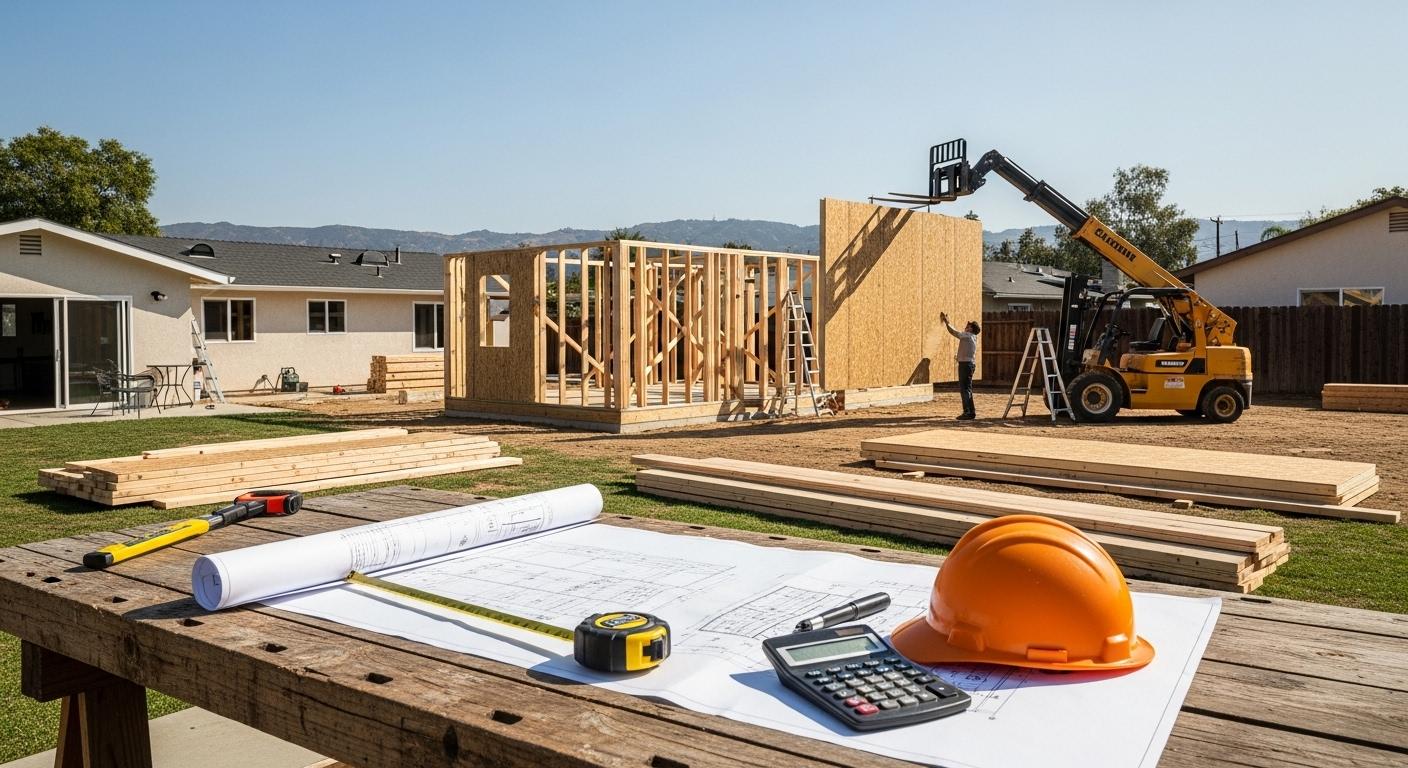
Introduction to Accessory Dwelling Units (ADUs) in California
ADUs, or Accessory Dwelling Units, have become the darling of Californian homeowners. These compact living spaces, which can be attached or detached, are transforming backyards from purely playful spaces into multifaceted extensions of the home. But what makes ADUs so appealing? Aside from their undeniable charm, ADUs offer tangible benefits: they can provide rental income, offer a housing solution for extended family, and even increase property value.
California’s legislative landscape has been evolving to embrace ADUs with open arms. Recent changes have smoothed the path for homeowners, making it easier to obtain permits and bypass previously prohibitive zoning restrictions. As we approach 2025, understanding the cost implications of building an ADU in a state as diverse as California becomes paramount.
Types of ADUs and Their Cost Implications
When exploring the world of ADUs, you’ll discover various types, including detached ADUs, attached counterparts, garage conversions, and even interior conversions within existing homes. Each type bears its own set of cost implications.
For instance, a detached ADU, which stands alone in your backyard, often presents a higher construction cost due to the need for additional utilities and standalone infrastructure. On the other hand, garage conversions can be more budget-friendly, utilizing the existing structure to significantly cut down on costs. The urban sprawl of the Bay Area might lead to higher expenses compared to more suburban locales like San Diego or San Jose, where labor and material costs may differ.
Key Factors Influencing the Cost of Building an ADU
The costs involved in ADU construction are as varied as California’s coastline. The size and design of your ADU play a pivotal role in determining your budget. A 500 sq ft ADU might be manageable in terms of both construction and ongoing maintenance, but the spaciousness of a 1,000 square foot edifice brings its own financial demands.
Then there are the material and labor costs, which, by 2025, could be influenced by economic fluctuations, supply chain issues, or new trends in sustainable building materials. And, of course, the importance of land and location can’t be understated. A backyard gem in San Francisco’s bustling landscape might come with a significant price tag, whereas a cozy unit in a quieter suburb could be more economical.
Permits and Regulations: Cost Considerations
Navigating permits and regulations may feel like learning a new language, but understanding these elements is crucial to your ADU journey. California requires specific permits for ADU construction, each with its own building permit fee and potential impact fees. As we look forward to 2025, anticipated regulatory changes could influence costs. Staying ahead of these changes and weaving smoothly through zoning laws and local building codes will be key to avoiding hidden costs.
Financing Options for ADU Construction
Building an ADU isn’t just a construction project; it’s an investment in your property’s future. Financing options are available to lessen the financial load, from home equity loans and lines of credit to more modern solutions like prefabricated ADU kits that promise ease and affordability.
Additionally, state and local grants, loans, and incentives can provide financial relief. Each option comes with its own set of benefits and drawbacks, so weighing these carefully will help you choose the best path forward.
Cost-Saving Tips for Building an ADU
Building with an eye on the budget doesn’t mean cutting corners. Engaging the right contractor or architect can offer immense savings through their expertise and connections. Opting for energy-efficient solutions even if they require a higher initial outlay can lead to significant savings over time.
Consider prefabricated ADUs that offer a balance of cost-effectiveness and quality. And don’t forget the power of detailed planning; a well-thought-out plan can preempt costly mistakes and unnecessary delays.
Potential ROI and Value Addition to Property
The financial allure of an ADU extends beyond mere construction costs. These units often boost property values significantly. Historical trends indicate a favorable ROI, particularly in dense, high-demand areas like the Bay Area.
Looking toward 2025, trends suggest that ADUs will continue to be a favored choice for property value enhancement, driven by demand for affordable housing and additional living space options.
Conclusion and Expert Insights
As you contemplate the nuances of building an ADU in California, it’s essential to weigh the costs against the potential benefits. From navigating building permit fees to choosing the right ADU type for your location, every decision influences your overall cost.
Experts predict that the popularity of ADUs will only grow as more homeowners recognize the value they add not just financially, but in providing flexible living solutions. If you’re considering embarking on this journey, rest assured that with the right planning and execution, your ADU dream can become a tangible reality by 2025.
