



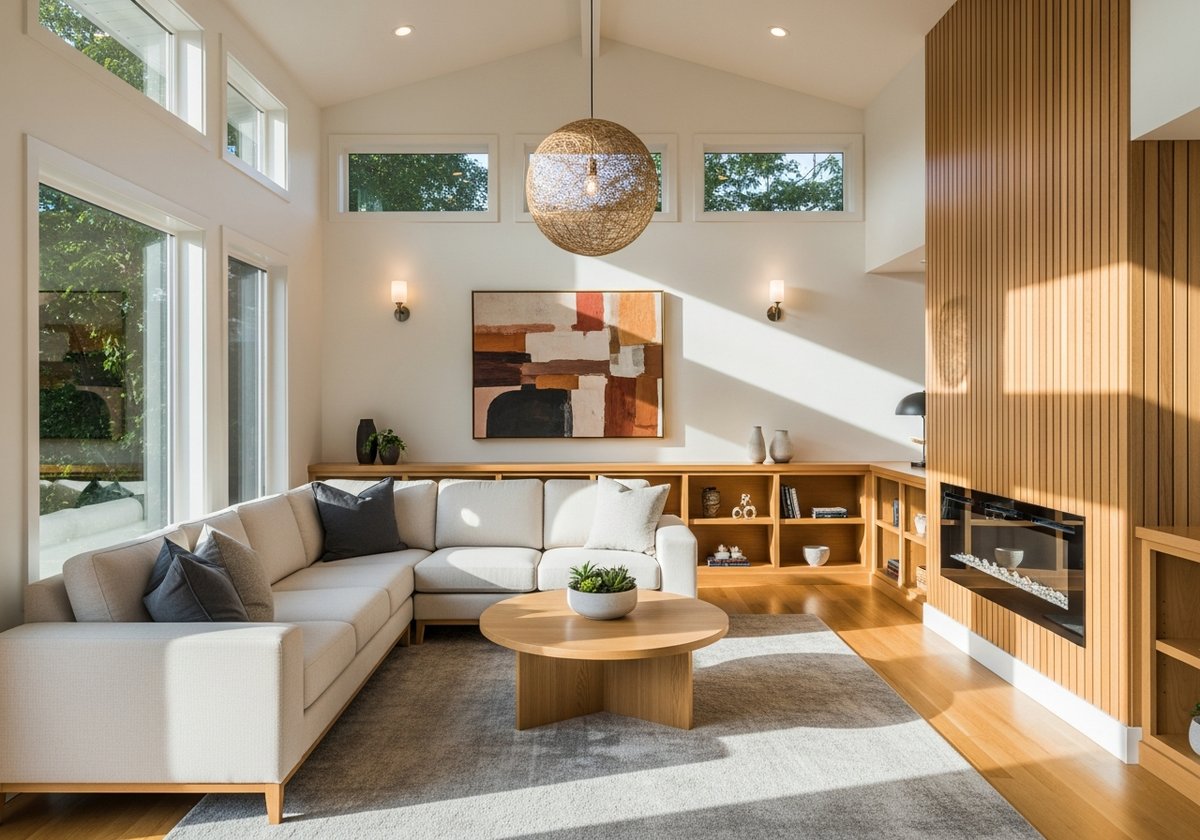
Walk into a room with a nine-foot ceiling, then walk into one with a seven-foot ceiling. You don’t need a tape measure to feel the difference. Something shifts in how you breathe, how you move, how the room seems to hold you. That feeling isn’t just psychology it’s physics, design, and human biology all working together. And for anyone buying or building a prefab home, ceiling height is one of the most consequential decisions you can make, especially because it’s one of the hardest to change after the fact.
Prefab homes have come a long way from the low-slung manufactured housing of the 1970s. Today’s modular and panelized builds can rival site-built homes in quality, energy performance, and design sophistication. But ceiling height remains a genuine constraint in the prefab world, shaped by transport regulations, factory production systems, and structural engineering. Understanding how height affects comfort and what your real options are can save you from a decision you’ll live with for decades.
Why ceiling height matters more than you think
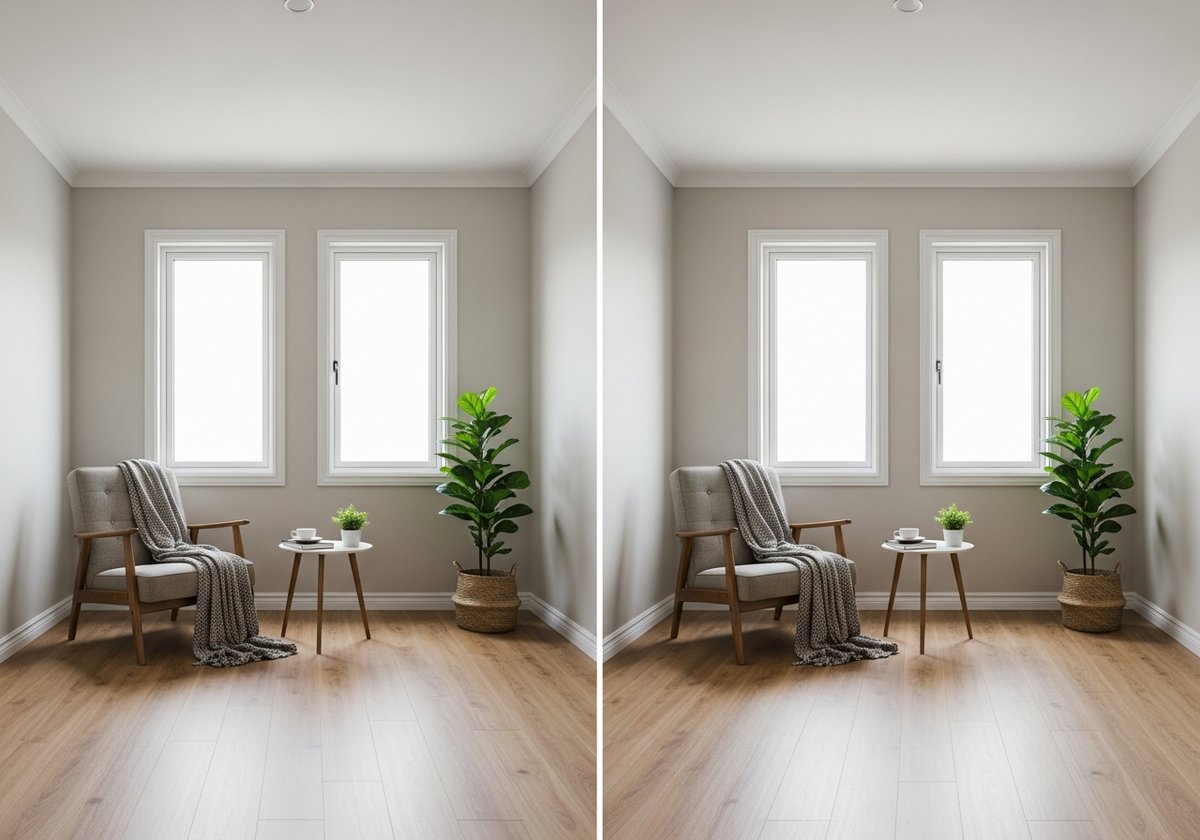
Architects often call ceiling height one of the “silent” dimensions of a room. Most buyers obsess over square footage while barely glancing at the ceiling plane. But research in environmental psychology consistently shows that ceiling height influences mood, perceived space, and even cognitive function. Studies at the University of Minnesota found that people in high-ceilinged rooms were more likely to engage in abstract, creative thinking, while lower ceilings encouraged detail-oriented focus. Neither is inherently bad but the wrong one in the wrong room creates friction you can’t easily name.
For prefab homes specifically, this matters because the typical floor plan is already compact. When you combine a smaller footprint with a low ceiling, the psychological compression doubles. The room doesn’t just feel small it feels trapped. Conversely, a well-designed small prefab with generous ceiling height can feel airy and livable in ways that surprise first-time visitors. Vertical volume is one of the most efficient ways to expand perceived space without adding a single square foot to your footprint, which is a core strategy explored in how prefab homes maximize every square foot.
Standard ceiling heights in prefab and manufactured homes
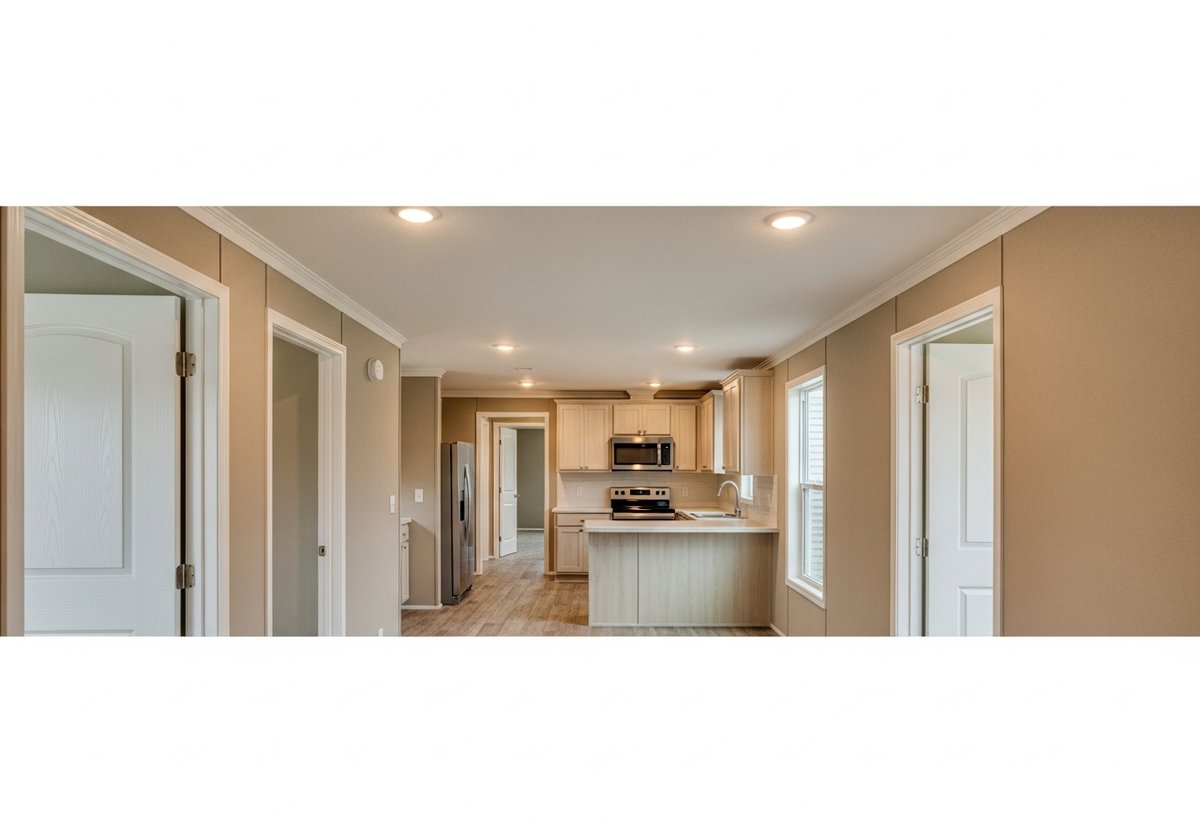
The HUD Code, which governs manufactured homes in the United States, sets a minimum ceiling height of seven feet in habitable rooms and six feet four inches in bathrooms and hallways. That’s the legal floor, not the design ideal. Most entry-level manufactured homes are built to seven feet or seven feet six inches because going higher adds cost and complicates transport.
Modular homes, which are built to local building codes rather than HUD standards, typically offer more flexibility. Standard modular ceiling heights range from eight to nine feet, with some manufacturers offering nine feet six inches or vaulted options. The constraint isn’t regulatory it’s logistical. Modules must be trucked on public roads, and most highway height restrictions top out around thirteen feet six inches. Once you account for floor and roof structure within the module, interior ceiling heights above nine feet require creative engineering or specialized transport permits.
Panelized and kit homes offer the most flexibility because walls and roof panels are shipped flat and assembled on-site. A skilled designer working with a panelized system can achieve almost any ceiling height without the transport bottleneck that constrains volumetric modular builds.
How ceiling height interacts with HVAC, acoustics, and natural light
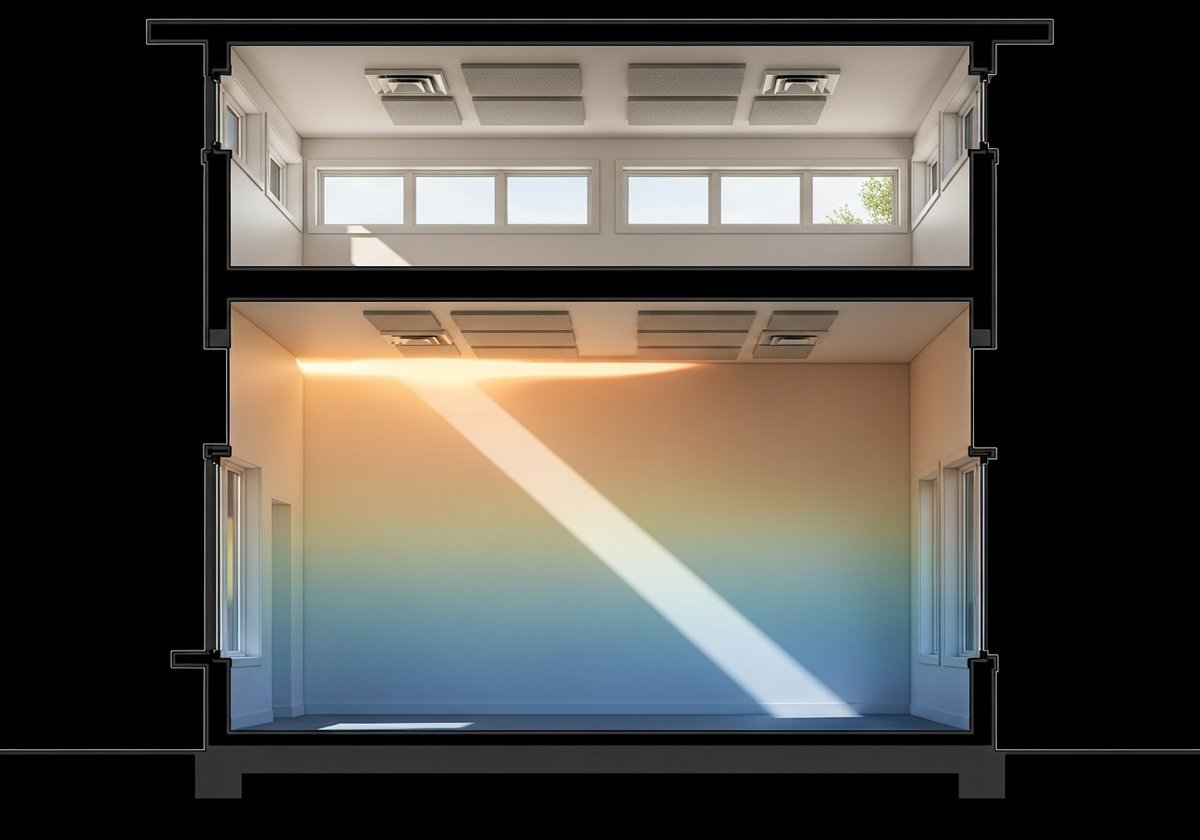
Comfort isn’t just psychological. Higher ceilings change the thermal dynamics of a room. Hot air rises, which means a ten-foot ceiling in a heating-dominated climate creates a larger buffer of warm air above your head that isn’t directly serving your comfort. This can increase heating costs unless the HVAC system is designed to account for it, often through radiant floor heating or ceiling fans that push warm air back down.
Acoustics shift too. Lower ceilings create more parallel reflective surfaces, which can amplify sound and create echo problems particularly in open-plan prefabs with hard flooring. Higher ceilings diffuse sound more naturally, which is one reason cathedral-ceilinged living rooms tend to feel calmer even when busy with activity.
Natural light distribution is perhaps the most underappreciated variable. A high ceiling allows clerestory windows and high-placed glazing that floods a room with daylight without sacrificing wall space or privacy. This is especially relevant for prefab ADUs and backyard units, where privacy from neighboring properties limits how low you can place windows. The best prefab tiny homes for backyard living often use ceiling height and strategic glazing together to create openness that belies their small footprint.
Low ceiling solutions for prefab homes
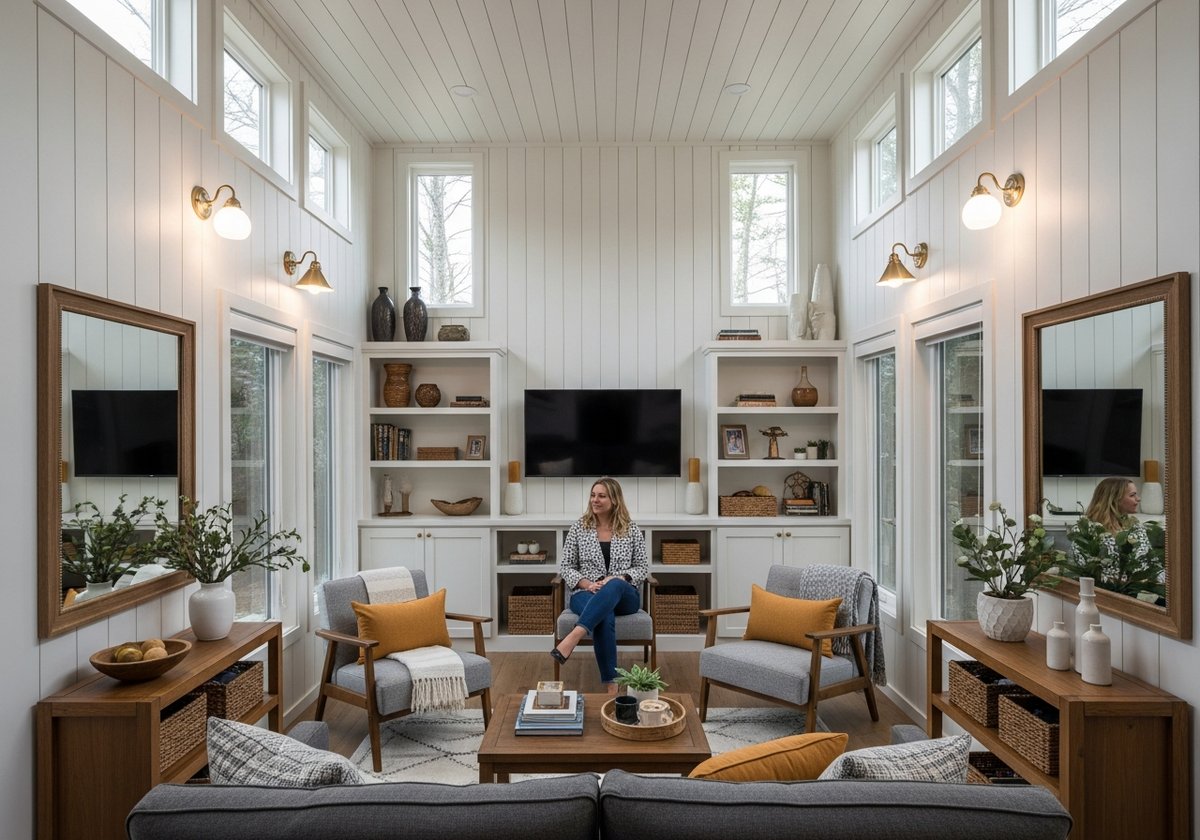
Not every prefab buyer has the budget or structural flexibility for soaring ceilings. Thoughtful design can do a lot to counteract the compression of a lower ceiling.
Use vertical lines and light colors
Vertical paneling, tall narrow windows, and floor-to-ceiling cabinetry draw the eye upward. Light wall colors reflect more light and reduce the visual weight of a low ceiling. Matte white or off-white ceilings painted in the same tone as walls blur the boundary between wall and ceiling, making the room feel taller.
Minimize ceiling-mounted fixtures
Recessed lighting dramatically reduces visual clutter on a low ceiling. Pendant lights hung on short cords or surface-mounted LED strips near the ceiling perimeter keep light where you need it without eating into vertical headroom psychologically. Avoid bulky ceiling fans in rooms under eight feet the blades can feel oppressively close.
Control furniture scale
Oversized furniture in a low-ceilinged room compounds the compression. Lower-profile sofas, beds without tall headboards, and open shelving instead of full-height bookcases all help preserve visual breathing room. This kind of spatial thinking is explored in depth in the guide to interior design ideas for small ADUs and tiny prefabs, which covers how scale, color, and layout interact in compact spaces.
Choosing ceiling height when specifying your prefab build
If you’re specifying a new prefab home rather than buying an existing one, ceiling height should be on your checklist from the first conversation with a manufacturer. Here’s what to ask:
- What is the standard ceiling height in your modules, and what are the upgrade options?
- Does a higher ceiling affect the structural span and the cost of roof framing?
- Are vaulted or cathedral ceiling options available, and how do they affect transport logistics?
- Will a higher ceiling change my HVAC sizing or insulation requirements?
- How does ceiling height interact with my chosen window package and daylighting strategy?
These questions are especially important if you’re planning a modular home you may want to expand later. Structural ceiling decisions made now can either enable or foreclose future additions. The article on whether you can expand a prefab home later walks through exactly how initial design decisions ripple into long-term flexibility.
The optimal ceiling height for residential prefab spaces
There’s no single universal answer, but there are useful benchmarks. Eight feet is the functional minimum for a comfortable contemporary living space. Nine feet begins to feel genuinely generous in a compact prefab. Nine feet six inches or ten feet, paired with high glazing and an open floor plan, can make a small prefab feel almost loft-like. For sleeping lofts or mezzanines, seven feet is workable if the primary living areas below are taller.
The optimal height also depends on use. A home office benefits from the creativity-boosting effect of higher ceilings. A bedroom or reading nook can feel cozy and intentional at eight feet. A kitchen benefits from practical ceiling height primarily for ventilation clearance above range hoods, typically requiring at least seven feet six inches above the cooking surface.
Think of ceiling height as part of your spatial budget. It doesn’t cost square footage, but it does cost money and complexity. Spending that budget strategically higher in social and working spaces, more modest in sleeping and utility areas is how good prefab designers create homes that feel both efficient and generous at the same time.
Frequently asked questions about ceiling height in prefab homes
What is the standard ceiling height in a manufactured home?
The HUD Code requires a minimum of seven feet in habitable rooms. Most modern manufactured homes are built to seven feet or seven feet six inches, though some higher-end manufacturers offer eight-foot ceilings as a standard or optional upgrade.
Can I get higher ceilings in a modular prefab home?
Yes. Modular homes built to local building codes can typically offer eight to nine feet as standard, with nine feet six inches or vaulted options available from many manufacturers. The main constraints are transport logistics and cost rather than regulation.
Does ceiling height affect energy efficiency in a prefab home?
- Higher ceilings create more air volume, which can increase heating loads in cold climates.
- Radiant floor heating and ceiling fans help redistribute warm air in tall spaces efficiently.
- In hot climates, higher ceilings can be an advantage by keeping warm air away from occupants.
- HVAC systems should be sized for actual room volume, not just floor area.
What are the best design strategies for low ceilings in a prefab home?
- Use vertical lines in paneling, cabinetry, and window placement to draw the eye upward.
- Paint walls and ceilings the same light color to blur the horizontal boundary.
- Choose recessed or perimeter lighting instead of surface-mounted fixtures.
- Select low-profile furniture that doesn’t compete with the ceiling plane.
Is a vaulted ceiling an option in prefab or modular homes?
Yes, but it depends on the construction method. Panelized and kit homes accommodate vaulted ceilings most easily. Volumetric modular homes can achieve vaulted effects through specific roof module configurations, though this often requires additional engineering and sometimes special transport permits.
How does ceiling height affect the resale value of a prefab home?
Ceiling height correlates with perceived quality and livability. Homes with eight-foot or taller ceilings consistently outperform those with seven-foot ceilings in buyer preference surveys. In competitive markets, a ceiling upgrade can return more than its cost through faster sales and higher offers, particularly in the ADU and primary residence segments.
What ceiling height should I choose for a prefab ADU used as a rental?
For rental ADUs, eight feet should be considered the minimum for tenant satisfaction and marketability. Nine feet is increasingly expected in urban rental markets. A taller ceiling also allows more flexibility in how tenants furnish and use the space, which reduces vacancy and turnover over time.
Sources
- U.S. Department of Housing and Urban Development – HUD Manufactured Home Construction and Safety Standards (HUD Code)
- Meyers-Levy, J., and Zhu, R. (2007). “The Influence of Ceiling Height: The Effect of Priming on the Type of Processing People Use.” Journal of Consumer Research, University of Minnesota.
- American Institute of Architects – Residential Design Best Practices
- National Association of Home Builders – Modular and Manufactured Housing Data Reports
- ASHRAE Standard 62.2 – Ventilation and Acceptable Indoor Air Quality in Residential Buildings
