



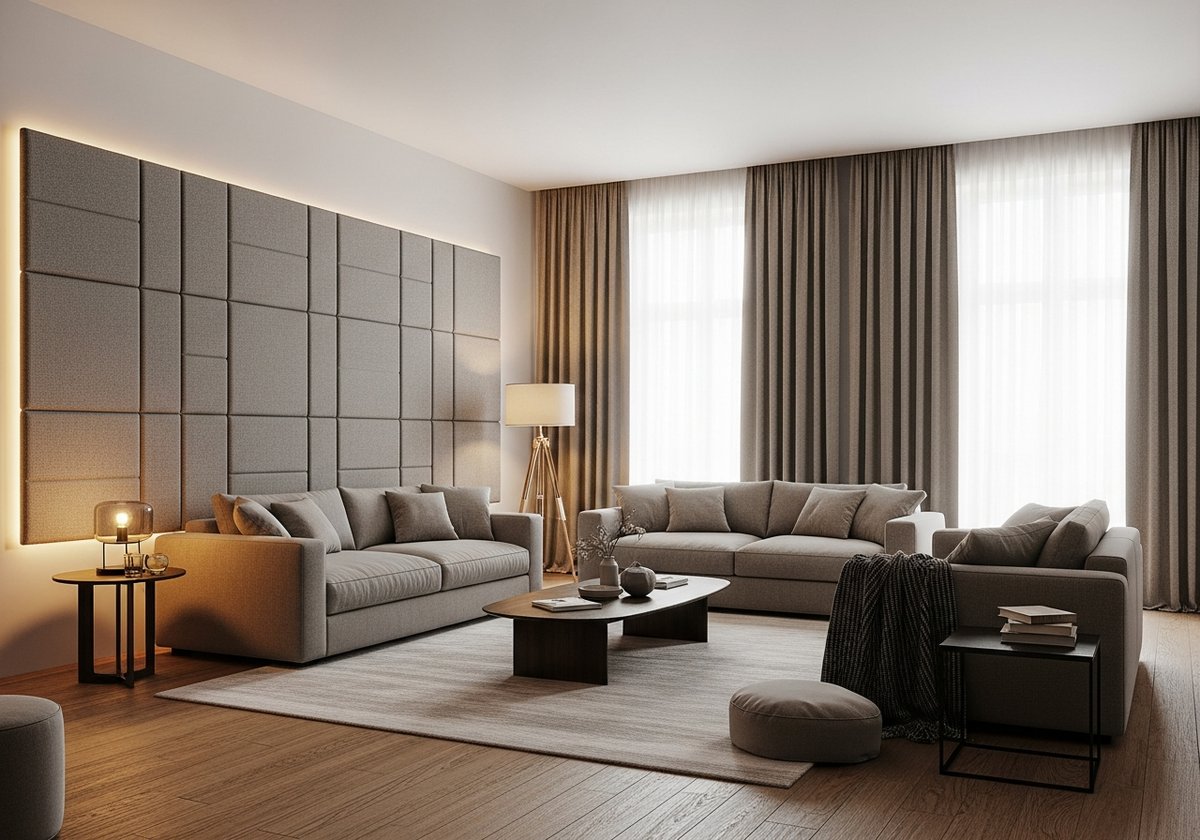
Noise is one of those things you don’t fully appreciate until it’s gone. Move into a quiet room, and suddenly you sleep better, think more clearly, and feel less irritable by midday. Stay in a noisy one, and even the most beautiful interior starts to feel like a burden. The good news? The materials you choose for your walls, floors, and ceilings do far more than set a visual tone. They shape the acoustic environment of your entire home, and with the right choices, you can dramatically reduce unwanted noise without a major renovation.
This guide breaks down the best soundproofing interior materials available today, how they work, where to use them, and why the science behind sound absorption matters more than most people realize.
Why Interior Materials Matter for Acoustic Comfort

Sound travels as vibration. When a noise occurs, it sends waves through the air, and those waves bounce off hard surfaces, pass through thin walls, and resonate through floors and ceilings. The goal of acoustic design is to interrupt that journey at as many points as possible.
There are two distinct challenges. The first is sound absorption, which means reducing the echo and reverberation inside a room. The second is sound isolation, which means stopping noise from passing between rooms or from outside into your living space. Most soundproofing interior materials address one or both of these challenges depending on their density, mass, and porosity.
For anyone living in a compact space, a prefab home, or an ADU, these principles are especially relevant. Smaller footprints mean sounds carry more easily between zones, and thoughtful material choices can make a significant difference in daily comfort. If you’re curious about how prefab construction specifically handles this issue, the article on real soundproofing expectations in prefab homes offers an honest look at what builders do and don’t control at the factory level.
Noise Reducing Wall Panels: The First Line of Defense
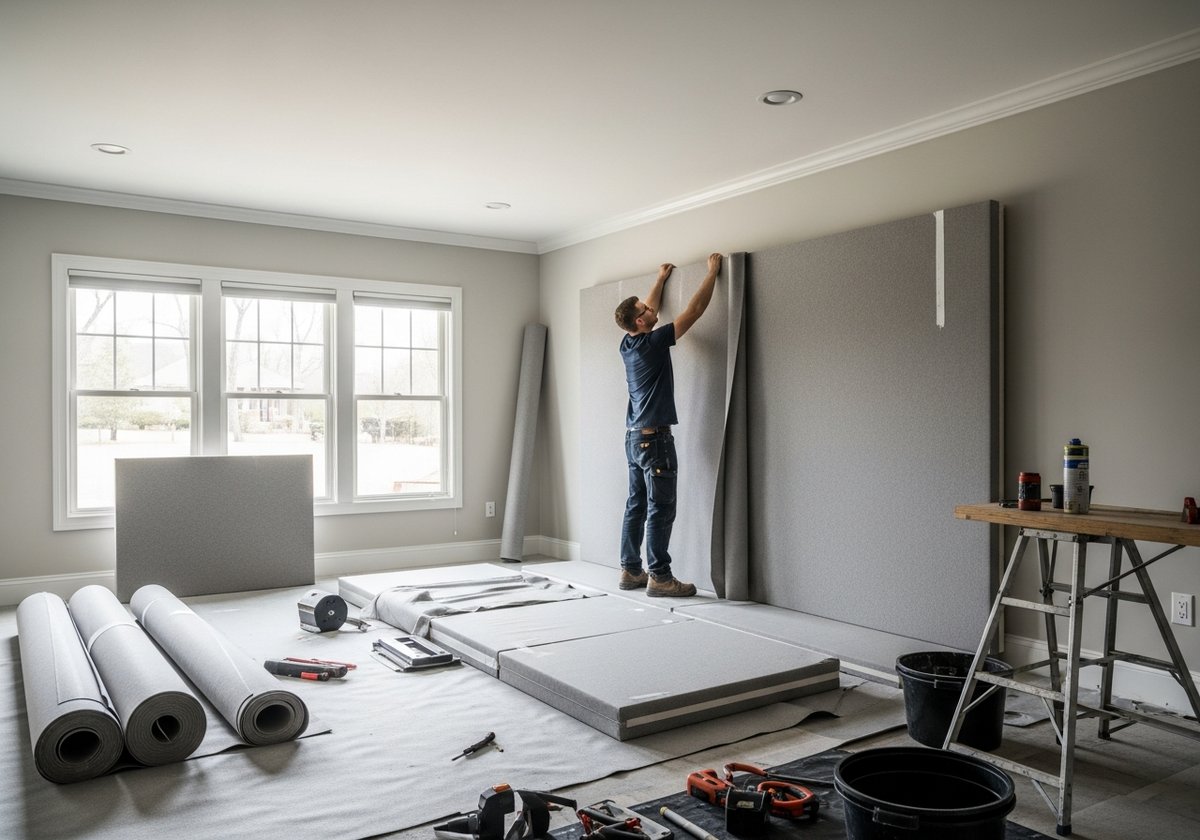
Walls are where most acoustic battles are won or lost. A standard drywall partition offers very little resistance to airborne noise. Add mass, and everything changes.
Mass-Loaded Vinyl (MLV)
Mass-loaded vinyl is one of the most effective and versatile soundproofing interior materials available. It’s a dense, flexible sheet product that adds significant mass to walls without taking up much space. You can install it between layers of drywall, behind wall panels, or directly on studs. Because it’s limp and heavy, it disrupts sound waves rather than letting them pass through. It’s particularly effective at reducing low-frequency noise from traffic, HVAC systems, and bass-heavy music.
Acoustic Drywall
Standard drywall has a single-layer, rigid structure that transmits vibrations easily. Acoustic drywall uses a damping compound sandwiched between two gypsum layers. This viscoelastic layer converts sound energy into a tiny amount of heat, breaking the vibration cycle. Brands like QuietRock have popularized this product, and while it costs more per sheet than standard drywall, it performs significantly better and requires no additional framing or furring strips.
Fabric-Wrapped Acoustic Panels
Fabric-wrapped panels filled with mineral wool or compressed fiberglass are the go-to solution for reducing echo and improving clarity within a room. They work well in living rooms, bedrooms, and home offices. The fabric covering makes them visually adaptable, and they’re available in custom colors and sizes. These panels address the absorption side of the acoustic equation rather than isolation, so they work best when combined with a dense wall assembly behind them.
Acoustic Insulation for Homes: What’s Inside the Walls
Visible wall treatments are only part of the solution. What’s inside the wall cavity has an enormous effect on sound transmission between rooms.
Mineral Wool Batts
Mineral wool (also sold as Rockwool or Roxul) consistently outperforms standard fiberglass batts for acoustic insulation. It’s denser, which means it resists airborne sound more effectively, and it also performs well thermally. Installing mineral wool in interior partition walls is one of the most cost-effective upgrades you can make during a build or renovation.
Cellulose Insulation
Dense-pack cellulose, made primarily from recycled paper fiber, is another strong performer. It’s blown into wall cavities under pressure, eliminating the air gaps that undermine batt insulation. The density and irregularity of cellulose particles are particularly good at breaking up sound waves. It also carries sustainability credentials that matter to environmentally conscious builders and homeowners.
For homeowners exploring interior upgrades alongside broader design changes, the guide to interior design ideas for small ADUs and tiny prefabs covers how material choices interact with spatial planning in compact homes.
Sound Absorbing Flooring Options
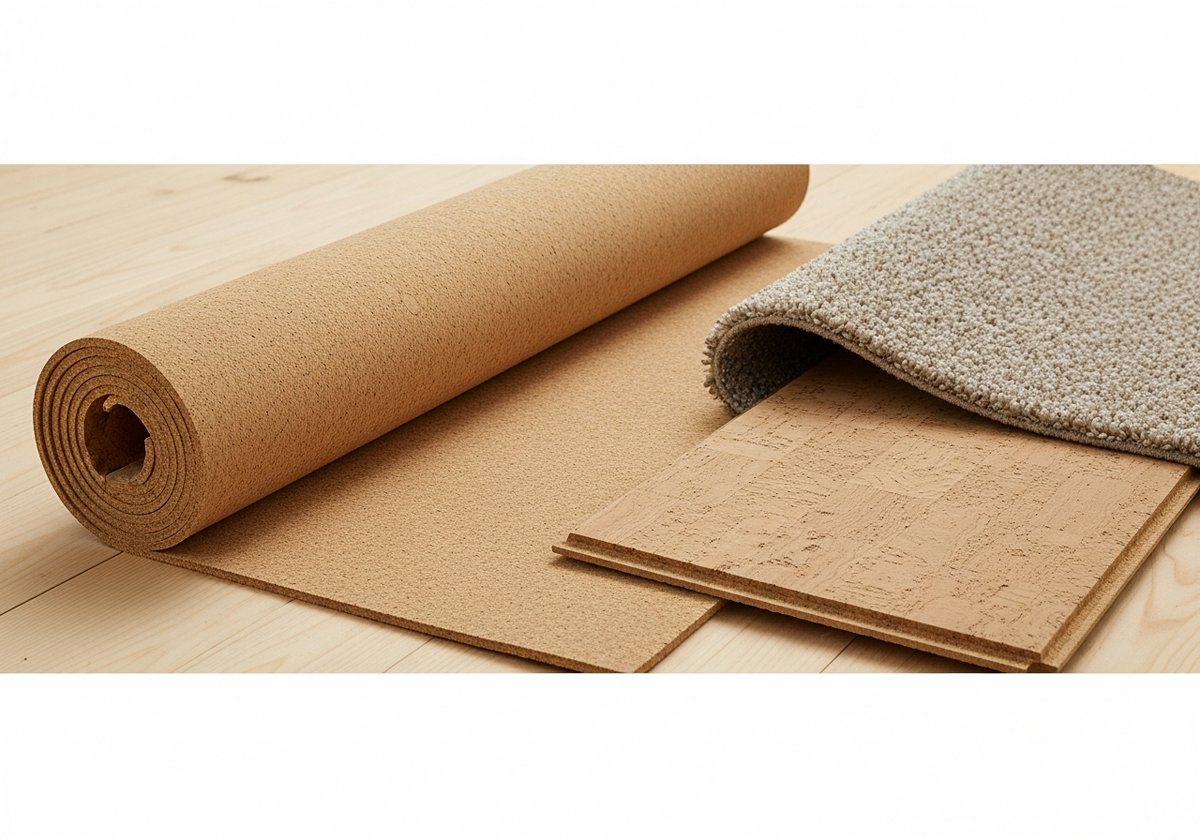
Hard floors look great, but they’re acoustic nightmares. Every footstep, dropped object, and chair scrape becomes an event. Impact noise – the kind that travels through the floor structure itself – is one of the hardest types to address after the fact. Choosing the right flooring from the start is far more effective than retrofitting solutions later.
Cork Flooring
Cork is a natural, renewable material with impressive acoustic properties. Its cellular structure compresses and rebounds under load, absorbing impact energy before it converts to sound. Cork flooring is warm underfoot, durable when properly sealed, and effective at reducing both footfall noise and surface reverberation. It’s a strong choice for upper-floor bedrooms, home offices, and children’s rooms.
Carpet and Underlayment
Carpet remains the single most effective flooring choice for reducing impact noise. Even a low-pile carpet over a quality acoustic underlayment can reduce impact sound transmission by 25 to 35 decibels. For rooms where carpet isn’t preferred, a high-density foam or rubber underlayment beneath hardwood, laminate, or luxury vinyl plank provides meaningful improvement over bare subfloor installation.
Luxury Vinyl Plank with Acoustic Backing
Many LVP products now come with an attached acoustic backing layer, typically made from cork or dense foam. These products offer a practical compromise between the clean look of hard flooring and improved impact sound performance. They’re particularly popular in ADUs and multi-use spaces where both aesthetics and function matter.
Acoustic Foam and Advanced Wall Treatments
Acoustic foam panels excel at absorbing mid and high-frequency sounds within a room, reducing flutter echo and harshness. They do not, however, provide meaningful sound isolation between rooms. Foam tiles and wedge panels are best used in media rooms, podcasting setups, or any room where internal acoustic clarity is the primary goal. Combining foam with heavier mass-based materials creates a layered approach that addresses both absorption and isolation – think of it as a system rather than a single solution.
Windows, Doors, and the Weak Points Most People Overlook
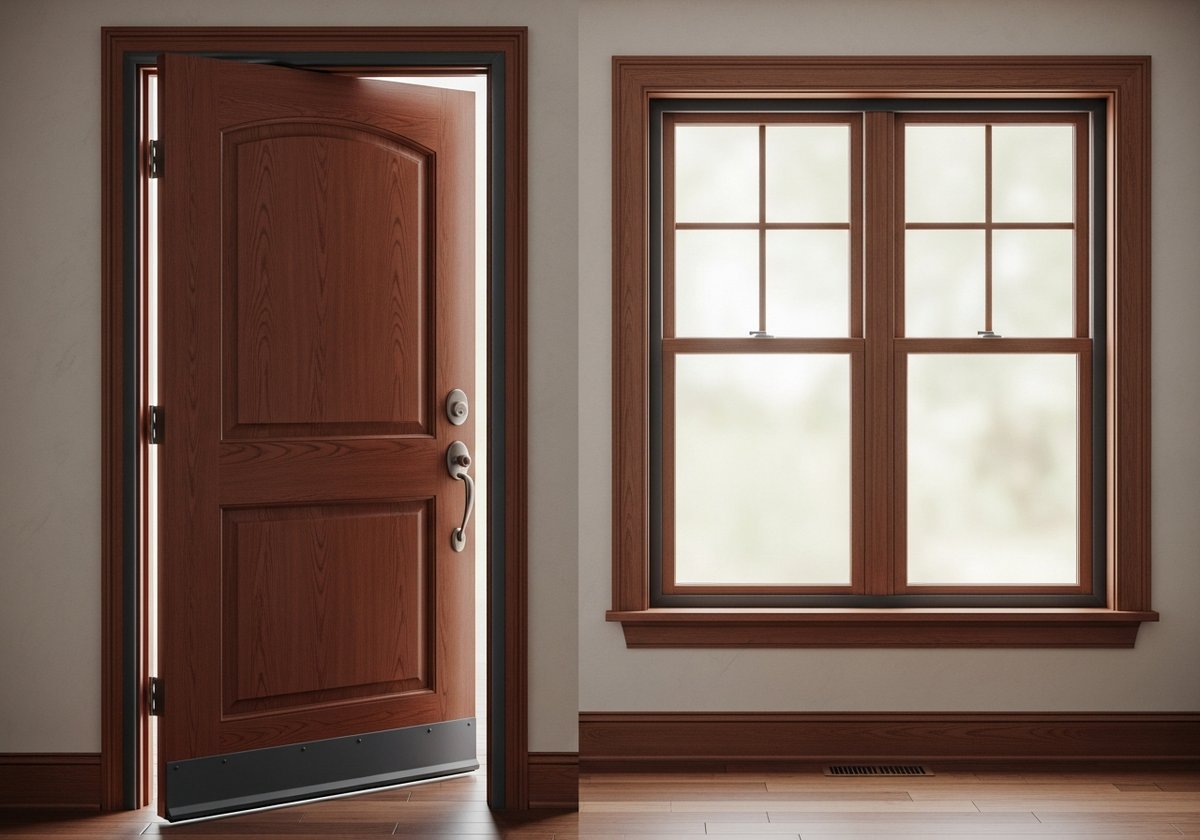
Even the best wall assembly won’t deliver quiet rooms if windows and doors are acoustic weak points. A standard hollow-core interior door allows noise to pass almost unimpeded. Solid-core doors are dramatically better and are among the most cost-effective upgrades available for reducing noise in living spaces.
For windows, double or triple glazing with an air gap between panes significantly reduces airborne noise. Laminated glass, which contains a plastic interlayer, is even more effective at blocking traffic and urban noise. Acoustic window inserts offer a retrofit option for homes where full window replacement isn’t feasible.
Sealing gaps around doors and windows with acoustic weatherstripping and door sweeps completes the assembly. A door with a quarter-inch gap at the bottom loses a substantial portion of its acoustic benefit, regardless of how solid the door itself is.
Those planning renovations should also review what structural and material changes are permissible in their specific home type. The resource on renovating a prefab home and what’s allowed covers those boundaries clearly for prefab and modular structures.
Putting It All Together
The best approach to acoustic comfort is layered and systematic. No single material solves every noise problem, but combining mass, decoupling, absorption, and sealing creates an environment that genuinely feels quieter and more comfortable. Prioritize based on your specific noise sources. Traffic noise calls for laminated glass and mass-loaded vinyl. Footfall from upstairs neighbors needs impact-rated underlayment and carpet. Echo in a home office responds well to fabric-wrapped panels and bookshelves. Every room has its own acoustic fingerprint, and matching materials to problems is both a science and a design opportunity.
Frequently Asked Questions About Soundproofing Interior Materials
What is the most effective material for soundproofing interior walls?
Mass-loaded vinyl combined with acoustic drywall and mineral wool insulation inside the cavity provides the strongest overall performance. For most homes, this combination addresses both airborne and impact noise effectively.
Can I add soundproofing materials without a full renovation?
Yes. Several options work without demolition, including:
- Adding a second layer of acoustic drywall over existing walls
- Installing fabric-wrapped acoustic panels on wall surfaces
- Replacing hollow-core doors with solid-core alternatives
- Applying acoustic weatherstripping and door sweeps
- Laying area rugs with thick acoustic underlayment on hard floors
Does acoustic foam actually reduce noise between rooms?
No. Acoustic foam reduces echo and reverberation within a room, improving sound clarity. It does not provide meaningful sound isolation between spaces. For noise passing through walls, mass-based and decoupling solutions are required.
What flooring is best for reducing noise in an upstairs bedroom?
Carpet over a dense foam or rubber underlayment is the most effective choice. Cork flooring is a strong second option for those who prefer a hard surface. Luxury vinyl plank with an acoustic backing layer also performs reasonably well compared to bare hardwood or laminate.
How much does acoustic insulation improve comfort in a small home or ADU?
- Mineral wool in partition walls can reduce sound transmission by 10 to 15 decibels compared to an empty cavity
- In compact spaces, this improvement significantly reduces noise from adjacent rooms and mechanical systems
- Combined with sealed penetrations and solid-core doors, the overall difference is noticeable in everyday living
Are there design-friendly soundproofing options that don’t look industrial?
Absolutely. Fabric-wrapped acoustic panels are available in a wide range of colors and textures that complement any interior style. Cork floors and area rugs add warmth visually while absorbing sound. Bookshelves, upholstered furniture, curtains, and wall art all contribute to acoustic absorption without looking like studio equipment.
What role does ceiling treatment play in reducing noise?
Ceilings are often overlooked but are critical for impact noise from above and for controlling echo in rooms with high ceilings. Resilient channel or sound isolation clips decouple the drywall from the structure, significantly reducing impact sound transfer. Acoustic tiles and spray-applied cellulose are effective options for absorption in existing spaces.
Is soundproofing worth the investment in a prefab or modular home?
Yes, particularly for homes used as primary residences or rental units. Acoustic comfort is consistently cited as a top factor in residential satisfaction, and targeted investments in wall insulation, flooring underlayment, and door upgrades deliver real, perceivable results for years after installation.
Sources
- U.S. Department of Energy – Building Technologies Office: Insulation Materials
- Acoustical Society of America – Residential Acoustic Guidelines
- National Institute of Standards and Technology – Sound Transmission Class Testing
- International Building Code – Chapter 12: Interior Environment (Acoustic Requirements)
- Forest Stewardship Council – Sustainable Flooring Material Standards
