



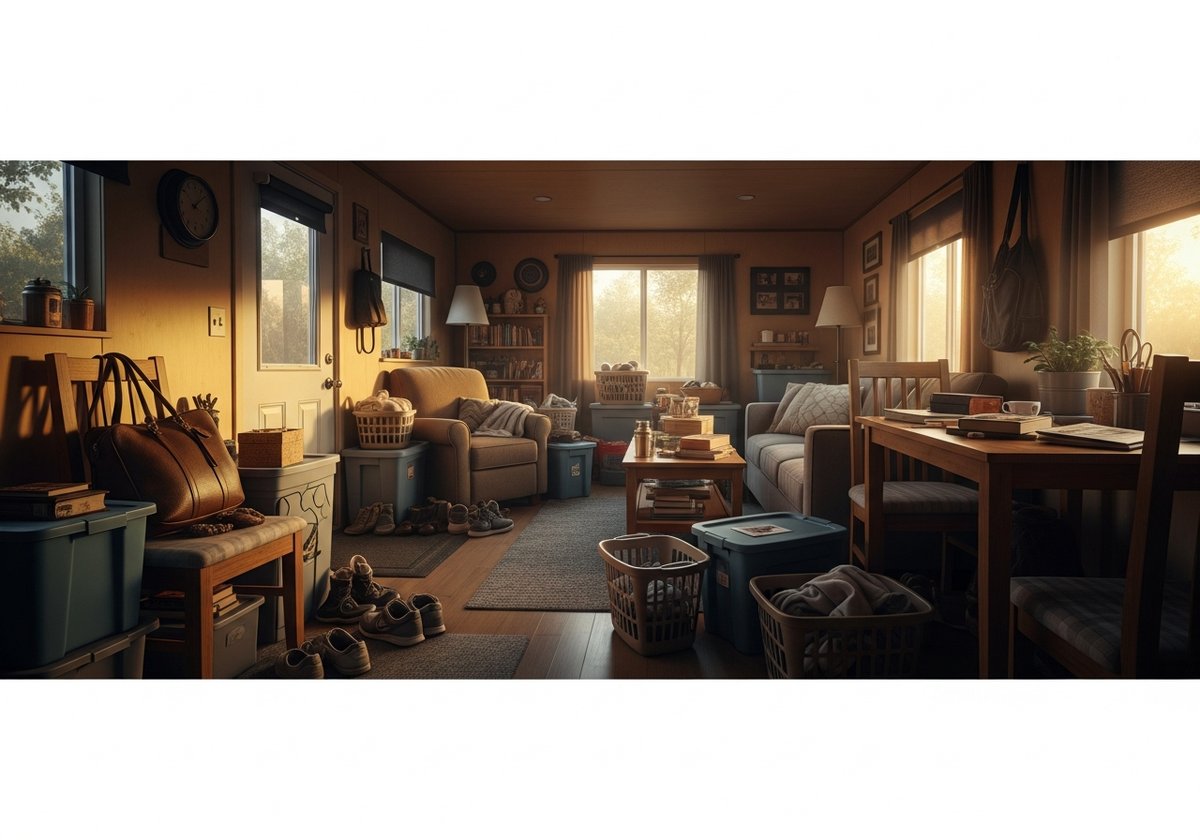
There is a particular kind of frustration that comes with living in a small prefab home that feels more crowded than it should. You chose the compact footprint on purpose. You did the math, toured the floor plans, maybe even read every article about tiny living you could find. And yet, somehow, the space still feels like it is closing in on you. The problem, more often than not, is not the square footage. It is the storage.
Small prefab homes are genuinely brilliant pieces of design engineering. Manufacturers obsess over every inch of wall cavity, every roofline angle, every transition between rooms. But even the best-designed shell can feel suffocating if the people living inside it are making storage decisions that work against the architecture. The good news is that most of these mistakes are entirely fixable, and once you spot them, you cannot unsee them.
Let us walk through the most common small prefab home storage mistakes, why they happen, and what you can do instead.
Mistake 1: Treating Floor Space as the Only Real Estate
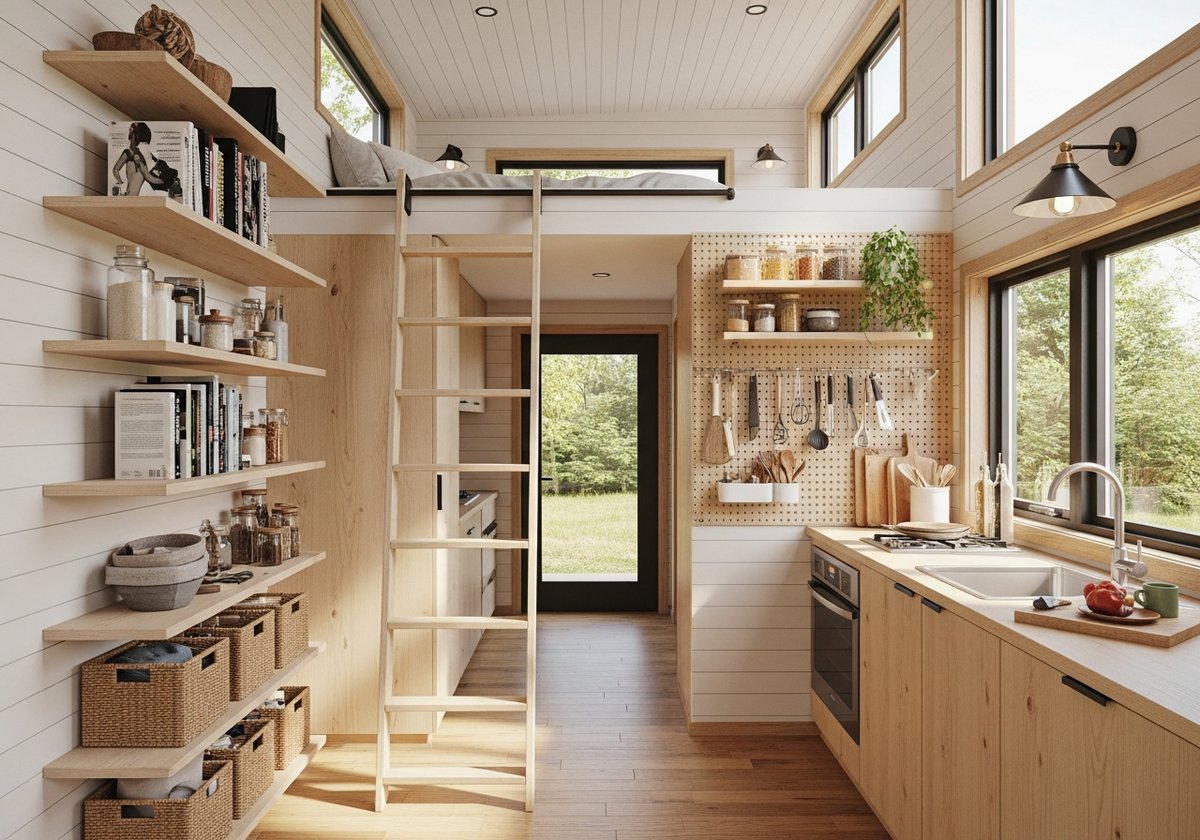
Walk into most small homes and you will immediately notice the same pattern: stuff accumulates at ground level. Bins, baskets, furniture with things stuffed underneath it, shoes by the door, bags hanging off chair backs. All of it competes for the same horizontal plane.
In a standard-sized home, this is inconvenient. In a small prefab home, it is catastrophic. When your floor is visually cluttered, your brain reads the entire room as smaller than it actually is. Psychologists call this cognitive load, and it applies directly to how we perceive space.
The fix is not simply tidying up. It is fundamentally rethinking your vertical real estate. Walls are not decoration; they are storage infrastructure waiting to be used. Open shelving above doorways, floating shelves that run ceiling-high, pegboards in kitchens and entryways, magnetic knife strips and mounted spice racks – these all move storage off the floor and free up the visual field that makes a room feel open.
If you are still in the planning phase, this is worth raising directly with your prefab builder. Many manufacturers now offer wall-integrated storage systems as part of their standard packages. For a deeper look at how prefab interiors are being designed to maximize usable space, the article on interior design ideas for small ADUs and tiny prefabs covers a range of practical approaches worth exploring.
Mistake 2: Buying Furniture That Does Not Pull Double Duty
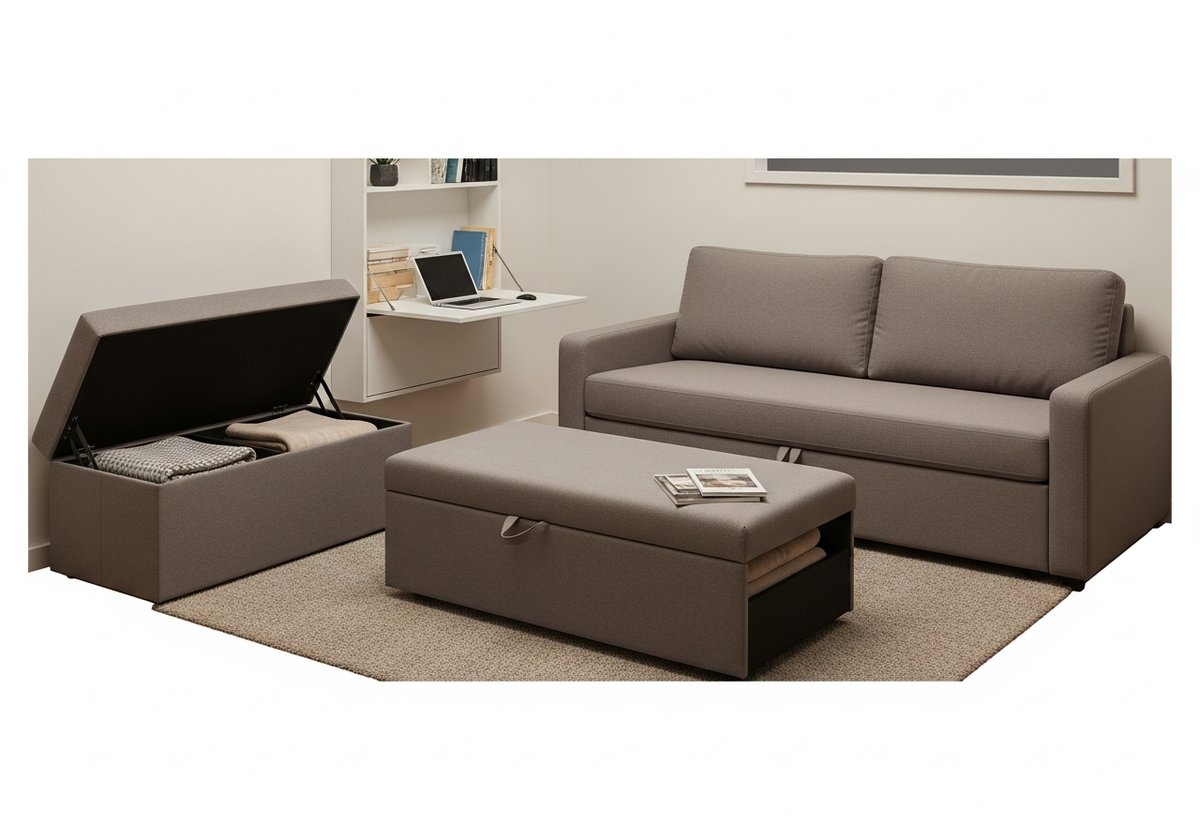
A sofa is just a sofa. A coffee table is just a coffee table. In a 900-square-foot prefab home, that kind of single-purpose thinking is a luxury you simply cannot afford.
One of the most consistent storage mistakes in small prefab living is furnishing the space with pieces designed for larger homes. The proportions are wrong, the functionality is too narrow, and the result is a room that feels both cramped and underutilized at the same time.
Multifunctional furniture is not a trend; it is an engineering response to a real constraint. Ottoman benches with interior storage, beds with deep drawers built into the platform, dining tables that fold flat against the wall, desks that collapse into shelving units when not in use – all of these serve the same purpose as a built-in wall system, but with the flexibility to move or reconfigure.
The key is to audit every major piece of furniture with a single question: does this do more than one job? If the answer is no, it is worth reconsidering. This is particularly important in prefab ADUs and backyard studios, where the spatial constraints are even tighter than in a primary residence.
Mistake 3: Ignoring Built-In Opportunities During Construction
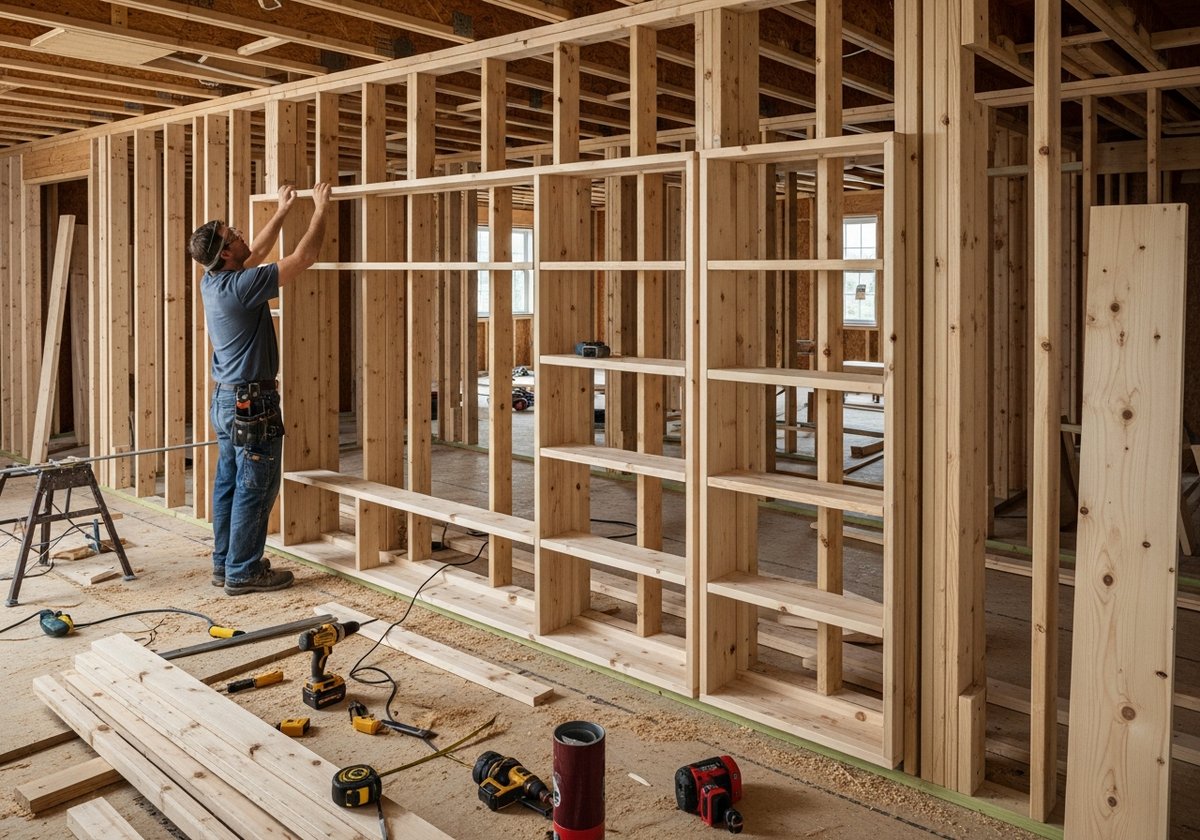
This is the mistake that hurts the most, because it is the hardest to fix after the fact. Many prefab home buyers focus almost entirely on floor plans, exterior finishes, and appliance packages during the specification process. Storage infrastructure, particularly built-in storage, often gets treated as something to figure out later.
Later is much more expensive and disruptive. Adding built-in shelving, window seat storage, under-stair drawers, or integrated cabinetry after your prefab is installed means retrofitting into a structure that was not designed to accommodate those changes easily.
The smarter approach is to treat built-in storage as a non-negotiable specification during the design phase. Builders who specialize in small prefab homes and ADUs often have options for banquette seating with storage, recessed shelving between wall studs, and custom cabinetry that runs floor to ceiling. These choices are far less expensive when built in from the start, and they make the home feel intentional rather than improvised.
The guide to small space living and how prefab homes maximize every square foot goes into detail about how manufacturers approach the relationship between structure and storage from the ground up.
Mistake 4: Keeping Things You Do Not Actually Use
No storage system in the world can compensate for too much stuff. People move into a compact prefab and bring with them the accumulated possessions of a much larger life, then wonder why nothing fits.
The problem is not always hoarding in any dramatic sense. It is the quiet accumulation of things that felt useful in a different context – the extra set of dishes for twelve guests, the exercise equipment used twice, the filing cabinet full of documents you could scan and store digitally in an afternoon.
Minimalist storage solutions for prefab homes work best when paired with genuine editing of what you own. A useful framework is to think in categories rather than rooms. Go through everything you own by type, not by location, and make honest decisions about what earns its keep in a smaller space. This is not about aesthetic minimalism; it is about functional clarity.
For those using their small prefab as a rental or secondary dwelling, storage organization directly affects tenant satisfaction. The guide to the best prefab tiny homes for backyard living highlights several models where smart storage design is a key differentiator in the tenant experience.
Mistake 5: Underestimating the Power of Zones
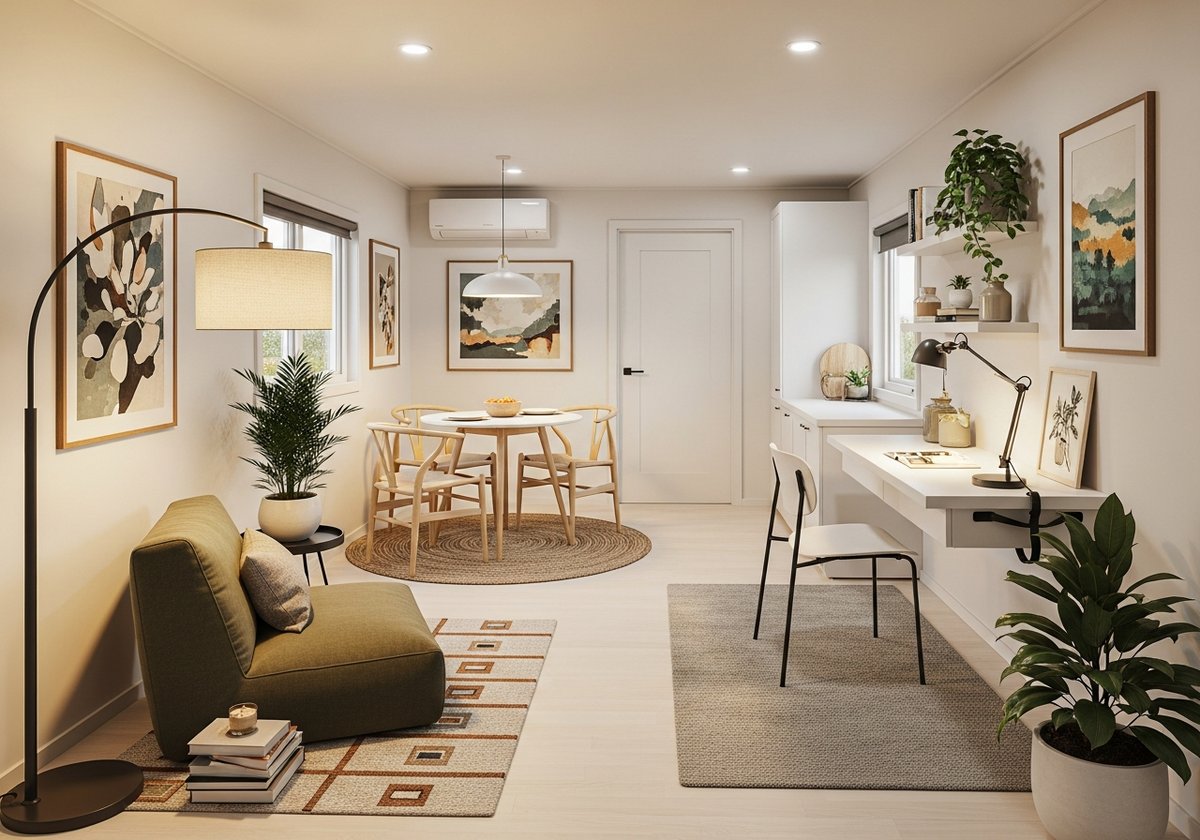
In a large home, rooms create natural zones. In a small prefab home where one room might serve three or four functions, the absence of clear zones creates chaos – and chaos creates the feeling of clutter even when the actual volume of stuff is manageable.
Zone-based organization means assigning every activity a dedicated area and ensuring that the storage for that activity lives within or immediately adjacent to that zone. Cooking supplies near the stove. Work materials near the desk. Sleep and dressing items contained within the bedroom footprint. When everything has a logical place, the home feels ordered even when life is moving fast.
Visual delineation matters here too. Rugs, lighting, and even paint can signal zone transitions in open-plan prefabs without adding physical barriers – a technique borrowed from retail design, where the goal is to make a single open space feel like multiple distinct environments.
Mistake 6: Overlooking Hidden Storage Opportunities
Small prefab homes are full of underutilized storage potential that most people simply do not notice. The wall beside the refrigerator. The gap between the washer and dryer. The space above kitchen cabinets. The back of every door in the house. These micro-spaces, taken together, can add up to a surprising amount of functional storage.
Narrow pull-out pantry units fit into a six-inch gap beside an appliance and hold an entire pantry’s worth of canned goods. Over-door organizers handle everything from cleaning supplies to accessories. Shallow shelves in hallways hold books and plants without consuming meaningful floor area. Magnetic strips mounted inside cabinet doors hold small tools, spices, or bathroom products.
The principle is simple: treat every surface as a potential storage opportunity and evaluate it deliberately rather than leaving it blank by default.
Frequently Asked Questions About Storage in Small Prefab Homes
What is the single biggest storage mistake in small prefab homes?
The most impactful mistake is failing to specify built-in storage during the construction phase. Retrofitting storage solutions after installation is significantly more expensive and disruptive than integrating them into the original design. If you are still in the planning stage, prioritize this conversation with your builder.
How do I make my small prefab home feel less crowded without major renovations?
- Move storage off the floor and onto walls using floating shelves and pegboards.
- Replace single-purpose furniture with multifunctional pieces that include hidden storage.
- Create clear activity zones so every area of the home has a dedicated purpose.
- Audit your possessions and remove items that do not earn their place in a smaller footprint.
- Use the back of doors and gaps beside appliances for narrow storage solutions.
Are there prefab home models that come with built-in storage already designed in?
Yes. Several prefab manufacturers treat built-in storage as a core design feature rather than an optional upgrade. Models designed specifically for small footprints, including many ADUs and backyard studios, often include platform beds with drawers, integrated cabinetry, and recessed shelving as standard. Researching manufacturer specifications carefully before purchasing will reveal which builders take this seriously.
How does clutter affect the perception of space in a small home?
Visual clutter increases cognitive load, which is the mental effort required to process your environment. When a room has too many competing visual elements, especially at eye level and below, the brain interprets the space as smaller and more chaotic than it actually is. Reducing visible clutter, even without changing a single dimension of the room, can make the space feel significantly more open.
What furniture works best for storage in small prefab homes?
- Platform beds with integrated drawer systems.
- Storage ottomans that serve as seating, footrests, and concealed storage simultaneously.
- Fold-down dining tables with shelving integrated into the wall mount.
- Benches with lift-top seats, particularly in entryways and mudrooms.
- Modular shelving units that can be reconfigured as needs change.
Is minimalist design necessary for small prefab storage to work?
Minimalist aesthetics are not required, but functional minimalism – owning fewer things and organizing them intentionally – is essential. You can have a visually rich, layered interior and still apply the principles of zone organization, vertical storage, and multifunctional furniture. The goal is purposeful design, not bare walls.
Can good storage design increase the rental value of a prefab ADU?
Absolutely. Tenants in small ADUs and compact prefab units are acutely aware of storage limitations. A unit with clever built-in storage, well-organized zones, and adequate concealed storage for daily living will consistently attract stronger interest and justify higher rental rates than a comparable unit that feels cramped and disorganized.
