



Introduction to the Housing Crisis in California
California, where dreams meet reality, is also where the housing crisis has reached a fever pitch. With its sunny beaches and sprawling cities like Los Angeles and San Francisco, the state has long been a magnet for those seeking opportunity and a better life. Yet, the very allure of California has contributed to an unprecedented housing shortage. Picture it: the demand for homes is soaring, but the availability? Not so much.
Factors such as a booming population, strict zoning laws, and a shortage of construction workers have all converged, creating a perfect storm that impacts both affordability and availability. Families and individuals are squeezed out of the market, forced to pay exorbitant rents, or to some degree, abandon the Californian dream. This urgent need for innovative and viable housing solutions has led many to explore prefab homes as a potential remedy.
What Are Prefab Homes?
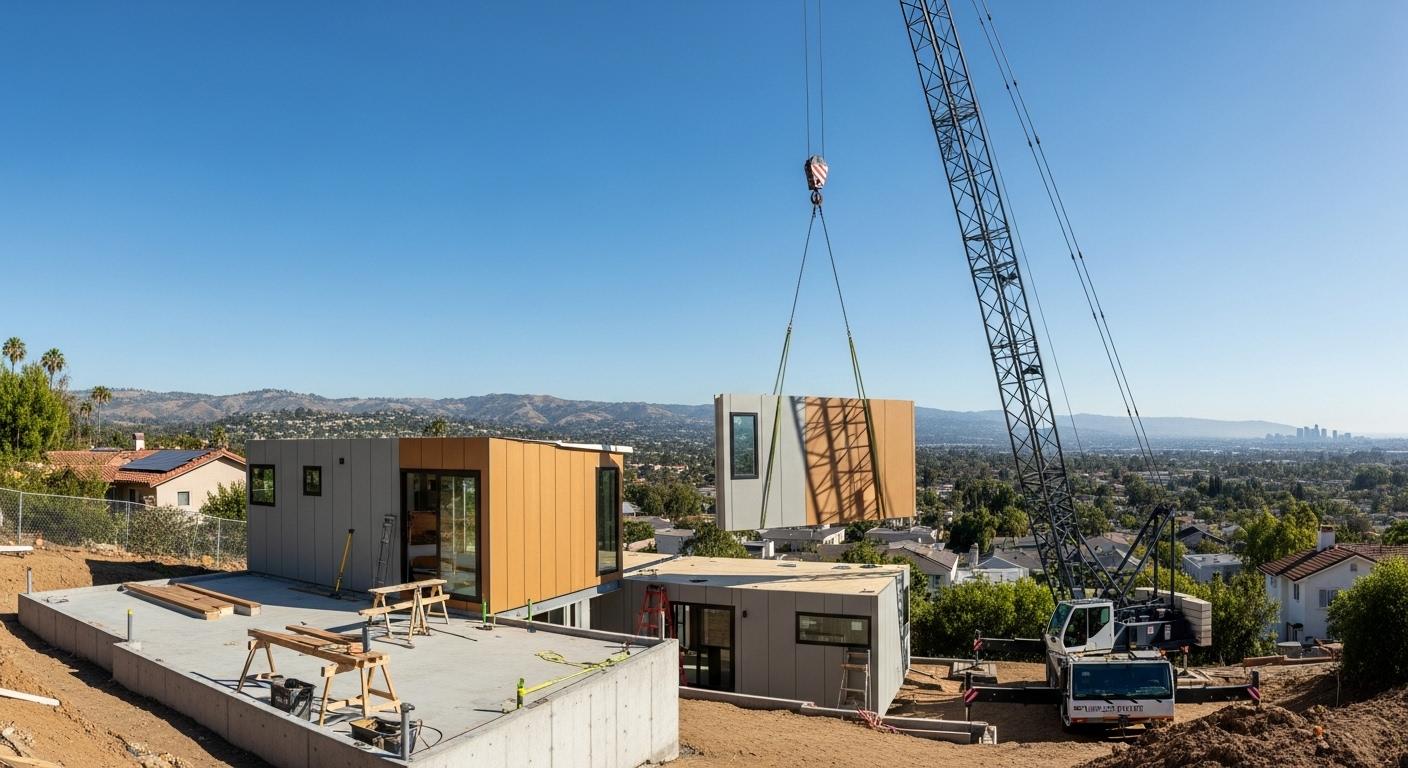
Prefabricated homes, or prefab homes, are like the modern-day answer to the Sears catalog homes of the past efficient, stylish, and designed to be assembled quickly. Essentially, these homes are constructed in a factory setting and then transported to the site as a whole or in sections. It’s akin to ordering a meal kit: you get all the ingredients ready-to-go, but the final assembly happens in your kitchen.
Within the realm of prefab homes, you’ll find modular homes and manufactured homes. Modular homes are built in sections, transported to the site, and then assembled. Manufactured homes, often known as mobile homes, are constructed in entirety and then moved to their final destination. The prefab construction process is streamlined, allowing for homes to be built faster and sometimes cheaper than traditional site-built homes. And don’t forget the benefits reduced waste, energy efficiency, and customization options. The list goes on.
Why Prefab Homes Are Gaining Popularity
There’s a reason prefab homes are having their moment in the sun, especially in a place like California. First up, the speed of construction. In an industry where time is literally money, prefab homes offer significantly reduced build times, sometimes cutting the timeline by months. Imagine getting the keys to your new home much sooner than expected it’s a game-changer.
The cost-effectiveness of prefab homes is another key draw. Traditional construction can be costly, but prefabricated homes often reduce expenses related to labor and materials. Moreover, these homes are built with sustainability in mind, boasting lower carbon footprints due to efficient manufacturing processes and materials. And let’s not overlook the customization. From layout to finishes, you can tailor a prefab home to suit your taste, making it a truly personalized space.
Challenges and Limitations
But let’s face it, prefab homes aren’t without their challenges. Zoning regulations and legal hurdles can be significant barriers to widespread adoption. Some cities are still wrestling with outdated perceptions of prefab homes as inferior to traditional construction an unfortunate legacy from the days when “mobile homes” equated to less desirable living conditions.
Logistical challenges also exist, particularly related to transport and assembly on-site. Quality control is crucial; while factory conditions can ensure consistency, the eventual assembly requires meticulous attention to detail. It’s a landscape of opportunity, but one that must navigate these complexities with care.
Innovations and Future of Prefab Homes
Interestingly, technological advancements are continually reinventing what prefab homes can offer. New materials and cutting-edge design trends are emerging, making prefab not only a cost-effective choice but also a chic and modern one. The collaboration between tech companies and developers is pushing the boundaries of what’s possible in prefabricated housing.
As California looks to the future, the prefab home industry is set to grow exponentially. Increasingly, these homes are not just seen as temporary solutions but as enduring, attractive options for homeownership in the United States.
Case Studies and Success Stories
Consider the compelling story of a family who opted for a prefab home in the Bay Area. Despite skepticism from some quarters, their experience has been overwhelmingly positive. From a swift construction process to a home that perfectly suits their lifestyle, their story exemplifies the potential economic and social benefits of prefab housing.
Builders and residents alike sing praises, noting not just the affordability but the sense of community that springs up around prefab neighborhoods. The lessons learned from these projects can serve as blueprints for future developments, with recommendations aimed at overcoming hurdles and maximizing success.
Conclusion and Call to Action
The benefits of prefab homes in addressing California’s housing crisis are clear: they’re swift, sustainable, and increasingly stylish. Policymakers have a vital role in supporting initiatives that make prefab housing more accessible and accepted. For investors and entrepreneurs, the prefab market offers ripe opportunities there’s room for growth, innovation, and real solutions.
In a state where the dream of a home sometimes feels out of reach, prefab homes emerge as a realistic, sustainable option. They offer hope, not just to residents but to anyone investing in the future of housing in California. Isn’t it time we gave them the spotlight they deserve? Let’s embrace prefab homes as a cornerstone of the solution to this complex and pressing crisis.
