



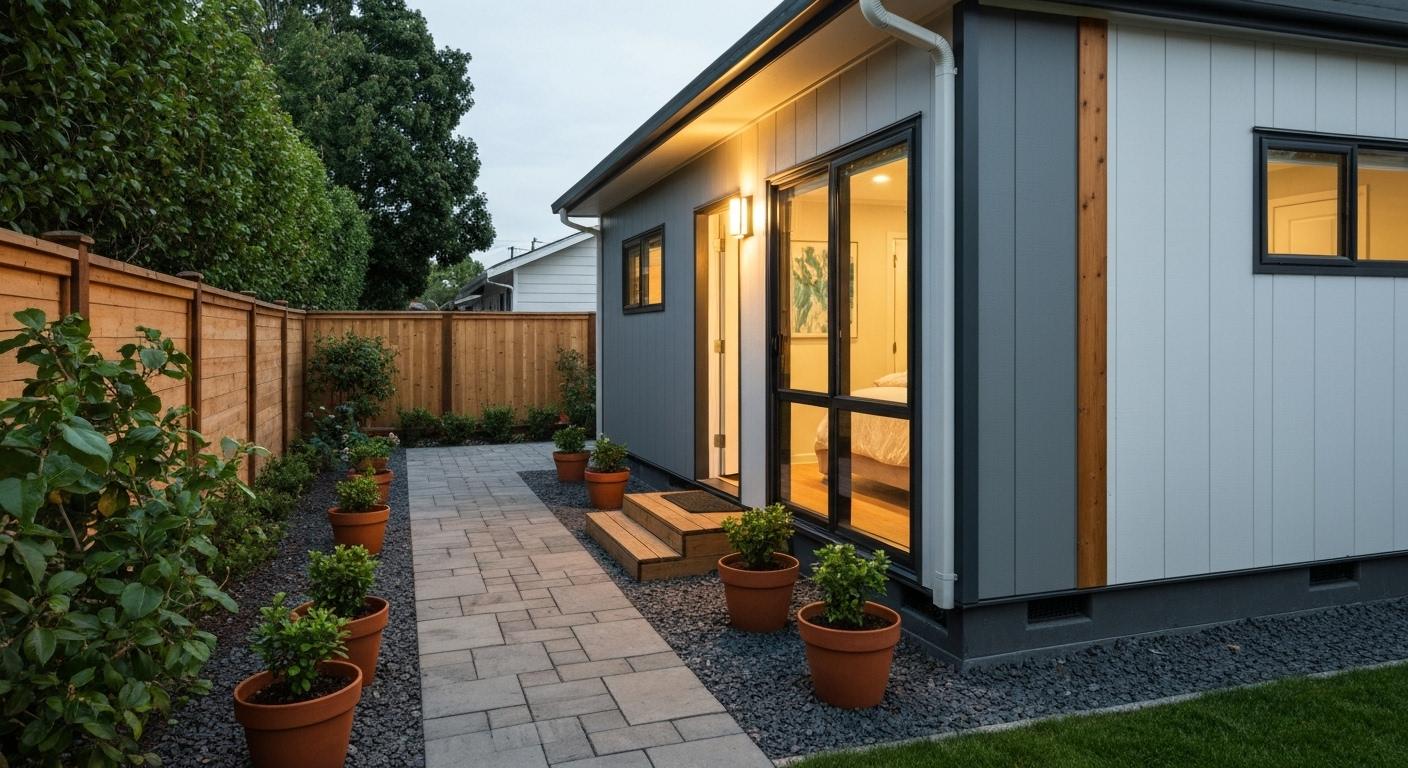
Introduction to Prefab ADUs for Small Backyards
An Accessory Dwelling Unit, commonly known as an ADU, may sound like regulatory jargon, but it has become one of the most practical housing solutions in California. Simply put, an ADU is a secondary residential unit built on an existing residential lot, often located in a backyard. The true value of ADUs lies in their ability to maximize limited space efficiently, making them especially appealing to homeowners with small lots who want to increase property value, generate rental income, or create flexible living arrangements for family members.
Prefab ADUs have rapidly gained popularity as a solution to California’s housing and construction challenges. Short for prefabricated, these units are built off-site and delivered for fast installation. In a state where construction costs, labor shortages, and long timelines are common concerns, prefab ADUs offer predictability, speed, and greater budget control. Recent state legislation has significantly streamlined ADU approvals, though homeowners should still review local zoning rules, setback requirements, and utility connections before moving forward.
Top Prefab ADU Models Suitable for Tight Spaces
Prefab ADU manufacturers have responded to California’s small-lot realities with compact, well-designed models that prioritize efficiency without sacrificing comfort. Modular designs from companies such as Studio Shed and similar prefab builders are especially well-suited for tight backyards. These units often include space-saving layouts, integrated storage, and flexible room configurations that make even modest square footage feel functional.
Many models feature smart design elements such as built-in cabinetry, fold-away furniture, and high ceilings to enhance the sense of openness. Customization options are also common, allowing homeowners to adapt layouts for personal use or rental compliance. Durability is a key consideration, particularly in areas exposed to heat, seismic activity, or coastal conditions. High-quality materials and modern construction methods ensure these units meet California building standards and perform well over time.
Space-Saving Features Common in Prefab ADUs
Prefab ADUs rely heavily on intelligent design to make limited space work harder. Multi-functional furniture, integrated storage walls, and flexible room layouts are standard features in many models. Kitchens and bathrooms are often designed with compact, efficient footprints that still meet residential code requirements.
Energy efficiency is another defining characteristic. Many prefab ADUs are designed to meet or exceed California Title 24 energy standards, incorporating high-performance insulation, energy-efficient windows, and compatibility with solar systems. These features not only reduce environmental impact but also help control long-term utility costs an important consideration given California’s energy prices.
Installation Process and Timeframe
One of the biggest advantages of prefab ADUs is the relatively fast installation process. After an initial site assessment and permitting phase, the unit is constructed off-site, which can take several weeks depending on the manufacturer. Once delivered, on-site assembly and final connections often take only a few days to a few weeks, significantly faster than traditional ground-up construction.
Proper site preparation is critical. This includes foundation work, utility hookups, and ensuring access for delivery. Many homeowners choose to work with experienced ADU professionals who coordinate permitting, inspections, and installation, reducing the risk of delays or costly errors.
Cost Analysis and Financial Benefits
While prefab ADUs require an upfront investment, they often deliver strong long-term financial returns. Construction costs are typically lower and more predictable than custom-built ADUs, and the shorter build time reduces carrying costs. In many California markets, ADUs can generate steady rental income, whether through long-term tenants or, where permitted, short-term rentals.
In addition to rental potential, ADUs frequently increase overall property value. California homeowners may also benefit from local incentives, fee waivers for units under 750 square feet, or favorable financing options designed to encourage ADU development.
Legal and Zoning Considerations
California has some of the most ADU-friendly laws in the United States, but compliance still matters. State law allows ADUs by right in most residential zones, limits parking requirements, and restricts local governments from imposing excessive barriers. However, local jurisdictions may still enforce design standards, height limits, or special rules in coastal, historic, or fire-prone areas.
Navigating permits, building codes, and inspections can feel overwhelming, which is why many homeowners rely on ADU specialists or prefab providers that offer end-to-end support, including permitting assistance.
Designing a Prefab ADU for Personal and Rental Use
Prefab ADUs are highly adaptable. Some homeowners design them as home offices, guest suites, or housing for aging parents, while others focus on rental appeal. Layout choices, finishes, and amenities should reflect the intended use. Rental-focused ADUs often benefit from private entrances, efficient kitchens, and durable materials, while personal-use units may emphasize comfort and customization.
Thoughtful landscaping, fencing, and privacy features help integrate the ADU into the existing property without sacrificing outdoor space. Even in compact backyards, careful design can create a comfortable and attractive living environment.
Future Trends in Prefab ADU Development
The prefab ADU market continues to evolve as technology and housing policy advance. Innovations in modular construction, materials, and energy systems are making units more efficient, resilient, and customizable. As housing demand remains high and land availability limited, ADUs are expected to play an increasingly important role in California’s residential landscape.
With continued regulatory support and growing consumer awareness, prefab ADUs are likely to remain a preferred solution for homeowners seeking efficient, flexible, and future-proof housing options.
