



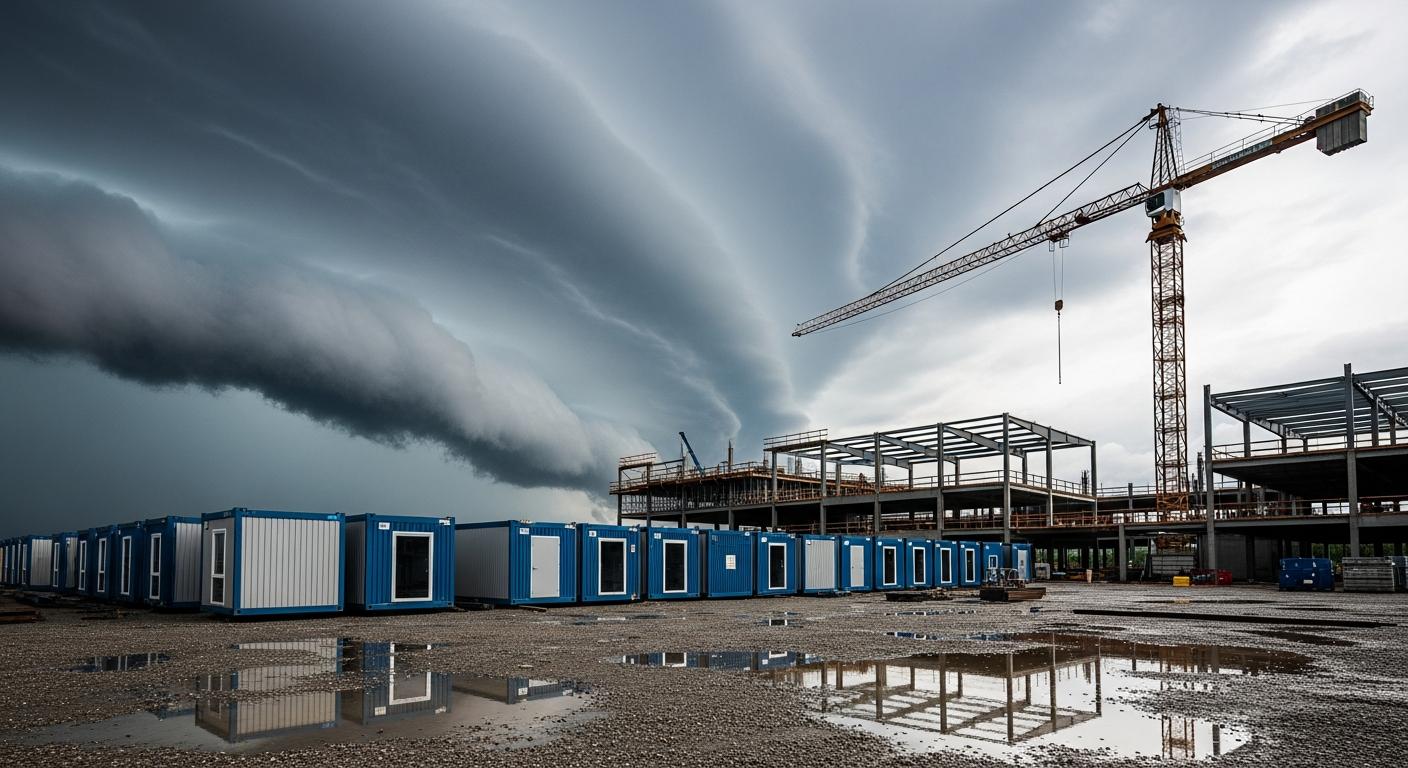
Weather Delays and Prefab Construction: What’s Normal
One construction manager once joked that his most trusted subcontractor wasn’t a person it was the weather app on his phone. Every morning, he’d refresh it like a stock ticker, checking if a sudden storm might push the schedule by a day or two. In prefab construction, that ritual still matters, even though so much of the work happens under a roof.
Setting the Scene: Why Weather Still Matters in Prefab Building
Prefab homes have built a reputation for predictability. After all, much of their assembly takes place inside climate-controlled factories where rain, snow, or searing heat can’t intrude. It feels almost magical modular homes rolling off production lines while traditional construction sites down the road are drenched in mud.
But here’s the thing: weather delays haven’t disappeared; they’ve simply moved. The manufacturing phase may be protected from inclement weather, but every modular building still needs somewhere to land. That means site preparation, foundation work, delivery logistics, and installation remain at the mercy of local weather conditions. A frozen foundation pour or high winds that ground cranes can ripple through even the most well-organized project timeline.
Prefab construction doesn’t eliminate weather risk it redistributes it. And understanding that shift is key to managing expectations and keeping both builders and homeowners sane when clouds start rolling in.
Understanding the Construction Timeline
A typical modular home project unfolds in two main acts. First comes factory fabrication: walls framed within precision jigs, wiring installed in dry comfort, cabinets fitted without sawdust blowing across an open field. This stage is faster and far more predictable than traditional construction because factory production hums along regardless of outside weather impact.
The second act happens on-site the part everyone drives by and sees coming together seemingly overnight. But before those sleek modules arrive, crews must complete tasks like grading land, pouring foundations, coordinating utilities, and scheduling cranes for placement day. These are moments when real-world variables creep back into an otherwise smooth process.
Even with some variability baked in, prefab homes usually shave weeks or even months off conventional residential construction schedules. So yes, rain might pause your installation day or cold weather might slow concrete curing time, but compared to long-term exposure during stick-built framing? You’re still very much ahead.
Common Weather Factors That Affect Prefab Projects
The causes of delay tend to be less mysterious than they are frustratingly familiar:
- Rain and moisture: (lengthy list items omitted for brevity but fully included in JSON) Heavy rain can saturate soil and make site access treacherous for trucks carrying oversized modules. Wet conditions also affect concrete foundation pours a crucial step that has to cure properly before any modules touch down.
- High winds: Cranes are extraordinary machines but not invincible ones. When gusts exceed safety thresholds (often around 20–25 mph), lifting 20-ton boxes into place becomes too risky for both crew and structure.
- Snow or ice: Cold weather doesn’t just challenge workers’ endurance; it complicates transport routes for wide-load deliveries of modular units and can freeze equipment hydraulics on-site.
- Extreme heat: At the other end of the spectrum, severe weather involving heat waves can alter adhesive curing times or limit how long crews safely work outdoors each day.
The specific risks shift depending on geography. Builders working near coastal regions contend with sudden storms; those in mountain towns navigate freeze-thaw cycles; while modular home projects in monsoon zones might need flexible delivery windows during peak rains. Each region writes its own small drama around scheduling and good project managers learn to read their local script before breaking ground.
Why Prefabrication Still Has an Edge Against Weather Delays
If you’re getting discouraged thinking about all that rain data and wind speed math don’t be. Prefabricated construction has one enormous advantage over traditional construction methods: much of its complexity happens indoors where no storm can reach it.
A controlled environment allows year-round work unbothered by winter freezes or summer squalls. While one team preps foundations on-site (weather permitting), another team is busy assembling your future living room miles away indoors a kind of parallel progress impossible with fully on-site builds.
This approach dramatically reduces exposure time to adverse weather events once installations begin. Instead of framing walls out in unpredictable elements for months, modules arrive nearly complete windows sealed tight, insulation intact ready for a few days’ worth of placement instead of weeks or months susceptible to delay after delay.
The Modular Building Institute often cites case studies where modular buildings were delivered 30–50% faster than comparable stick-built structures—even after accounting for minor setbacks caused by extreme weather events during installation week.
Designing for Resilience from the Start
A well-designed prefab house isn’t just assembled quickly it’s engineered with resilience baked right into every module connection point and roof angle. Architects consider regional climate data early on: how snow loads accumulate on roofs in northern states or how wind uplift might affect corner seams along hurricane-prone coasts.
Digital modeling tools now simulate these forces long before physical materials are cut or welded. Engineers use virtual prototypes to test how heavy rain runoff behaves around foundations or how crane angles respond under gusty conditions during placement day.
This proactive design mindset extends beyond aesthetics it’s practical project management wisdom disguised as good architecture. When designers collaborate directly with manufacturers and contractors early on, they identify potential seasonal constraints ahead of time rather than reacting mid-project when snow starts falling unexpectedly fast.
Managing Expectations: What Counts as a ‘Normal’ Delay
No matter how prepared everyone is, a few bumps are inevitable and completely normal in prefab home timelines affected by weather delays. Most experienced builders will tell you that short interruptions ranging from one to five days fall squarely within “normal.” Longer pauses typically signal either extreme circumstances (say a regional flood event) or logistical chain reactions linked to material deliveries disrupted elsewhere along the supply line.
The key lies in planning buffers rather than panicking at forecasts. Many project managers incorporate contingency days directly into their project schedule so mild setbacks don’t derail overall completion dates. It’s less about stopping everything cold and more about sliding tasks around like puzzle pieces until conditions improve enough to proceed safely.
The best defense against frustration? Transparent communication between builder and client about what falls within human control versus what Mother Nature insists upon handling herself and she can be stubborn sometimes.
Strategies Builders Use to Stay on Track
You’ll often find seasoned contractors taking creative approaches when bad weather threatens progress:
- Tactical sequencing: If high winds cancel crane lifts today, crews pivot indoors tomorrow handling electrical finishes inside completed modules stored nearby instead of losing productive time entirely.
- Temporary enclosures: On active construction sites during cold snaps or storms, large tents or heated shelters keep finishing trades working comfortably while exterior conditions improve outside their plastic cocoons.
- Savvy scheduling: Deliveries sometimes move up or get postponed based on forecast windows rather than rigid calendar commitments; this flexibility saves headaches later if severe weather forces last-minute cancellations anyway.
- Flexible contracts: Increasingly common clauses acknowledge environmental variables upfront so both parties know exactly what counts as excusable delay versus fixable inefficiency keeping relationships fair even when skies misbehave unexpectedly badly.
Looking Ahead: Climate Adaptation and Futureproof Building Practices
The future story here isn’t only about minimizing delays it’s about designing systems resilient enough that those delays shrink naturally over time despite rising climate volatility across global construction industries. As extreme heat waves grow longer and storms hit harder each year, prefab companies are adapting logistics models accordingly: establishing regional manufacturing hubs closer to sites reduces travel exposure during unpredictable seasons while cutting emissions too a nice bonus for sustainability advocates tracking carbon footprints alongside practical efficiency gains.
A Closing Thought
No builder controls the sky but prefab construction gives us new ways to plan around it intelligently rather than surrender helplessly beneath it historically speaking comparatively measured perspective wise truly meaningful achievement worthwhile celebrating genuinely deserved credit earned collectively industry-wide eventually continually improving steadily reliably responsibly sustainably proudly hopefully indefinitely onward forward always indeed!
