



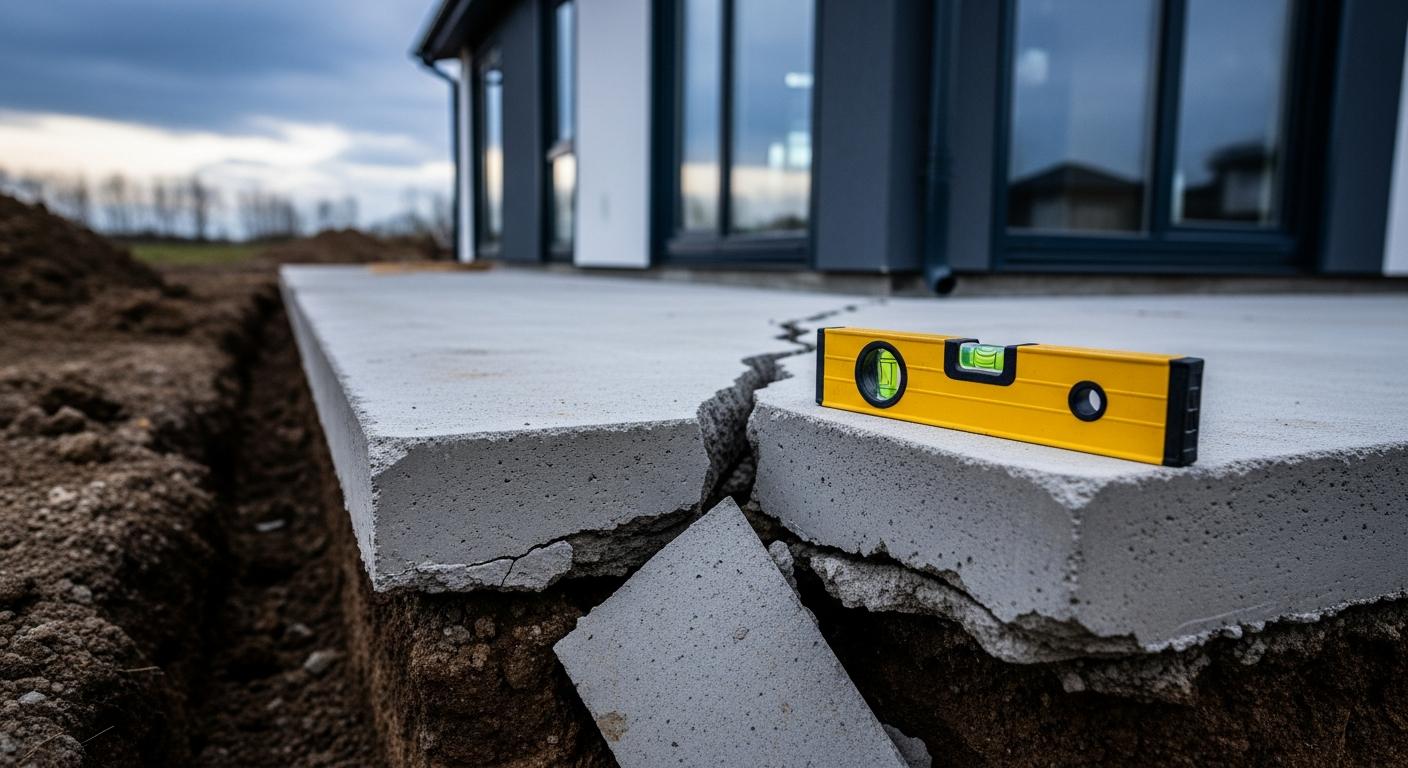
The Ground Beneath Modern Prefab Living
Some of the most beautiful prefab homes in Los Angeles or San Diego stand on ground that looks perfectly stable but what’s happening underneath can tell a different story. A foundation isn’t just a concrete slab or a set of steel piers; it’s the stage on which every wall, window, and utility hookup performs. When that stage tilts even a fraction barely enough to notice it can trigger a chain reaction of cracks, structural damage, and costly foundation repair.
Traditional construction allows for a little flexibility. Builders pour, measure, adjust, and correct as they go. In modular construction, though, the factory-built precision demands an equally precise base. Each module is designed to meet others with millimeter accuracy so if your permanent foundation is even slightly off level or misaligned, you’ll often find that doors won’t close properly or roof seams refuse to line up. What’s surprising is how many of these problems begin before a single prefab panel arrives on-site.
Site Assessments: Where Small Oversights Become Big Bills
Imagine buying a piece of land in the Bay Area with lovely views and clay soil that seems firm enough beneath your boots. You’re eager to start building your modular home and because time is money, you skip the geotechnical survey. Months later, one corner begins to sink by half an inch. It sounds negligible until rainwater starts pooling along one side and tiny cracks appear across your interior drywall. That’s when you realize: soil testing would have cost $1,200; re-leveling now costs ten times that.
Accurate site prep and soil reports are not glamorous topics at dinner parties, but they’re vital for any prefab construction project in the United States. Drainage patterns, groundwater levels, slope direction all these factors affect long-term stability and water management under your prefab house. Ignore them and you risk more than aesthetic issues; you also open yourself up to structural failure or moisture-related health concerns like mold growth in crawl spaces.
Misaligned Foundations and Modular Fit Issues
Each module built for a modular home comes from the factory like a puzzle piece cut by lasers precise down to the millimeter. But what happens when those pieces meet a foundation poured by hand? Even slight deviations in pier spacing or anchor bolt placement can throw everything off balance.
Uneven leveling pads cause gaps between modules; misplaced anchors stress load-bearing walls; even an extra quarter-inch here or there can make plumbing hookups refuse to align. One builder I met recalled spending three days adjusting floor plates because one pier was out of place a mistake traced back to an unverified site measurement done months earlier.
To prevent that kind of domino effect, it helps when manufacturers send detailed foundation drawings early and local contractors take them seriously enough to double-check every dimension against actual field conditions before pouring concrete slabs or setting piers.
Drainage and Moisture Control Mistakes
Moisture might be the most polite intruder in homebuilding it seeps quietly rather than barging in but left unchecked it becomes ruthless. In prefab homes especially those installed on concrete slabs without proper vapor barriers or drainage slopes away from the perimeter moisture sneaks under insulation layers and corrodes metal fasteners over time.
A common oversight occurs when builders forget how water behaves after heavy rain: it doesn’t always flow where we expect it to. Without proper grading around the homes foundation at least five inches of drop within ten feet you can end up with puddles hugging exterior walls like unwanted guests at a housewarming party.
Preventive measures aren’t complicated: install perimeter drains along downhill edges; add moisture barriers beneath floor systems; verify that downspouts direct water far from living spaces. These small acts preserve both structural integrity and energy efficiency since dry insulation performs far better than damp material ever could.
Underestimating Local Codes and Engineering Requirements
Every local jurisdiction has its quirks from frost lines in New York state to seismic zones across California’s coastlines and each affects how foundations must be designed for prefab houses or metal buildings alike. Yet too many homeowners assume that factory engineers automatically account for local building codes everywhere their designs are shipped.
That assumption can lead straight into hidden costs: failed inspections, retrofits requiring new reinforcement beams, or worse a stop-work order while permits get corrected mid-construction. A case study from San Diego illustrates this well: one homeowner had to reengineer piers after learning their site sat within an unexpected flood plain boundary identified only during final inspection.
The simplest safeguard? Have stamped engineering drawings reviewed locally before fabrication begins. Coordination between manufacturer engineers and regional experts early on prevents confusion later and saves thousands in unnecessary labor costs once construction starts rolling.
Skipping Quality Checks During Installation
There’s something almost hypnotic about watching prefabricated modules swing into place by crane a symphony of straps, signals, and precision timing but amid all that choreography lurks an easy trap: assuming perfection because things look professional.
Even “factory-perfect” components need verification once they touch real ground conditions. Rushed crews might forget anchor bolts; differences between plan elevation points may go unconfirmed until interior flooring reveals uneven slopes; sometimes concrete curing times get shortened due to scheduling pressure which weakens strength below code requirements for permanent foundations.
In most cases hiring a third-party inspector costs less than one percent of total construction cost yet catches errors worth tens of thousands later in avoided repairs or warranty disputes with foundation repair companies down the road.
Thermal Bridging and Insulation Gaps at the Base
Prefab owners often think about solar panels long before they think about heat loss through their floor edges but here’s where sustainability lives (or leaks). Thermal bridging happens when materials like steel beams conduct warmth directly through insulated sections into colder ground surfaces below concrete slabs or crawl spaces.
Poor insulation detailing at this critical junction undermines energy efficiency far more than most realize it’s like leaving your refrigerator door open just half an inch all day long. For high-performance modular homes marketed as “net-zero,” such oversights quietly sabotage performance metrics while raising heating bills year after year.
The fix lies in design foresight: install rigid foam wraps around slab perimeters; use insulated raft slabs on challenging soils; create thermal breaks wherever structural steel meets conditioned living space. None add much per square foot but collectively protect against long-term energy losses and maintain comfort where toes meet floors on chilly mornings.
Practical Checklist for a Trouble-Free Foundation
Every seasoned builder knows prevention trumps cure especially with prefabs where retrofitting means lifting massive modules back off-ground (a logistical nightmare bordering on comedy). To keep projects smooth from permit approval through move-in day consider this simple checklist:
- Pre-construction essentials: Confirm boundary surveys with certified accuracy; obtain geotechnical soil reports verified by engineers familiar with local building codes; secure drainage plan approval through city reviewers.
- Team coordination: Schedule early meetings among manufacturer reps contractor leads structural engineers and yes even permitting officials to ensure everyone interprets drawings exactly alike.
- During installation: Verify each pier elevation using laser levels not eyeballs; confirm anchor placements match shop plans before module arrival day.
- Post-installation self-checks: Homeowners can monitor visible cracks near corners track minor settling via laser level apps inspect edge sealing annually particularly after heavy rainfall events.
- If problems arise: Contact reputable local professionals experienced with manufactured home foundations rather than generic repair outfits unfamiliar with modular tolerances.
Spend modestly upfront on diligence instead of extravagantly later on remediation that thought alone should keep every prospective prefab owner grounded literally in good habits.
A Grounded Perspective Worth Keeping
Errors underfoot rarely announce themselves loudly at first they whisper through hairline cracks doors slightly ajar floors subtly uneven until one day they demand attention through costly repairs or lost rental income potential from delayed occupancy permits.
But here’s the encouraging part: nearly all major foundation issues are preventable when treated as integral parts of design not afterthoughts buried below grade level unseen again until trouble surfaces years later. Modern prefabs combine craft precision with industrial speed a partnership too elegant to jeopardize over skipped surveys or rushed pours.
So whether you’re assembling a sleek metal building near downtown Los Angeles expanding living space behind your San Diego bungalow adding square footage atop rocky New York hillsides or charting out new prefab dreams somewhere entirely different the advice holds steady: respect the ground beneath you because everything else quite literally rests upon it.
