



On-Site vs Factory Work: Where Most Quality Issues Occur
One rainy Tuesday in Seattle, a project manager watched as sheets of plywood warped overnight. It wasn’t sabotage just the weather doing what it does best. A few hundred miles away, in a clean, dry factory, another team was assembling wall panels with robotic precision. Same materials. Very different outcomes. That’s the paradox at the heart of today’s construction industry: where, exactly, do most quality issues occur out in the mud or inside the warehouse?
Setting the Stage: Why Construction Quality Is So Uneven
The struggle for consistent product quality has haunted construction since long before the industrial revolution. Every construction site is its own small world with different teams, working hours, and weather patterns. The supply chain may stretch from one side of the United States to the other, and raw materials pass through countless hands before they become someone’s living room.
Traditional on-site construction invites variability. One day it’s too hot for concrete; another day rain seeps into insulation left uncovered overnight. Quality managers attempt to impose order through checklists and safety protocols, but human error finds its way in like water through cracked mortar.
Setting the Stage: Why Construction Quality Is So Uneven
Factory work promises something cleaner literally and figuratively. Controlled humidity. Repeatable manufacturing processes. Clear accountability within a formal quality management system (QMS). But even factories aren’t immune to defects; they just make them faster when things go wrong. So where do most quality issues truly arise in the field or on the assembly line?
The Nature of On-Site Work: Challenges Built into the Ground
Walk across any active construction site and you’ll feel it immediately the organized chaos. Wind blows dust across freshly painted surfaces; rain delays pour schedules into disarray; a forklift nicked a pallet that now hides a hairline crack in a structural beam.
This environment breeds inconsistency. Construction workers vary widely in experience, subcontractors rotate between jobs, and supervision can stretch thin across multiple zones. Once materials are installed, inspections often happen too late for easy fixes especially when rework requires tearing out finished sections.
The Nature of On-Site Work: Challenges Built into the Ground
Add logistics to that mix: cramped storage containers, unpredictable deliveries, and raw materials sitting longer than planned under tarps that don’t always hold up against storms. Small wonder that many quality defects trace back not to poor craftsmanship but to conditions no one fully controls.
Inside the Factory: Precision by Design but Not Without Risks
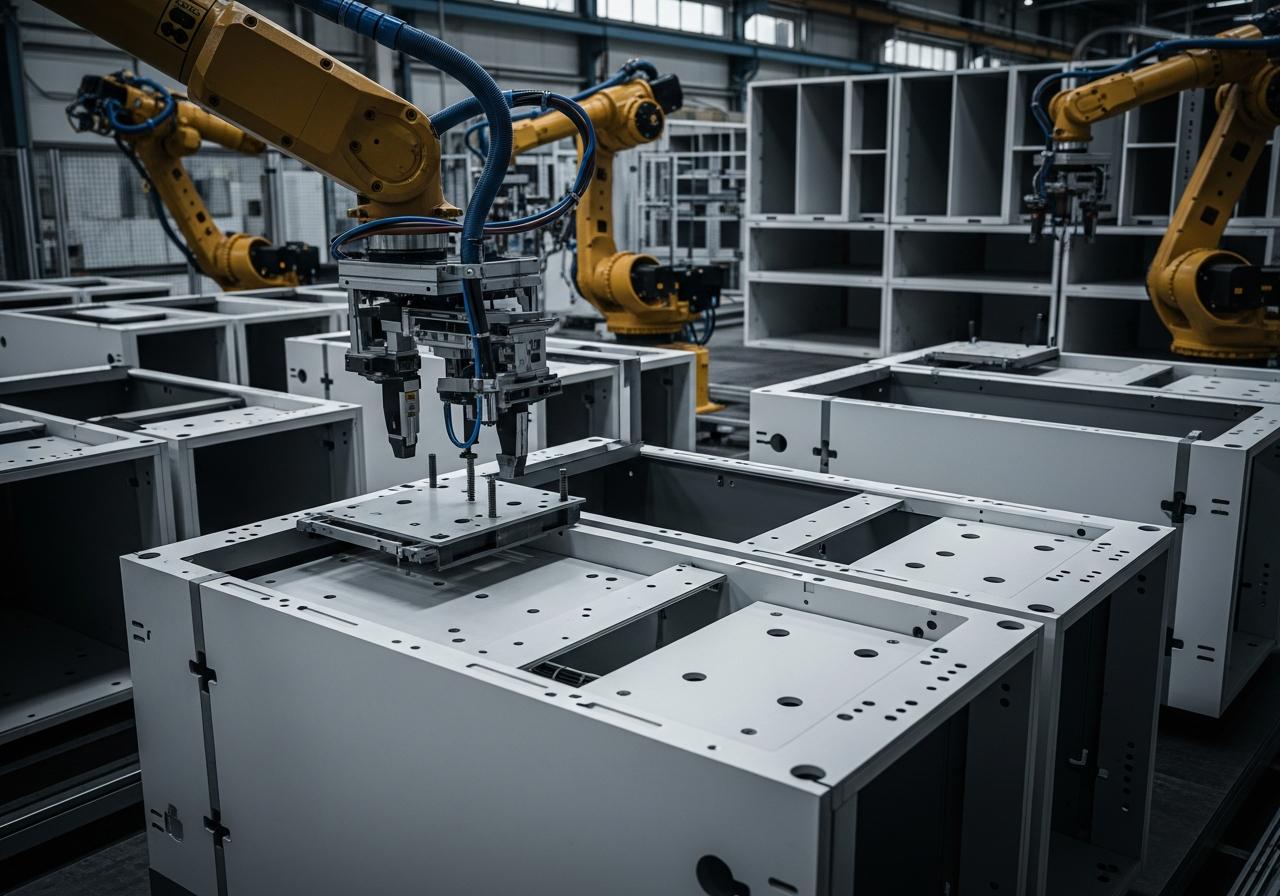
Now step inside a prefab facility or modular home factory and you’ll notice what feels almost serene compared to a job site’s dust and noise. Controlled climate? Check. Standardized workflows? Absolutely. Machines like CNC cutters perform tasks with sub-millimeter accuracy a dream for anyone obsessed with fit tolerances.
This kind of environment supports continuous improvement practices straight out of manufacturing industry playbooks think ISO 13485:2016 standards borrowed from medical devices production or automotive lines adjusted for flexible building systems.
Inside the Factory: Precision by Design but Not Without Risks
Yet perfection remains elusive. Compressed production schedules create pressure; miscommunication between design teams and production departments still happens; digital files can go missing or get outdated mid-run. When an error slips through here a misplaced screw hole pattern or incorrect joint detail it can replicate across dozens of identical modules before anyone notices.
Design Translation: Where Digital Meets Physical
The bridge between design intent and final product might just be where many hidden quality problems start forming quietly beneath all our fancy modeling software.
A beautifully detailed BIM model is only as good as its last update and file conversions between architects, engineers, and fabricators introduce risk every time data hops platforms. A single missing tolerance note can turn into an ill-fitting facade panel thousands of miles away from where someone hit “export.”
Design Translation: Where Digital Meets Physical
I once heard about a project where window openings were modeled 12 millimeters too narrow due to rounding errors between CAD systems a small discrepancy that meant a full week of corrective action once parts arrived on-site. It wasn’t poor manufacturing or careless installation; it was digital translation gone slightly sideways.
Inspection Culture: Who Checks What and When?
If on-site inspection is like grading homework after it’s turned in (too late to rewrite), factory-based quality control works more like proofreading while still drafting paragraphs you catch mistakes early enough to fix them efficiently.
Factories operate under tight quality standards guided by documented procedures within their QMS frameworks each component logged, photographed perhaps, tested before shipment leaves docking bays. Data collection becomes part of everyday life there: routine torque checks on fasteners, humidity readings logged hourly, records stored for root cause analysis if something later fails in the field.
Inspection Culture: Who Checks What and When?
This proactive mindset contrasts sharply with traditional construction sites where inspections often focus on visible completion rather than internal integrity. But both worlds are beginning to merge thanks to digital twins virtual replicas monitoring performance continuously and smart sensors flagging deviations long before cracks appear physically.
Transportation & Assembly: The Hidden Middle Ground for Errors
You could build perfect modules under pristine conditions and still fail spectacularly halfway down an interstate highway if proper care isn’t taken during transport.
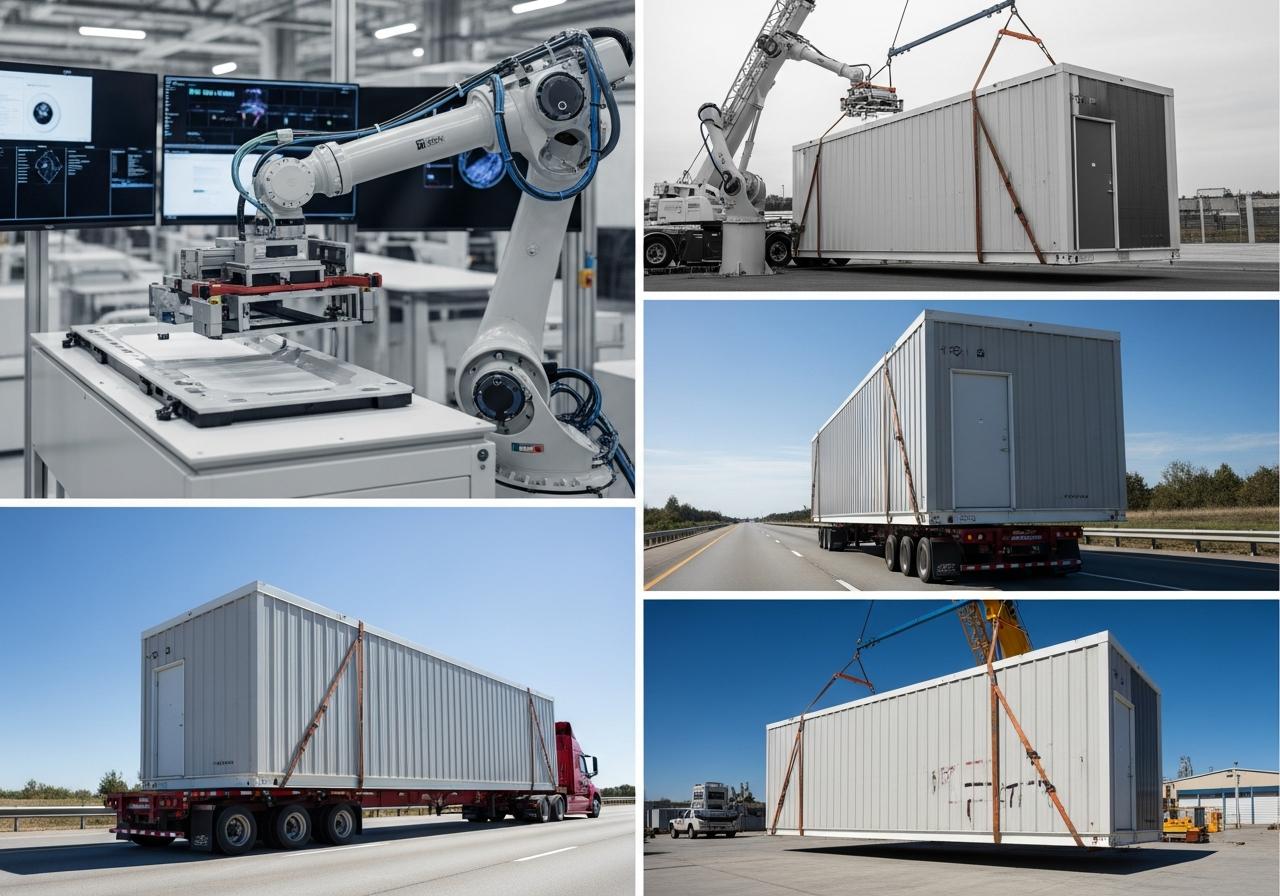
The journey from factory floor to foundation introduces its own hazards: vibration damage during trucking, lifting strap marks on facades, even mismatched numbering during loading sequences leading to scrambled installations later on-site.
Cost of Correction: Time, Money, Carbon Footprint
Here’s where things get painfully measurable: rework costs time twice over both fixing what broke and delaying everything downstream waiting for clearance again.
In traditional construction work this means extra labor hours under less-than-ideal working conditions plus duplicated material usage essentially paying twice while inflating embodied carbon footprints unnecessarily.
Factory-floor corrections tend to be less wasteful because equipment access is easier and inventory right there at hand allows immediate replacement without shipping delays or scaffolding rentals extending schedules further weeks longer than planned.
From an emissions standpoint alone preventing defects early brings enormous value even modest improvements in first-time-right production reduce cumulative greenhouse impact significantly across large-scale housing programs throughout the construction sector worldwide.
It’s one subtle but powerful form of climate action hiding within good quality management practice itself.
Fixing poor quality after installation creates not only budget headaches but environmental ones too.
So prevention really is better than cure in every sense imaginable.
Toward Hybrid Quality Models: Combining Strengths from Both Worlds
If there’s one lesson repeating across industries from car plants producing zero-defect vehicles to medical device manufacturers tracking every bolt it’s that no single system holds all answers forever.
The future belongs somewhere between jobsite grit
and factory polish a hybrid model joining strengths rather than choosing sides entirely.
Imagine standardized wall cassettes fabricated under ISO-level scrutiny paired seamlessly with bespoke finishes crafted locally by skilled artisans familiar with regional conditions.
That mix honors both efficiency and character.
Shared cloud-based data platforms now allow live synchronization among designers engineers fabricators installers even inspectors watching remotely which means everyone sees possible discrepancies simultaneously before they snowball into expensive physical flaws later onsite.
Quality assurance then stops being reactive paperwork completed post-event becoming instead an ongoing conversation flowing continuously among all project stakeholders throughout entire building lifecycle from conception through occupancy.
And maybe someday soon asking “where do most quality issues occur?” won’t matter nearly as much because robust collaborative systems will prevent majority outright regardless location whether indoors controlled environment or outdoors unpredictable terrain subject rain wind tempers schedules alike.
Which leaves us finally back standing between two worlds:
One muddy uncertain full improvisations miracles daily;
Another clean measurable repeatable yet sometimes rigid cold;
Somewhere balanced middle lies sweet spot true continuous improvement lives breathing steady rhythm making buildings strong beautiful reliably high-quality each time we put shovel blade saw hammer robot arm motion again tomorrow morning wondering quietly how close perfection feels today.
Closing Thought
No matter how sophisticated our production process grows there will always remain irreducible human element inside every structure built from drawing lines first conceptual sketches toward tightening final bolts sealing joints before handoff occupants entering new spaces smiling relief satisfaction completed work well done safe sound sustainable reliable long-lasting hopefully kinder planet overall too.
Because ultimately (or should I say generally speaking) great product quality isn’t finish line reached once but discipline practiced everywhere along way continuously supported shared responsibility equally factory workers engineers architects onsite crews pumping hearts muscle dreams structure raising sky itself piece by measured piece intentionally carefully hopefully perfectly or at least pretty close most days anyway which honestly might be miracle enough already.
