



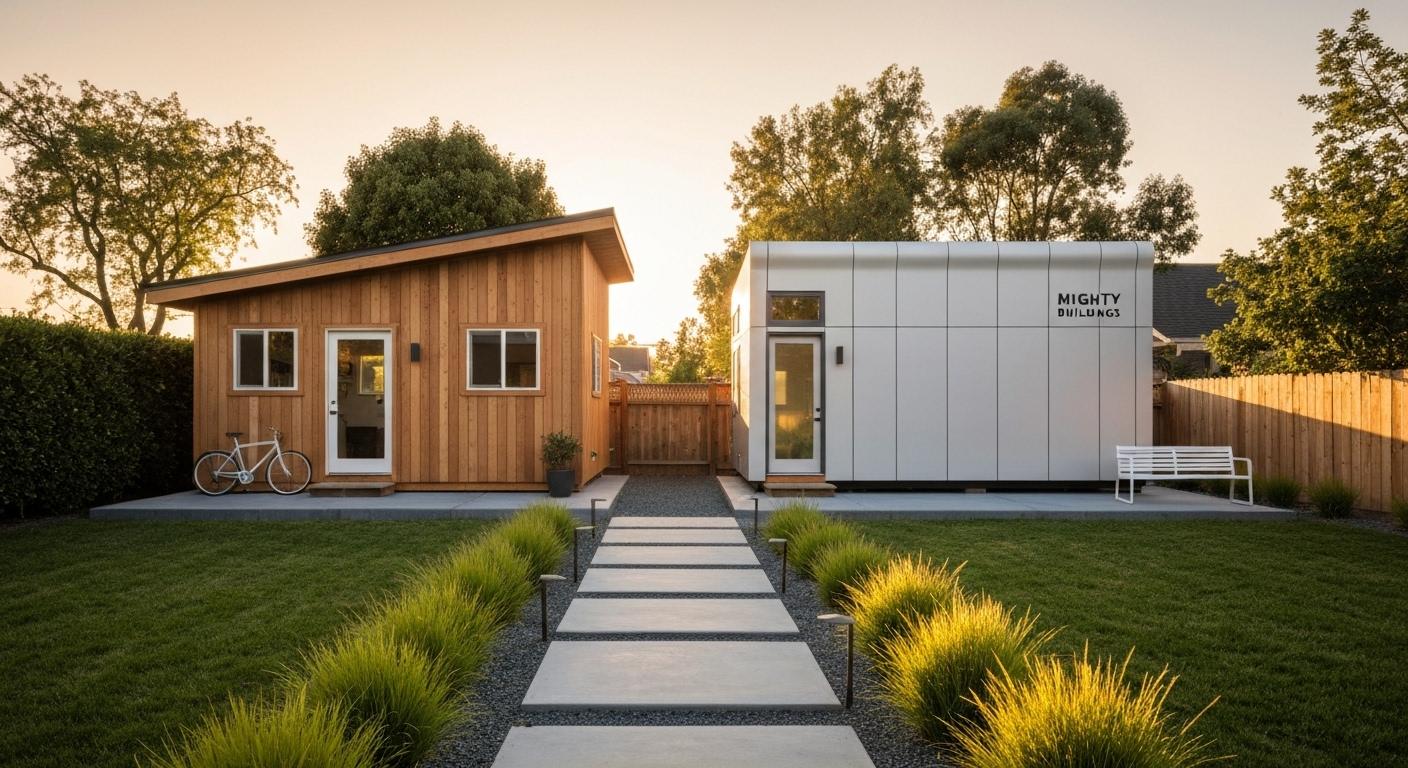
Studio Sheds: An Overview
Studio sheds offer a minimalist yet highly practical solution for creating additional living space in California, where ADUs have become a core strategy for addressing housing shortages. Think of a shed but upgraded with insulation, utilities, and finishes comparable to a small cabin or backyard studio. Built using durable materials such as wood, steel, or composite panels, studio sheds are designed to handle California’s diverse climates, from coastal moisture to inland heat.
One of the major advantages of studio sheds is flexibility. They can function as a home office, art studio, guest suite, or even a permitted ADU with a kitchenette and bathroom. In California, pricing is often competitive compared to traditional construction, especially for detached ADUs under 750 sq ft, making studio sheds an appealing option for homeowners looking to add value without excessive cost or disruption.
Mighty Buildings: An Overview
If one word defines Mighty Buildings, it is innovation. Using advanced 3D-printed construction technology and proprietary composite materials, Mighty Buildings represent the cutting edge of prefab housing particularly relevant in California’s push toward faster, more sustainable housing solutions.
These structures are engineered for high energy efficiency, meeting or exceeding California Title 24 energy standards. Superior insulation, airtight construction, and compatibility with solar systems make them especially attractive in a state with high energy costs and aggressive climate goals. Installation, however, requires careful coordination with local jurisdictions, foundations, and utility hookups, as the construction process differs from conventional framing.
Head-to-Head Comparison: Studio Shed vs. Mighty Buildings
Upfront Cost:
Studio sheds typically have a lower initial price point due to simpler construction and broader contractor availability. This can be appealing in California, where ADU budgets often need to stay lean.
Mighty Buildings generally cost more upfront but can offset this over time through reduced energy bills, minimal maintenance, and long-term durability.
Durability & Maintenance:
Both options are built to last, but Mighty Buildings’ composite materials may require less ongoing maintenance than wood-based studio sheds, especially in fire-prone or high-sun regions.
Design & Aesthetics:
Studio sheds offer more traditional and customizable designs that blend easily into existing neighborhoods. Mighty Buildings lean toward sleek, modern aesthetics that align well with contemporary California architecture.
Sustainability:
While studio sheds can be built sustainably, Mighty Buildings integrate sustainability at the structural level, aligning closely with California’s environmental and housing policies.
Regulatory Considerations for ADUs in California
California is one of the most ADU-friendly states in the U.S., but regulations still matter. State law allows ADUs and Junior ADUs (JADUs) by right in most residential zones, but local requirements such as setbacks, height limits, utility connections, and design standards still apply.
Permits are required for both studio sheds and Mighty Buildings if they are used as habitable ADUs. Many jurisdictions waive impact fees for ADUs under 750 sq ft, which can significantly reduce costs. However, coastal zones, historic districts, and wildfire-risk areas may impose additional review requirements.
Early coordination with your local planning department is essential to avoid delays or redesigns.
Factors to Consider When Choosing Between Studio Sheds and Mighty Buildings
Your choice should be guided by how you plan to use the space. A simple backyard office or creative studio may favor a studio shed, while a long-term rental or multigenerational living unit may justify the investment in a Mighty Building.
Site conditions matter greatly in California. Lot size, access for installation, slope, and utility proximity can influence feasibility and cost. Budget, financing options, and timelines also play a major role.
Finally, consider future needs. California ADUs are increasingly used for rental income, aging parents, or housing flexibility. Choosing a solution that can adapt over time is a smart long-term strategy.
Real-Life Examples and Case Studies
In Los Angeles, many homeowners have converted studio sheds into fully permitted ADUs that serve as rental units, generating steady income while increasing property value.
Meanwhile, in the Bay Area, homeowners have adopted Mighty Buildings to create energy-efficient backyard homes that meet strict local codes and function as primary residences or professional workspaces. These projects often highlight faster build times and excellent thermal performance.
Across California, both approaches demonstrate how thoughtful ADU planning can unlock unused backyard potential.
Conclusion and Recommendations
So, which option is best for a California ADU? The answer depends on your priorities.
If affordability, customization, and traditional design are key, a studio shed may be the right choice. If energy efficiency, innovation, and long-term performance are your top concerns, Mighty Buildings offer a compelling alternative.
California’s supportive ADU laws make both paths viable. With careful planning, local code awareness, and a clear vision, either option can deliver meaningful value financially, functionally, and sustainably.
