



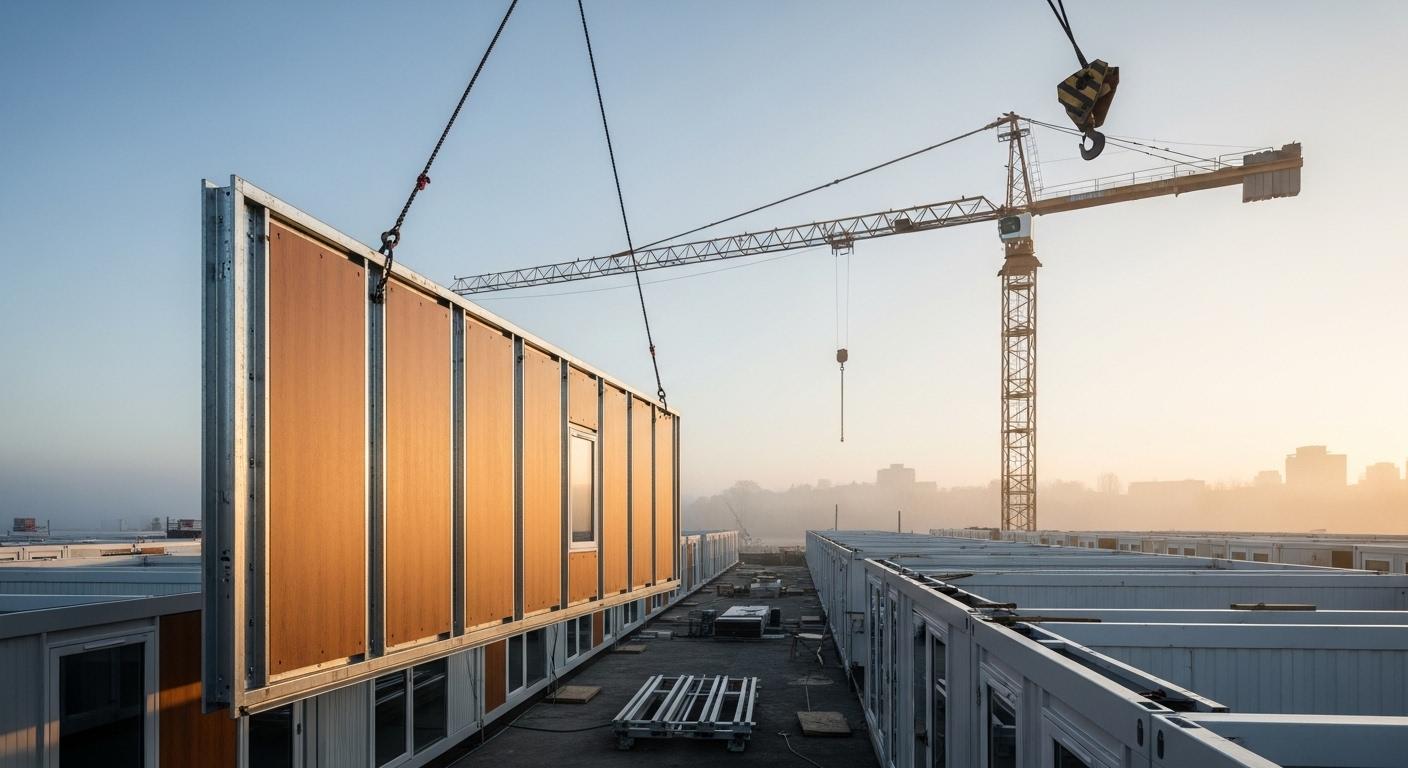
Introduction to Prefabrication in Architecture
Prefabrication, a term buzzing with innovation, is reshaping the modern architecture landscape. It’s not just about building faster; it’s about building smarter. Prefabrication involves constructing sections of buildings, often referred to as modules, in a factory setting, then assembling them on-site. This technique isn’t exactly new, but its integration with cutting-edge technology is what makes it particularly significant today. With a focus on modular construction, we’re seeing improvements in sustainability, efficiency, and overall quality. Prefabrication reduces material waste and minimizes the environmental impact, making it a green choice for the construction industry. As technology evolves, so does the potential for prefabrication, offering solutions that might just transform how we think about creating spaces.
Profiles of Leading Prefab Architects
Amongst the vanguard of prefab architects, a few names stand out for their innovative approaches and breathtaking designs. Take the example of Michelle Kaufmann, who has been a pioneer in sustainable, eco-friendly prefab homes. Her work often features solar panels and eco-friendly materials, reducing the carbon footprint of her projects. Kaufmann’s signature style is not just about efficiency; it’s about creating homes with personality and warmth, emphasizing customization and innovative design.
Another trailblazer is Bjarke Ingels, whose approach combines cutting-edge technology with bold aesthetics. His projects, like Vancouver House, showcase how prefabrication can be used to push architectural boundaries while maintaining quality control. Ingels often explores how to balance large-scale housing projects with energy efficiency, showing that prefab homes can be as luxurious as they are practical.
Prominent Developers Pioneering Prefab Solutions
Developers like Factory_OS and LivingHomes are at the forefront of the prefab revolution. Factory_OS, based in California, is transforming the housing market by drastically reducing construction time. Their modular homes can be completed in weeks rather than months without compromising on quality or design. This not only benefits the bottom line but also addresses housing shortages in high-demand areas.
LivingHomes, meanwhile, focuses on sustainable prefab solutions, collaborating with architects to create homes that are both beautiful and environmentally conscious. Their projects often feature advanced technology and maintain rigorous quality standards. These developers exemplify how prefab construction can meet modern needs while minimizing environmental impact.
Technological Advances Driving Prefab Architecture
The advent of technology has been a game changer for prefabrication. Robotics and AI are being used to streamline manufacturing processes, ensuring precise quality control. 3D printing is another technology making waves, allowing for intricate design features that would be challenging with traditional construction methods. The use of such advanced technologies not only improves efficiency but also opens up new avenues for innovative design in prefab architecture.
Keypoint: The integration of technology in prefab methods is largely why we’re seeing a rise in its adoption. It’s not just about speed; it’s about flexibility and adaptability in design and function.
Sustainability and Environmental Benefits
One of the most compelling advantages of prefab construction is its sustainability. By constructing in a controlled factory setting, material waste is significantly reduced. This efficiency not only cuts costs but also lessens the environmental impact, a crucial consideration given today’s climate challenges. Moreover, prefab buildings often incorporate eco-friendly materials and energy-efficient features, such as solar panels, further enhancing their green credentials.
Consider a project in Sweden, where a community of prefab homes was built entirely from sustainable materials. These homes not only met stringent green standards but also set a benchmark for future developments.
Challenges Facing Prefab Innovators
Despite its benefits, prefabrication is not without its challenges. One major obstacle is navigating the often complex building codes and permitting processes that vary widely by region. Additionally, the upfront costs, though recoverable over time, can be a deterrent for some developers. Accessibility remains another hurdle, as not all areas have the infrastructure to support large-scale prefab projects.
Keypoint: Overcoming these challenges requires collaboration and innovation, but with the right approach, the benefits of prefab far outweigh the hurdles.
Future Trends and Predictions for Prefab Architecture
As we look towards 2025, the prefab industry is poised for exciting developments. Emerging trends suggest a rise in customization, offering wider ranges of style and functionality. The integration of smart technology into prefab homes is another trend to watch, enhancing energy efficiency and easing energy consumption.
Additionally, the growing urbanization will likely see prefab playing a crucial role in urban planning, potentially offering solutions to housing shortages and even resilience against natural disasters. Some innovators are already exploring how prefab can be part of the solution to these global challenges.
Conclusion and Outlook for 2025
Prefabrication is moving beyond its roots, driven by innovation and necessity. As architects and developers continue to push boundaries, the prefab home may soon lose its “alternative” label, becoming a mainstream option for sustainable, efficient housing. With an eye toward the future, the potential for prefab construction to transform the industry is vast, promising a new era of design and sustainability in architecture. Watch this space as we move towards 2025 and beyond, where prefab homes might just be the new norm.
