



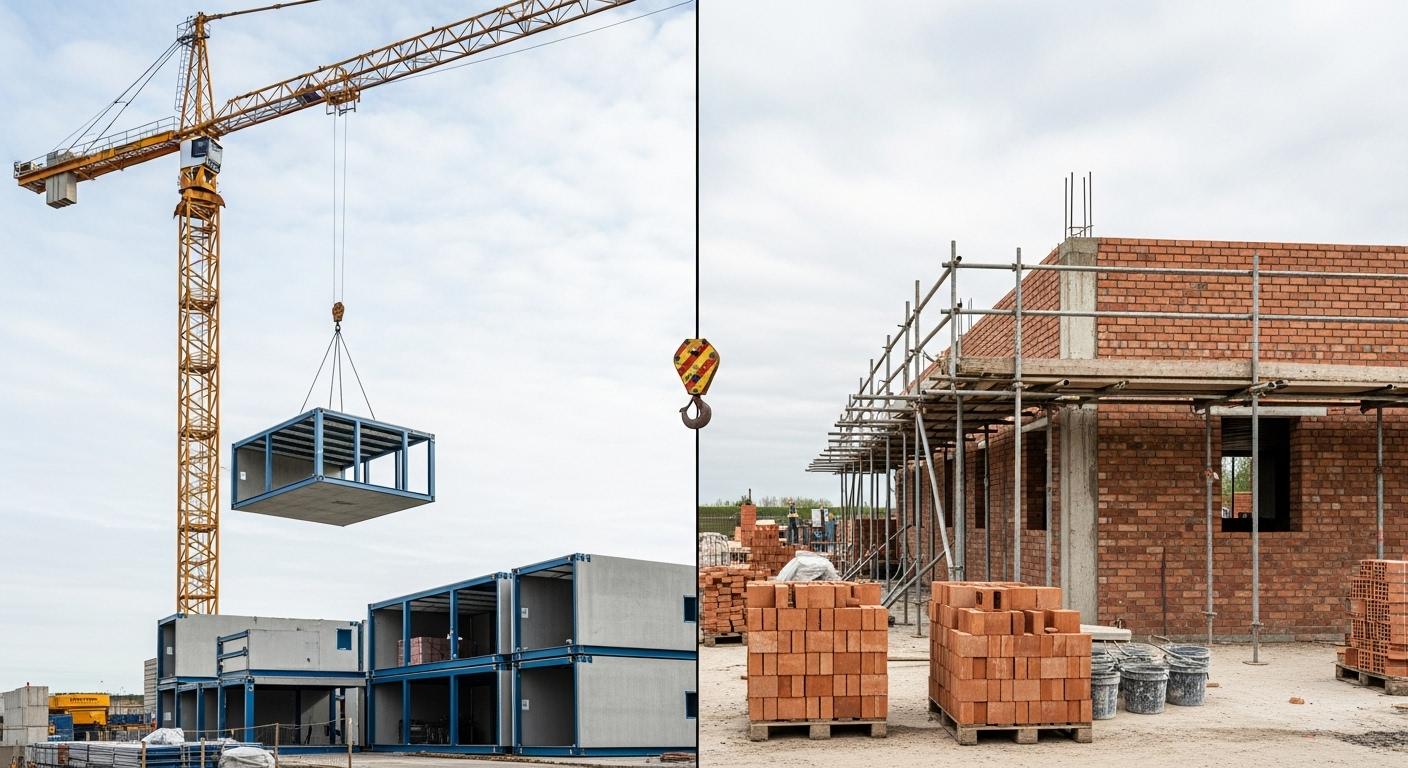
Introduction to Prefab and Traditional Construction
Building a home is no small feat, and choosing between prefab construction and traditional methods is a decision that’s both exciting and, admittedly, a bit daunting. Prefab, short for prefabricated, refers to homes built off-site in a factory-controlled environment and then assembled on location. Traditional construction, on the other hand, is the classic approach where everything is crafted on the building site from start to finish.
Prefab methods date back to ancient civilizations, but they gained popularity post-World War II as a quick solution to housing shortages. Fast forward to today, and California is witnessing a renaissance in prefab construction as it embraces innovation in the building sector. Given the increasing pressure to manage costs effectively, understanding the cost implications of each method is more important than ever.
Initial Costs Comparison: Prefab vs. Traditional Construction
When we talk about cost, initial expenses naturally take center stage. So, what factors into these costs? Materials and labor are the usual suspects, but prefab and traditional methods approach these differently. Prefab construction thrives on bulk production in a controlled factory setting, often leading to reduced material wastage and cost savings.
Labor costs also differ significantly. Traditional construction relies heavily on on-site crews, which can be both costly and unpredictable. In contrast, prefab homes benefit from factory efficiencies and reduced labor expenses, but you’ll need to factor in transport costs to the building site, which can sometimes offset these savings.
Construction Timeframes and Associated Costs
Time is money in construction, and prefab homes usually have the upper hand here. With components crafted in a controlled environment, prefab projects can be completed in a fraction of the time compared to traditional methods. This speed not only gets you into your home faster but often results in lower financing costs and less exposure to unexpected price hikes.
Real-world examples abound of prefab houses completed in what seems like the blink of an eye compared to traditional builds. Minimizing construction time also reduces potential for cost overruns, a common occurrence in the unpredictable realm of traditional construction.
Quality and Customization: Financial Implications
Quality and customization often go hand in hand with cost in homebuilding. Prefab homes, with stringent factory quality controls, tend to deliver consistent build quality. However, some might argue that traditional methods offer more room for customization, though at a higher price tag and longer project timelines.
Consumer preferences play heavily into this equation. While some buyers prioritize uniqueness and customization, others may value the precision and predictability of prefab options. Case studies show varied outcomes, but a key takeaway is that customization frequently leads to higher costs regardless of the construction method.
Market Trends and Future Cost Projections
The construction industry is ever-evolving, with prefab methods gaining traction through technological advancements that drive cost reductions. As materials science and building technology continue to advance, cost projections for prefab and traditional methods fluctuate, often favoring the innovation inherent in prefab approaches.
Being forward-thinking about these trends is crucial for prospective builders and developers looking to navigate future shifts in construction costs. Staying informed about industry dynamics can mean significant savings when it’s time to break ground on your new home.
Conclusion: Weighing the Costs and Benefits
In summary, deciding between prefab and traditional construction methods involves balancing multiple factors, from initial costs and long-term savings to customization desires and environmental impact. While prefab homes offer enticing benefits, such as reduced construction times and energy efficiency, traditional methods hold their ground with customization possibilities and market familiarity.
Ultimately, your decision should consider personal preferences and specific project needs. By keeping an eye on these considerations, you can make an informed choice that aligns with your financial goals and housing dreams.
