



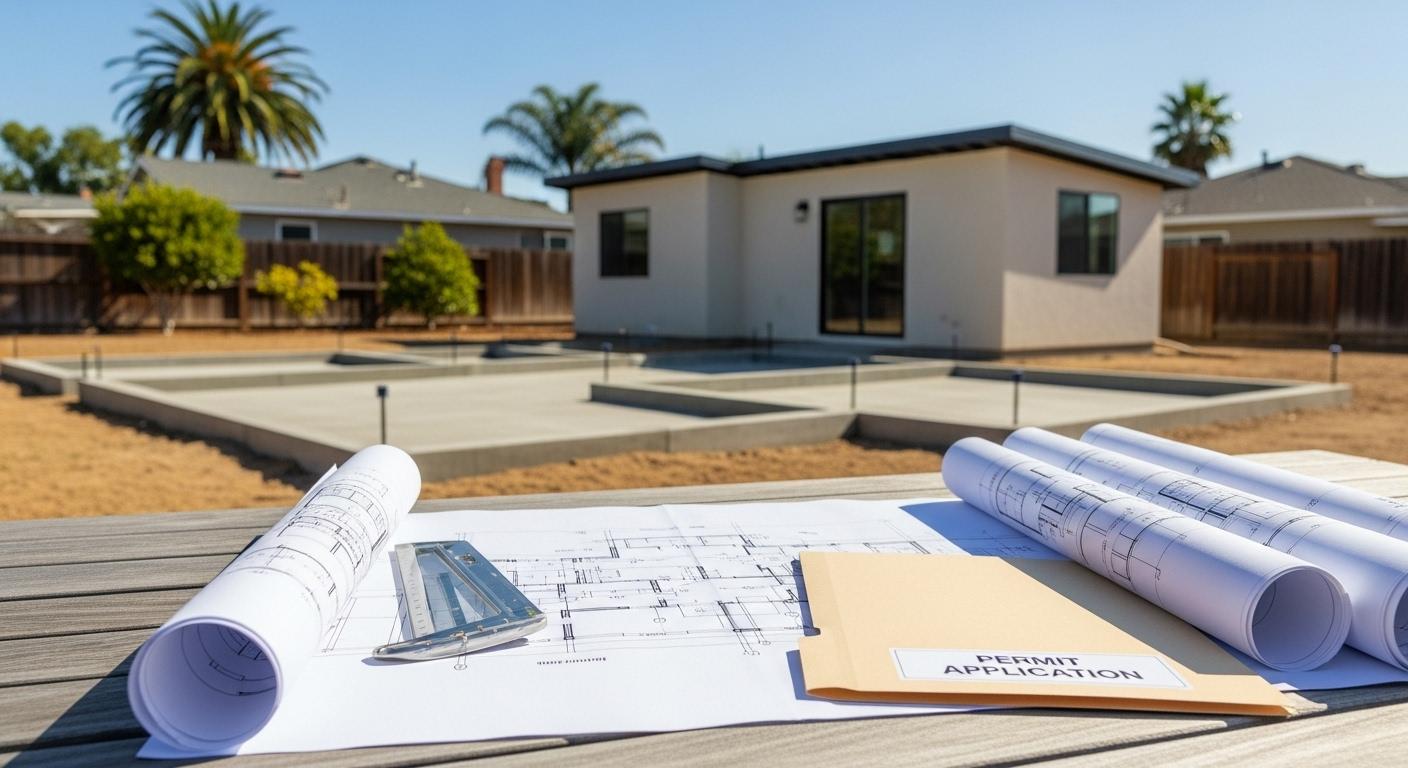
Initial Steps Before Applying for a Permit
Before diving into an ADU project, it’s crucial to assess whether your property is suitable for such an addition. Start by checking local zoning laws and requirements. Most California cities have their specific regulations, and understanding these early can save you a headache down the line.
Property setbacks those designated distances from property lines are another vital consideration. Ensuring your ADU complies with these can prevent future disputes and costly changes. Gather all necessary documentation, including property surveys and floor plans, to smooth the path for your building permit application.
Designing Your ADU
Designing an ADU is where creativity meets compliance. You need a design that not only fits your vision but also meets legal standards. This is where hiring an architect or design professional comes into play. They can help you draft a design that’s not only aesthetically pleasing but energy-efficient and sustainable. Consider materials that lower environmental impact, which can also be wallet-friendly in the long run.
Accessibility is another factor you’ll want to ponder. Ensuring that your ADU is accessible can broaden its appeal to potential renters, particularly in an increasingly inclusive society.
Application Process for an ADU Permit
Ready to dive into the paperwork? The permit application process can feel daunting, but breaking it into manageable steps can help. You’ll need to complete a detailed permit application that outlines your intended construction project down to the last detail. Be prepared for permit application fees, which can vary significantly depending on your municipality.
Upon submission, your application embarks on a journey through bureaucratic waters. Understanding the timelines, which often extend up to a 60-day review period, can help you manage expectations. As nerve-wracking as it sounds, the review process is a crucial step in making sure your ADU construction complies with all local regulations.
Navigating the Inspection and Approval Process
Once your permit is in hand, the building phase begins. But hold on inspections are your next hurdle. Local authorities will visit your site to ensure adherence to safety and building codes. Addressing any flagged issues promptly is key to keeping your project on track.
Meeting all these requirements is a bit like juggling flaming swords; it seems impossible until you see it done. But once you pass these final inspections, the sweet taste of approval and the ability to move forward with construction is worth the effort.
Financing and Cost Considerations
Money matters linger in the background of any construction venture. Financing options for ADUs abound, from home equity loans to specialized ADU financing programs. It’s crucial to estimate the total construction and permit costs early in the process expect surprises, and budget for them!
Financial planning should also take tax implications and potential benefits into account. After all, an ADU isn’t just a financial burden; it’s an investment with potential income-generating opportunities.
Post-Permit Considerations
With permits and financing sorted, it’s time for the real action: construction. Selecting the right contractor can make or break your timelines and budget. With construction comes inevitable disruptions, but strategies for managing these like clear communication with contractors can make the ride smoother.
Beyond construction, future ADU owners should consider maintenance obligations. Regular upkeep ensures that your ADU remains a valuable asset. And with the rental market ever in demand, an ADU offers exciting possibilities for generating rental income.
Community and Environmental Impact
ADUs aren’t just about personal gain; they play a significant role in addressing community housing needs. They provide affordable housing solutions in saturated urban areas, helping alleviate California’s housing crunch one unit at a time.
Environmentally, ADUs offer a smaller-footprint living option, especially when designed with sustainability in mind. Considerations like solar panels or rainwater harvesting can further reduce their environmental impact.
Case studies show successful ADUs fostering stronger community ties, providing affordable rental options, and even supporting local economies. Those benefits, coupled with a potential increase in property value, make ADUs a compelling option for homeowners across California.
