



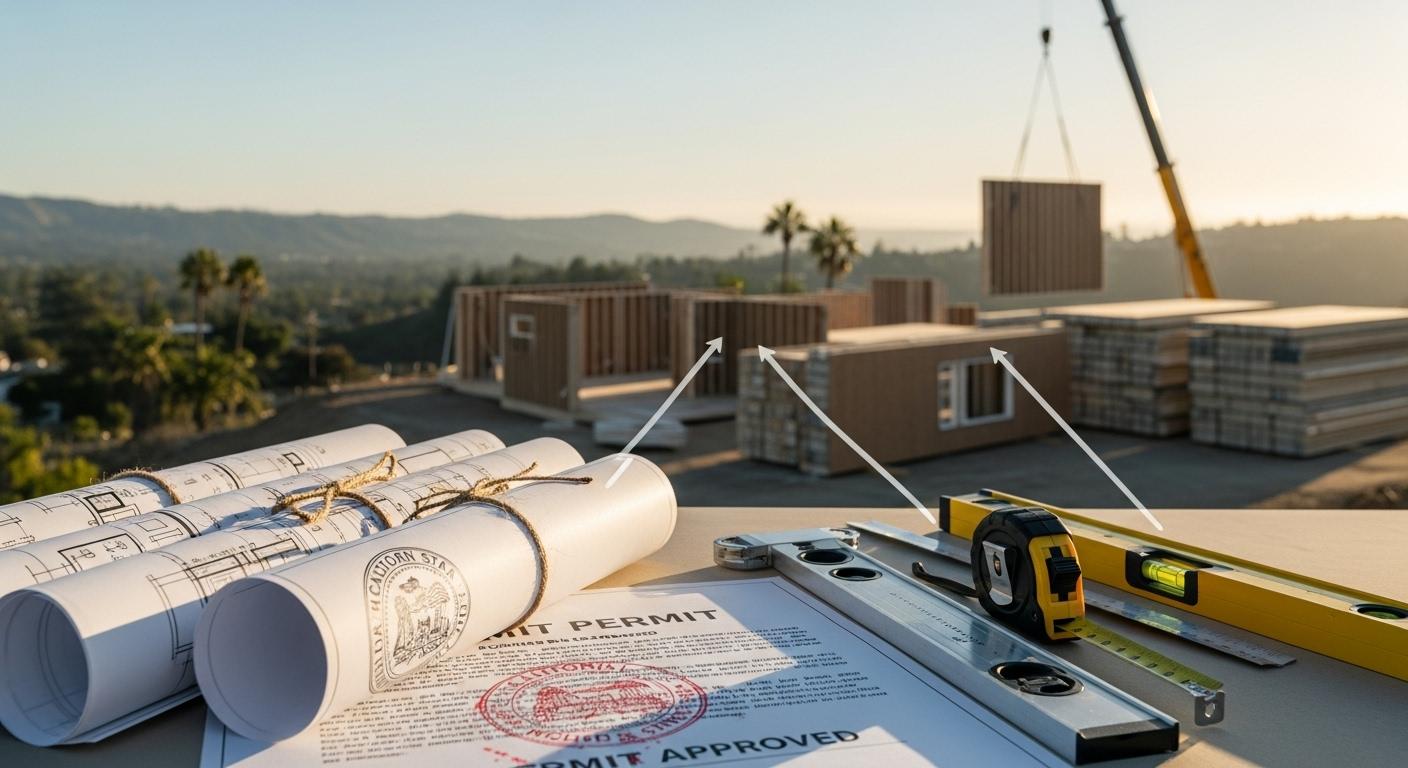
Introduction to Prefab Permitting in California
Prefabricated homes, often affectionately termed “prefabs,” offer a fresh perspective on modern housing. These structures are built off-site and then assembled in place, providing the benefits of faster construction times and often lower costs when compared to traditional construction. In California, where innovation and environmental consciousness frequently meet, prefab homes are becoming increasingly popular. However, this popularity doesn’t bypass the bureaucratic labyrinth known as the permitting process.
Understanding permits is a crucial step in turning that glossy floor plan into a tangible, liveable space. In California, a state with its own rhythm and quirks, navigating through the permitting process can feel like learning a new kind of dance. An essential part of this journey is getting a grip on the multifaceted regulations both state and local that make this state a standout. So, what does it take to get your prefab home through the permitting phase with minimal bruises?
Understanding Zoning Laws and Building Codes
Zoning laws in California can seem as elusive as trying to catch a breeze with your bare hands. Essentially, they determine what can be built, where, and how, which is no small feat given California’s vast and varied landscapes. Whether you’re considering a manufactured home, prefab home, or even a mobile home, these zoning laws will dictate the possibilities.
Meanwhile, California’s building codes are like a handshake agreement between safety and modern design. Key aspects include energy efficiency, structural integrity, and fire safety. The trick lies in understanding how state-level codes mesh with municipal regulations, which often boast their own set of unique requirements. It’s like trying to match two separate dance choreographies, each with its own rhythm and style.
Gathering Necessary Documents and Information
Venturing into the world of permits starts with a solid grip on paperwork. Among the requisite documents, you’ll often find site plans, floor plans, and detailed design specifications. There’s also a heap of information about utilities such as electricity and water, which need to be meticulously documented.
Accuracy in documentation can’t be overstated. Think of it as laying the foundation for your entire permitting process. It’s a step where any oversight could lead to delays. As you gather your documents, researching property-specific data, such as zoning specifics and local building department nuances, becomes invaluable.
Submitting the Permit Application
Once the documents are in order, it’s time to tackle the application itself. This is a step-by-step process where precision is your best ally. Application fees, which vary depending on the complexity of your project, are part of this equation. They, too, require careful understanding, as nobody enjoys unexpected costs mid-project.
Common pitfalls abound in this step, from incomplete forms to overlooked fees. The key lies in attention to detail and, usually, a fair bit of patience. A savvy approach here can save both time and money, which is often in short supply once the construction clock starts ticking.
Working with Local Agencies and Officials
In the grand dance of permits, local agencies and officials are like your partners. Identifying which agencies are relevant to your project is the first move. These might include environmental agencies or local planning departments.
When communicating with officials, clarity and respect pave the way for smoother interactions. While bureaucratic challenges might initially seem daunting, they’re often best navigated with a touch of patience and persistence. It’s a relationship, after all, and like any good relationship, mutual understanding is key.
Scheduling Inspections and Meeting Requirements
Inspections are an inevitable part of the prefab permitting process. They can range from initial site inspections to final checks once construction is complete. Scheduling these inspections and preparing for them is crucial for keeping your project on track.
Occasionally, inspections may not go as planned. If a failure occurs, corrective actions are necessary. Understanding this is part of the process helps in maintaining your composure and momentum.
Final Approval and Construction Commencement
So, when do you know you’re in the clear? Final approvals signal that it’s time to kick off construction. At this stage, ensuring compliance with all regulations becomes critical. It’s like crossing the starting line of a marathon the real journey is just beginning.
Preparation for construction involves aligning your team, securing materials, and setting timelines. All the preparation and paperwork culminate in this exciting phase, where ideas and plans finally take physical form.
Post-Construction Compliance and Maintenance
Even after your prefab dream home stands tall, there are still a few steps to complete. Final inspections are critical to closing out permits, ensuring everything is up to code and ready for habitation.
Long-term maintenance is an ongoing consideration. Prefab homes, much like traditional homes, demand regular upkeep. Staying informed about changes in regulations can help preserve your investment’s value over time.
Key Points
- Understanding regulations: Familiarize yourself with both state and local codes.
- Thorough documentation: Accurate paperwork is the backbone of the permitting process.
- Effective communication: Clear, respectful dialogue with officials can smooth the process.
- Preparation for inspections: Anticipate and plan for both the expected and the unexpected.
In the journey of bringing a prefab home to life, the permitting process may seem like a mountain. Yet, with the right tools and mindset, it can become just another step in building your dream. And who knows? You might even find the dance a little fun along the way.
