



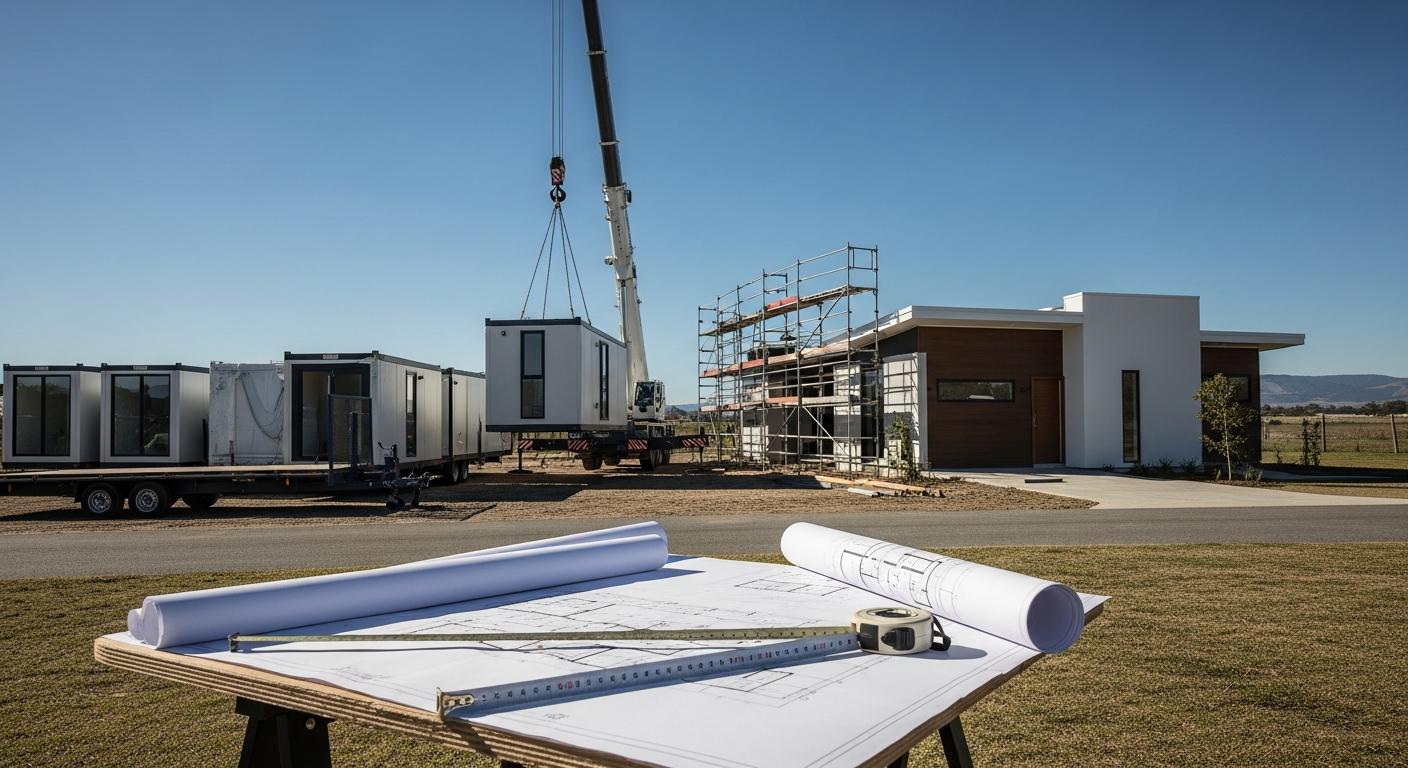
Setting the Scene: The Flexibility Promise of Prefab Homes
There’s a certain optimism that comes with buying a prefab home. Maybe it’s the promise of faster construction or the clean efficiency of modular design. Or maybe it’s that quiet thought in the back of your mind: “If I need more space later, I can just add another module.” It sounds wonderfully simple like snapping together building blocks for grown-ups.
Prefab and modular homes gained their reputation for flexibility because they’re built in sections modules or panels that are assembled on-site with impressive precision. That idea naturally leads homeowners to believe expansion should be straightforward. After all, if it was made in pieces once, why not add a few more?
The truth is both yes and no. These homes are engineered marvels, but they follow strict design logic. Each module fits into a structural puzzle designed with millimeter-level accuracy. That precision gives prefab housing its strength and energy efficiency yet it can also become the very thing that complicates future expansion.
So, how much flexibility is really built into these systems from day one? That question sits at the heart of whether expanding a prefab home later is easy, tricky, or somewhere in between.
Understanding the Structure: How Prefab Systems Are Engineered
Not all prefabs are created equal. Some are modular homes built as full three-dimensional boxes with floors, walls, and ceilings already in place; others are panelized systems where walls arrive flat-packed; and then there are hybrid structures blending both approaches. Each type influences how easily you can expand later.
Think of a modular unit as part of a grid each box designed to connect seamlessly to the next within specific load-bearing limits. The steel frame or wood structure inside isn’t random; every beam and column carries part of the home’s weight distribution. Adding a new section changes those forces, which may require recalculating loads across the entire structure to maintain structural integrity.
Factory precision is both gift and constraint here. In traditional construction on-site adjustments happen all the time an inch shaved off here, an angle adjusted there. But prefab homes leave less room for improvisation once delivered; tolerances are tight because machines cut components with near-perfect accuracy.
This means adaptability depends heavily on foresight during design. A prefab builder can engineer connection points for potential future modules, but doing so after installation may involve significant re-engineering work.
Designing for Growth from Day One
If you dream about adding more living space someday maybe a second story or an extra bedroom suite it pays to say so early. Expanding later is far easier when planned during initial design rather than retrofitted years down the road.
Architects experienced in modular construction sometimes add “knock-out panels” or flexible joints hidden behind finishes so future connections can be made without major demolition. Service lines like plumbing or wiring can also be routed toward potential expansion points to simplify hookups later.
You’ll often find smart homeowners choosing foundations poured large enough to support additional modules even if they only build “phase one” initially. Some plan ahead by extending rooflines or leaving intentional gaps for decks or small connector spaces where additions might click in later.
The cost savings can be notable: designing expansion-ready features upfront might add 5–10% to initial expenses but could prevent far greater costs associated with structural retrofits down the line.
The Reality Check: What Makes Expansion Tricky
Reality tends to test even well-laid plans. Adding onto an existing prefab home involves more than just ordering another module and watching it arrive by truck.
Your site may present constraints first: Is there enough land available under local zoning laws? Was your original foundation sized for more weight? Are there setbacks limiting new square footage? Even orientation matters adding onto a south-facing wall might block solar panels carefully positioned during initial construction.
A bigger challenge comes when trying to align old and new modules from different production runs or worse, different manufacturers operating under varied state building codes or HUD code standards (especially relevant for manufactured homes). Slight variations in height, framing dimensions, or materials can throw off alignment by critical fractions of an inch.
Then come mechanical systems: plumbing tie-ins must slope correctly; HVAC ducts need balance; electrical circuits have load limits that often make older systems incompatible with new demands. Matching finishes isn’t always simple either paint colors fade, siding styles get discontinued, and roofing products evolve faster than memory foam mattresses do marketing slogans.
When Expansion Works Smoothly
The good news? Some modern modular builders have anticipated this challenge head-on by offering systemized designs meant for growth. These brands treat each module almost like software updates you buy version 1 today knowing version 2 will integrate perfectly later.
Certain steel structure frameworks allow vertical expansion where upper stories simply bolt onto reinforced lower ones think stackable solutions reminiscent of Lego towers but certified by engineers instead of kids’ imagination. Side-by-side configurations work well too when floor plans follow repeatable geometry that maintains strength across seams.
Digital modeling tools such as Building Information Modeling (BIM) have made these seamless fits possible. Every bolt hole and conduit path exists virtually before any real material arrives on-site, reducing misalignment risks during future expansions.
You’ll even see community-scale prefab developments embracing “plug-in growth,” where neighborhoods expand gradually through modular additions that share utilities and layouts a particularly useful strategy in rural areas seeking scalable housing solutions without overwhelming infrastructure all at once.
Sustainability Implications of Expanding Prefab Homes
Sustainability advocates often highlight adaptability as one hallmark of resilient design and expanding prefab housing fits squarely into that vision when handled thoughtfully.
If your addition reuses compatible modules rather than demolishing existing walls, material waste stays low compared with traditional building methods where partial tear-downs are common. Prefab elements tend to arrive pre-cut too, minimizing landfill scraps from sawn lumber or drywall trimmings typically seen in traditional home building sites across the United States.
Energy efficiency plays its role as well: factory-sealed jointing ensures consistent insulation performance even after modifications if done according to manufacturer guidelines helpful for maintaining passive house aspirations over time.
The environmental tradeoff lies mostly in transportation energy shipping single modules cross-country consumes fuel but comparing that footprint against full-scale reconstruction usually tilts favorably toward prefabrication’s side again. Properly designed adaptability extends lifespan significantly; fewer demolitions mean less embodied carbon wasted over decades of use.
Regulations, Permits, and Local Realities
This part catches many homeowners off guard: expanding your modular home likely triggers local permitting just like traditional construction would and sometimes more scrutiny depending on local familiarity with prefab methods.
Codes vary widely between states and counties across the United States; some classify additions as entirely new structures requiring updated plan reviews while others treat them as extensions if connected through permanent foundations already approved originally as real property rather than mobile homes under HUD code regulations.
If expansion alters load paths say you’re adding another story the entire structure may need re-certification from an engineer verifying safety under revised conditions. Plumbing tie-ins might require utility inspection too since municipal grids track capacity changes carefully these days amid growing communities mindful of sustainability goals and infrastructure strain.
