



The Ten-Year Check-In: Why Prefab Longevity Matters
When the first wave of modern prefab homes swept across the United States in the early 2010s, their promise felt almost futuristic. Homes could be delivered in sections, assembled on-site within weeks, and claim energy efficiency that traditional builds could only dream of. But a decade later, those same houses have reached an important milestone ten years. It’s a good time to ask: how do they actually hold up?
The first ten years tell you a lot about any building’s durability and its environmental follow-through. Paint starts to fade, seals loosen, insulation settles a bit it’s the natural rhythm of materials meeting weather and use. Home buyers who once focused on how fast or affordably their prefab house went up are now asking different questions: How does it age? What still performs beautifully? And what needs a little extra care?
Prefab homes whether they’re modular houses, space capsule houses, flat pack container houses, or tiny homes face aging patterns that blend factory precision with real-world unpredictability. Early marketing promised near-perfect airtightness and long-term structural integrity. Today we can compare those expectations with reality through data from builders and stories from homeowners who’ve lived in prefabricated homes for ten years or more.
Factory Precision Meets Weather Reality
In theory, building a prefab home inside a controlled environment means fewer mistakes: no rain warping wood during construction, no rushed drywall seams before a storm. That control leads to high quality materials and tight tolerances that traditional site built homes sometimes struggle to achieve.
But then the real test begins once modules leave the factory and meet humidity, frost, heatwaves, or coastal salt air. Moisture management becomes crucial at connection points where one module meets another. If those joints weren’t sealed perfectly or if regular maintenance was skipped you might find subtle swelling or tiny leaks after several cycles of freeze-thaw seasons.
Prefab construction designed for dry climates has shown excellent longevity in places like Nevada or Arizona. In contrast, prefab houses in humid regions often reveal micro issues sooner: caulking fatigue around seams or condensation inside wall cavities if ventilation isn’t fine-tuned. Some early models promised impeccable airtightness but didn’t fully anticipate real-world expansion and contraction; new designs have since added flexible membranes that adapt better over time.
Structural Systems That Stand Strong
Ask any engineer what matters most at year ten and they’ll likely say “the frame.” Whether steel frame or engineered timber system, structural integrity defines long-term confidence for both prefab homes and traditional houses.
Steel frames resist pests and warping exceptionally well though they can show corrosion in salty coastal conditions without proper coatings. Engineered timber frames (often laminated veneer lumber or cross-laminated timber) bring warmth and renewable material benefits but need consistent moisture protection at joints. Interesting enough, hybrid systems a steel skeleton paired with timber infill are proving resilient after a decade because they balance rigidity with natural flexibility.
Regular inspections help too: tightening bolts every few years, resealing plates where water might sneak in, recalibrating loads when adding solar panels later on. Good home builders include these maintenance steps in owner manuals now a nod to lessons learned from earlier modular homes that developed squeaks or minor shifts due to overlooked fasteners.
Envelope & Insulation: Where Aging Shows First
If you want to see how a prefab house is aging, look at its skin the envelope tells all. Wall panels that once gleamed may dull slightly; insulation that kept winter drafts out might compress just enough to nudge energy bills upward.
Pre-insulated panels made under factory conditions often perform better than site-applied insulation because there’s less chance of uneven coverage or trapped moisture during installation. After ten years, spray foams tend to hold shape but may lose some R-value; mineral wool fares well against dampness; cellulose sometimes settles unless densely packed during assembly.
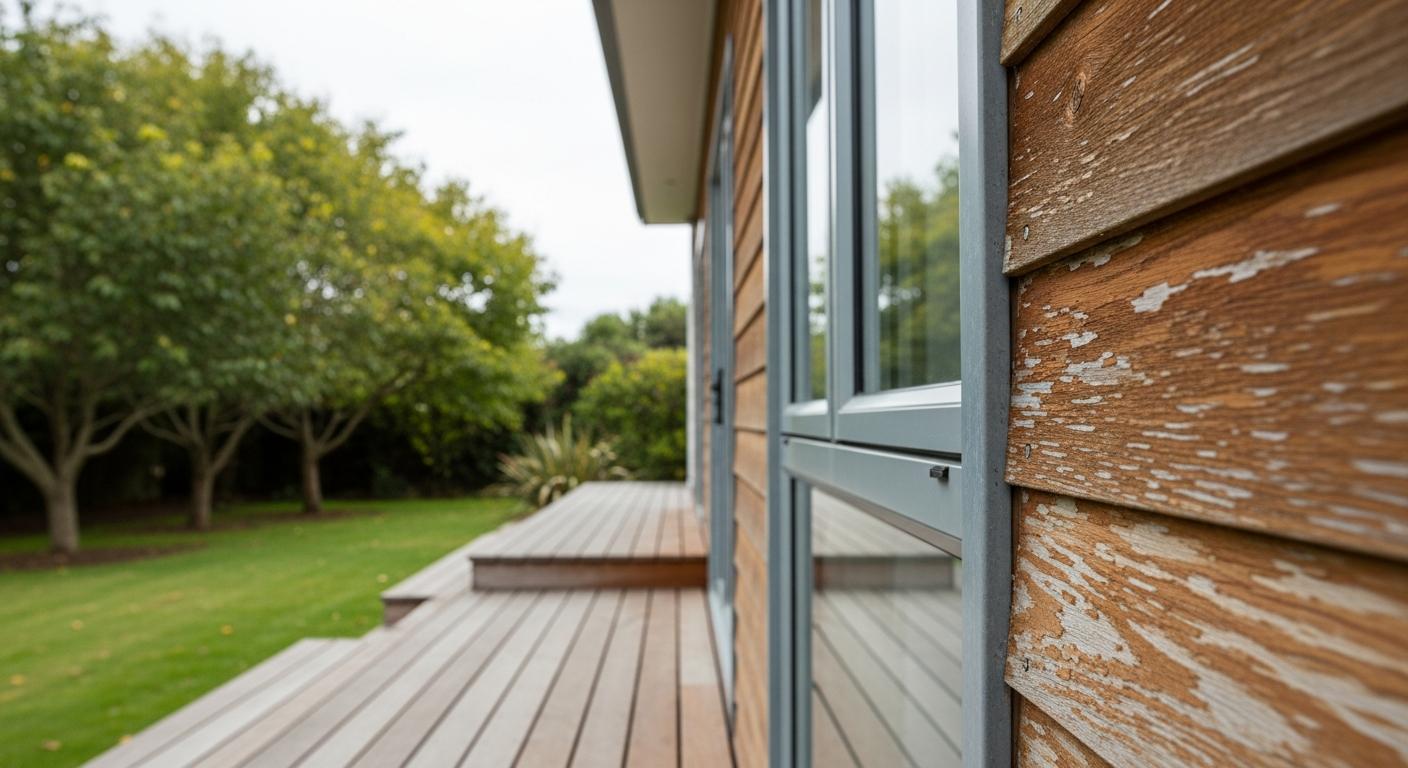
Exterior cladding is another area where time leaves fingerprints. Fiber cement panels remain remarkably stable even under intense UV exposure; metal composites hold color nicely but can dent; treated wood façades gain patina that many owners actually prefer as long as recoating happens every five years or so under proper maintenance schedules.
Interior Finishes & Everyday Wear
Inside modern prefab homes you’ll often find laminate floors designed for high traffic areas and composite countertops meant to shrug off spills from curious toddlers or weekend cooking experiments gone wrong. Most of these materials perform comparably to those in traditional homes after ten years if given regular cleaning and low-humidity conditions.
Adhesives and sealants deserve mention too. While most are formulated for long life cycles now, older prefabricated houses sometimes show yellowing edges around cabinetry or bathroom joints where VOC-heavy glues aged poorly. Newer eco adhesives have improved dramatically staying flexible longer while keeping indoor air quality healthier.
One quiet advantage of modular interiors is their replaceability. Need new flooring? Many modular systems allow swapping planks without demolition waste because panels were designed for disassembly from day one a small gesture toward circular design thinking even before it became trendy.
Energy Systems & Building Services Over Time
Energy efficiency was and still is a huge selling point for prefab housing construction methods. Many came with solar arrays pre-installed at the factory level or integrated conduits ready for plug-and-play upgrades later on.
Interestingly, wiring done indoors under strict quality control often outperforms onsite setups after ten years because connections stay protected during transport rather than exposed mid-construction like typical site built homes face.
HVAC systems present mixed results though: while pre-fitted units save install headaches initially, accessibility becomes key when replacement time arrives around year twelve to fifteen. Homeowners appreciate modular mechanical closets where equipment slides out easily rather than being wedged behind custom cabinetry (a small but vital convenience).
Smart sensors embedded within walls have aged faster than the buildings themselves a reminder that digital components follow different life spans than concrete or timber.
Real homeowners report satisfaction knowing their modular shells remain solid even as gadgets evolve around them.
Maintenance Culture & Owner Experience After a Decade
If we zoom out beyond materials alone,
what truly shapes longevity might be mindset the culture of regular maintenance among prefab owners seems distinctively proactive compared with some traditional house counterparts.
Maybe it’s because prefab buyers start out more aware of their home’s engineered nature,
or maybe manufacturer guides make upkeep unusually clear (often including detailed checklists for sealing joints,
cleaning ventilation ducts,
and performing regular inspections).
Whatever the reason,
this attentiveness pays off handsomely by extending lifespan while preserving resale value down the line.
Spare parts availability also matters; reputable home builders keep standard components compatible across multiple models so owners aren’t left hunting obscure fittings when replacing windows after storm damage years later.
Online communities dedicated specifically to older modular housing share retrofit tips from upgrading insulation layers
to refreshing façade coatings all fostering collective wisdom about living comfortably within durable materials rather than constantly replacing them like disposable goods.
It’s sustainability expressed through community as much as construction method.
Looking Forward: Designing for the Next Decade of Durability
What does another decade hold for modern prefab houses?
Material science is already offering clues:
bio-based resins derived from plant fibers promise coatings that last longer without petrochemicals;
cross-laminated timber innovations make larger spans possible while resisting rot more effectively;
and designers talk increasingly about “component reuse” instead of full rebuilds once wear appears a quieter revolution toward true circularity.
Future modular buildings may come tagged with transparent data showing exactly how each material ages over time,
so potential home buyers can compare not just cost per square foot
but performance per decade an idea gaining traction across sustainable architecture circles worldwide.
